Quick answer: The best squirrel deterrents are physical barriers: baffles on feeder poles, sheet-metal collars on tree trunks, branches trimmed at least 8 feet from the roof, and hardware cloth over vents and gaps. Capsaicin (hot pepper) and other taste repellents, motion-activated sprinklers, and predator decoys help in gardens, but squirrels get used to them, so rotate them and pair them with barriers. Ultrasonic devices rarely work for long.
Squirrels are smart, persistent, and amazing athletes. If there’s a way onto your roof, into your bird feeder, or through your tomato patch, they’ll find it.
That’s why the right squirrel deterrent depends on what you’re protecting. In this guide, I’ll rank the deterrents that really work, from barriers and baffles to sprays, granules, and devices, and show you how to use each one. If you’d rather start with natural scents, see our guide to scents that squirrels hate.
* This post contains affiliate links.
Squirrel Deterrents vs. Repellents: What’s the Difference?
A repellent makes something taste or smell bad. A deterrent is broader: anything that stops squirrels from getting where you don’t want them, including barriers, baffles, and scare devices. The most reliable deterrents physically block squirrels. Repellents and scare devices work best as backup.
The Best Squirrel Deterrents, Ranked
1. Baffles and Pole Placement (Best for Bird Feeders)
A smooth dome or cylinder baffle on a feeder pole is one of the most dependable squirrel deterrents you can buy. Placement matters just as much. Nebraska Extension recommends locating the pole 7 to 8 feet from fences, decks, tree trunks, and overhead branches that squirrels can use as launching pads. If you hang a feeder from a tree, keep it at least 6 feet above the ground and 6 feet away from the trunk and other branches.
2. Sheet-Metal Collars (Best for Trees)
To stop squirrels from climbing isolated trees and poles, the Internet Center for Wildlife Damage Management recommends encircling them with a 2-foot-wide collar of sheet metal set 6 feet off the ground. This only works when the tree isn’t close enough to other trees or buildings for squirrels to jump in. The University of Wisconsin also advises checking collars regularly so they don’t constrict a growing trunk.
3. Trimming Branches (Best for Roofs and Attics)
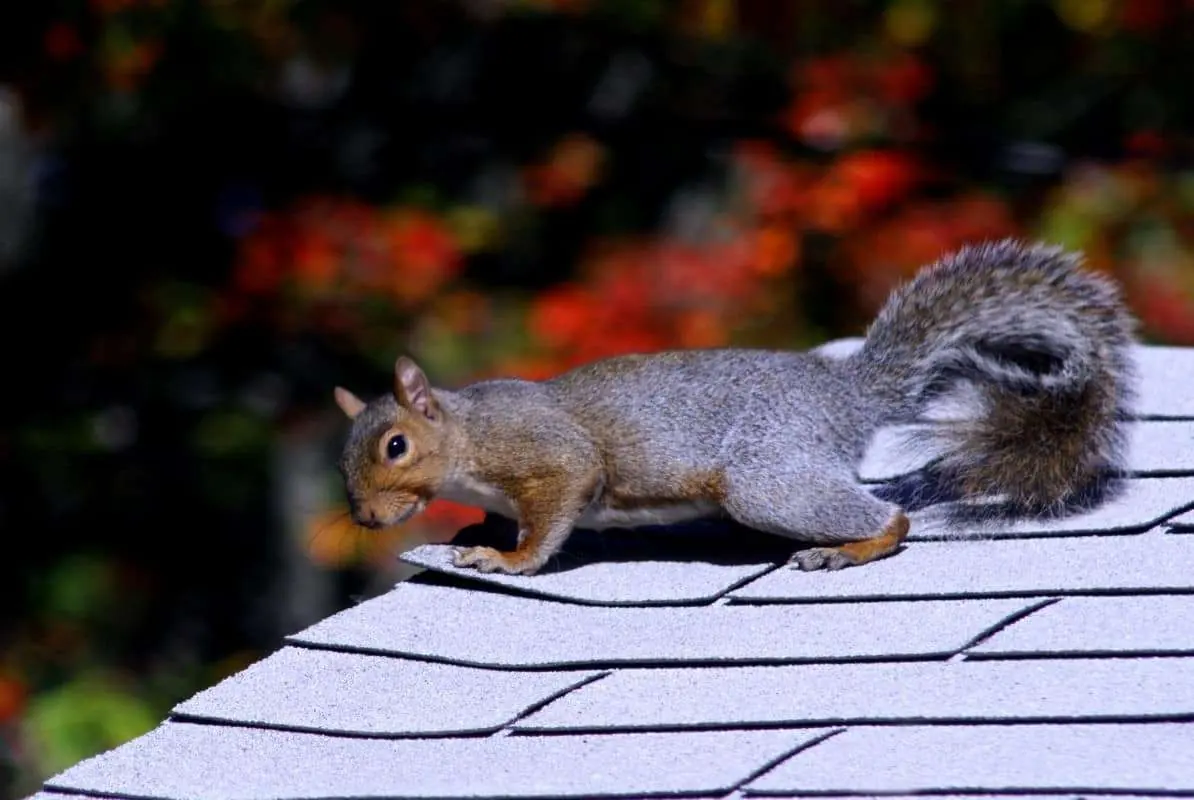
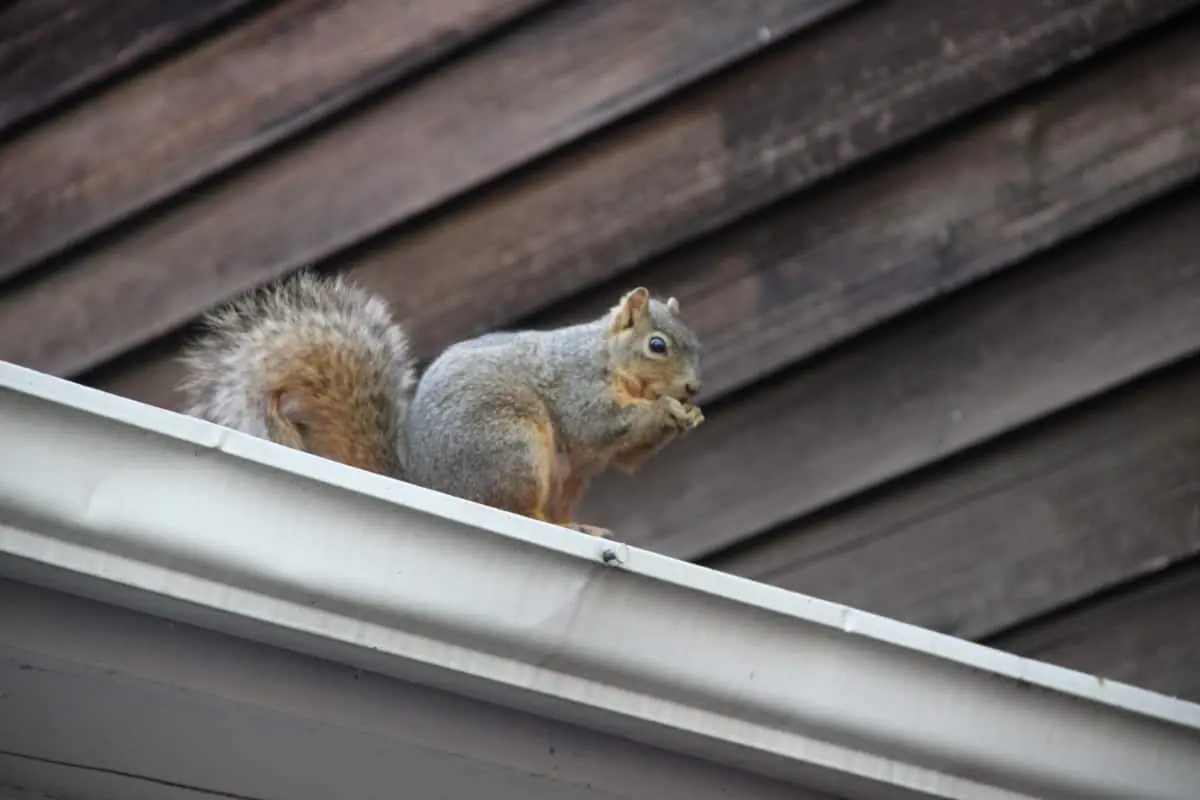
Nebraska Extension recommends trimming tree limbs at least 8 feet away from buildings to keep squirrels from jumping onto roofs. Don’t forget the upper branches, since a squirrel can leap down onto a roof from a higher limb.
4. Hardware Cloth and Exclusion (Best for Your House)
If squirrels are already chewing their way in, cover vents, soffit gaps, and chewed openings with sturdy hardware cloth or sheet metal. The University of Wisconsin notes that securing gnaw-proof material over chewed areas and access points prevents squirrels from getting in. Make sure no squirrel is trapped inside before you seal the last opening, especially in spring and late summer when babies may be in the nest. Learn what attracts squirrels to your yard so you can fix the cause too.
5. Capsaicin and Taste Repellent Sprays (Best for Plants and Surfaces)
Hot pepper (capsaicin) sprays and other taste repellents make plants, bulbs, and surfaces unpleasant to chew. The Internet Center for Wildlife Damage Management lists Ro-pel as a taste repellent that can be applied to seeds, bulbs, flowers, trees, shrubs, poles, fences, siding, and outdoor furniture. Reapply after rain and new growth, and never spray edible parts of plants unless the label allows it.
6. Granular Repellents (Best for Garden Beds and Lawns)
Granules scatter easily around beds and bulb plantings. Most use capsaicin, garlic, or predator scents. They’re convenient but wash away in heavy rain, so reapply on the schedule on the label.
7. Sticky Polybutene Repellents (Best for Poles and Ledges)
Nebraska Extension notes that polybutene-based repellents can help keep squirrels off trees, branches, and ledges. These tacky gels make surfaces uncomfortable to grip. They can be messy and may trap birds, so use them sparingly and only where the label allows.
8. Motion-Activated Sprinklers and Scare Devices
A sudden spray of water startles squirrels and works well around gardens in warm weather. Predator decoys such as plastic owls work for a short time. Move them every few days, or squirrels quickly learn they’re harmless. Our guide to using aluminum foil to keep squirrels away covers another cheap scare tactic.
Do Ultrasonic Squirrel Deterrents Work?
Usually not for long. A University of Nebraska review of frightening devices found that rodents may avoid high-frequency sound at first but get used to it, and that studies found ultrasonic devices ineffective against rats, mice, ground squirrels, voles, and pocket gophers. If you try one, treat it as a short-term add-on, not your main defense.
Choosing the Right Squirrel Deterrent
Problem
Best deterrent
Backup
Bird feeder raids
Baffle on a pole 7–8 ft from launch points
Hang feeders 6 ft up and 6 ft from the trunk
Squirrels on the roof or in the attic
Trim branches 8 ft back, seal gaps with hardware cloth
So, what’s the best squirrel deterrent? Physical barriers: baffles on feeder poles, sheet-metal collars on isolated trees, branches trimmed 8 feet from the house, and hardware cloth over openings. Back them up with capsaicin or taste repellents, granules, and motion-activated sprinklers, and rotate them so squirrels don’t get used to any one trick. Skip ultrasonic gadgets as a main defense.
Keep Pest Pointers in mind for all your pest control needs!
Squirrel Deterrent FAQs
What is the best squirrel deterrent?
Physical barriers work best: a baffle on a feeder pole, a sheet-metal collar on isolated trees, branches trimmed 8 feet from the house, and hardware cloth over openings. Use repellents and scare devices as backup.
What is the best squirrel repellent?
Capsaicin (hot pepper) and other taste repellents are the most reliable for plants and surfaces. Reapply them after rain and new growth.
Do squirrel deterrent sprays work?
Yes, for a while. Hot pepper and taste repellent sprays make plants and surfaces unpleasant to chew, but they wear off, so reapply them regularly and combine them with barriers.
What smell will keep squirrels away?
Squirrels dislike hot pepper, peppermint, garlic, white vinegar, and predator urine. Scents fade quickly, so refresh them every few days.
Do ultrasonic squirrel repellers work?
Rarely for long. Research reviews have found that rodents get used to high-frequency sound and return, so ultrasonic devices shouldn’t be your main deterrent.
How do I keep squirrels off my bird feeder?
Mount the feeder on a pole with a baffle, place the pole 7 to 8 feet from trees, fences, and decks. If you hang it from a tree, keep it 6 feet off the ground and 6 feet from the trunk.
Amos is your go-to editor and pest advice enthusiast, blending years of hands-on experience into clear, practical guidance for everyday pest problems. Growing up on a farm near Grandville, Michigan, he spent his days outdoors, learning to deal with wildlife, pests, and nature in real-world settings rather than just from a textbook. That upbringing turned him into a genuine nature lover, comfortable in fields, woods, and around all the critters that come with them. Today, he channels that background into approachable, science-informed articles that help homeowners protect their spaces without overcomplicating the process. When he’s not polishing guides or answering pest questions, you can imagine him most at home outside—observing animal behavior, walking the land, and turning those observations into practical tips you can actually use. His mission is simple: to give you straightforward, reliable pest pointers so you can spend less time worrying about infestations and more time enjoying your home and yard. Check out my Profile.