Quick answer: Does heat kill bed bugs? Yes. Heat is one of the most reliable ways to kill bed bugs and their eggs. According to Cornell University’s bed bug program, bed bugs die almost immediately at 122°F, and a clothes dryer on high heat for at least 20 minutes kills every life stage in dry clothes and bedding. Steam at 130°F or hotter kills the bugs it touches.
If you’ve found bed bugs, you’ve probably heard that heat is the answer. It’s true, but only if the heat is hot enough and lasts long enough. A warm room or a short trip through the dryer won’t do it, and some heat “hacks” are dangerous.
In this guide, I’ll show you exactly what temperature kills bed bugs, how long it takes, and how to use your dryer, a steamer and other heat tools safely at home. If you’re still trying to confirm an infestation, start with how to find bed bugs.
* This post contains affiliate links.
Does Heat Kill Bed Bugs?
Heat kills bed bugs at every stage, from eggs to adults. Bed bugs can’t survive once their bodies reach a lethal temperature, and unlike sprays, heat doesn’t care whether a population is resistant to insecticides. That’s why professionals rely on it so heavily.
The catch is that heat has to reach the bugs. Bed bugs hide deep in seams, cracks, and the middle of thick items like pillows and books, where it takes time for the temperature to climb. Heat also leaves nothing behind, so any bug that escapes or arrives later won’t be affected.
Cornell recommends aiming for 125°F at the center of whatever you’re treating. That small cushion makes up for cool spots and items that take longer to heat through.
Does the Dryer Kill Bed Bugs?
Yes. The dryer kills bed bugs very well, and it’s the easiest heat treatment you can do at home. Most dryers on high heat get hotter than 125°F. Cornell’s guidance is to run dry items on high for at least 20 minutes. The EPA also lists a clothes dryer on high heat as a do-it-yourself heat treatment.
Bag clothes, sheets, pillowcases and stuffed toys in the room where you find them so you don’t spread bugs on the way to the laundry room.
Put dry items straight into the dryer. Skip the wash first. Cornell notes that most washing machines aren’t hot enough to kill bed bugs unless the water reaches about 140°F for 90 minutes.
Don’t overload the dryer. Items need room to tumble so the heat reaches every layer.
Run the dryer on high for at least 20 minutes after the items are hot. Wet or bulky loads, such as comforters, need much longer.
Move items straight into a clean bag or bin so they don’t pick up new bugs.
If you’re not sure your dryer gets hot enough, test it. Put three dry towels in the dryer, run it on high for 20 minutes, then check the middle of the pile with a meat thermometer. If an item can’t take high heat, Cornell says two hours at 115°F also works. Shoes can go in a mesh laundry bag, but check the care label first.
Does Steam Kill Bed Bugs?
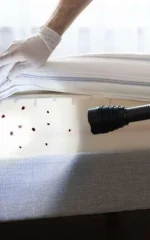
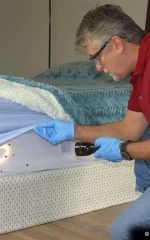
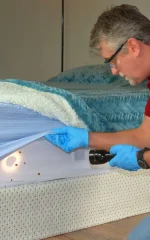
Steam kills bed bugs and eggs on contact, and it reaches into fabric, seams, and cracks that sprays miss. The EPA says the steam must be at least 130°F, and it shouldn’t come out with a forceful airflow, or it can blow bed bugs away from the heat. Use a diffuser or wide nozzle.
Move the nozzle slowly, about an inch per second, so the surface actually gets hot.
Steam mattress seams and tufts, box spring edges, bed frames, headboards, baseboards, and upholstered furniture.
Keep moisture light. Steam shouldn’t leave fabric soaking wet, which can lead to mold.
Steam only kills what it touches. It has no residual effect, so combine it with vacuuming, encasements, and follow-up checks.
Other Ways to Use Heat at Home
Portable Heat Chambers
Portable heat chambers and heated bags are made for luggage, shoes, books, and other items that can’t go in the dryer. Cornell says they typically cost $200 to $500. Use a thermometer and make sure the center of the load reaches 125°F, then hold it there.
Hair Dryers
A hair dryer can treat small spots like a seam or a crack, but it isn’t a substitute for a dryer or steamer. Use high heat on a low fan speed so you don’t blow bugs away. Never use a heat gun, which can start a fire.
A Hot Car or Black Plastic Bags in the Sun
The EPA says black plastic bags in a closed car in the sun can work, but success depends on your climate. On a mild or cloudy day, the inside of the bag may never reach a lethal temperature. Cornell notes that research in Australia found bagging items under black plastic in the sun wasn’t reliable, so treat this as a last resort and check with a thermometer.
Heat Treatments You Shouldn’t Try
Turning up the heat in your home is not a bed bug treatment. The EPA warns that raising indoor temperature with a thermostat, propane space heater, or fireplace doesn’t work and is dangerous. Homes can’t safely reach lethal temperatures that way, and bugs simply retreat to cooler spots.
Professional whole-room heat treatments are different. Trained technicians use special equipment, fans, and many sensors to bring every corner of a room to a killing temperature while protecting the house. Even then, Cornell notes heat can damage some items, such as wood, hard plastics, and electronics, and it leaves no residual protection.
What About Cold?
Cold can kill bed bugs too, but it’s slower. The EPA says items must stay in a sealed bag in a freezer set to 0°F for at least three days, and the University of Minnesota Extension recommends four days to be safe. Many kitchen freezers aren’t cold enough, so check yours with a thermometer.
If you keep finding live bugs after a few weeks, call a licensed pest professional about a whole-room heat treatment. Then follow the prevention tips in how to get rid of bed bugs permanently so they don’t come back.
That’s a Wrap!
So, does heat kill bed bugs? Absolutely. Bed bugs die almost instantly at 122°F, and a dryer on high for 20 minutes is one of the best tools you have. Steam at 130°F or hotter handles mattresses and furniture. Skip the thermostat and space heater tricks, check temperatures with a thermometer, and pair heat with other treatments for the best results.
Keep Pest Pointers in mind for all your pest control needs!
Does Heat Kill Bed Bugs: FAQs
What temperature kills bed bugs instantly?
Bed bugs and their eggs die almost immediately at 122°F (50°C), according to Cornell University. Aim for 125°F to allow for cool spots.
How long does it take heat to kill bed bugs?
At 118°F, adults die in about 2 minutes and eggs in about 90 minutes. At 113°F, adults take about 90 minutes and eggs about 8 hours.
Does the dryer kill bed bugs?
Yes. Run dry items on high heat for at least 20 minutes. Washing alone usually isn’t hot enough, so dry them on high even after washing.
Does steam kill bed bugs?
Yes, on contact. The steam must be at least 130°F, and it should have low airflow so it doesn’t blow bugs away. Move the nozzle slowly.
Can I kill bed bugs by turning up the heat in my house?
No. The EPA warns that using a thermostat, space heater or fireplace doesn’t work and is dangerous. Whole-room heat treatments need professional equipment.
Does heat kill bed bug eggs?
Yes. Eggs need more heat or more time than adults, but they die almost immediately at 122°F and in about 90 minutes at 118°F.
Amos is your go-to editor and pest advice enthusiast, blending years of hands-on experience into clear, practical guidance for everyday pest problems. Growing up on a farm near Grandville, Michigan, he spent his days outdoors, learning to deal with wildlife, pests, and nature in real-world settings rather than just from a textbook. That upbringing turned him into a genuine nature lover, comfortable in fields, woods, and around all the critters that come with them. Today, he channels that background into approachable, science-informed articles that help homeowners protect their spaces without overcomplicating the process. When he’s not polishing guides or answering pest questions, you can imagine him most at home outside—observing animal behavior, walking the land, and turning those observations into practical tips you can actually use. His mission is simple: to give you straightforward, reliable pest pointers so you can spend less time worrying about infestations and more time enjoying your home and yard. Check out my Profile.