Talks about Hantavirus from rats are hitting closer to home in 2026.
In May 2026, a confirmed Andes virus outbreak aboard a cruise ship in the Atlantic Ocean killed three people and alarmed public health officials globally. The CDC and WHO responded immediately, and for good reason.
But here’s what you need to know: the risk to most Americans remains extremely low. Knowing how Hantavirus from rats spreads, and how to stop it, gives you real, actionable protection.
Here are the key facts about Hantavirus from rats:
Not all rats carry hantavirus
Not every carrier rat spreads the dangerous Andes strain
You contract hantavirus by inhaling dried, airborne particles
Rats prefer undisturbed spaces near humans
Recognizing rat activity early is critical
Rat prevention at home is your best defense
Below, I’ll break down each fact and give you practical, pests control steps to keep your home rodent-free.
What Is Hantavirus and How Does It Connect to Rats?
The Hantavirus was first isolated in 1978 near the Hantaan River area of Korea. While this illness has several different forms, the most concerning is the Andes strain, which causes Hantavirus Pulmonary Syndrome (HPS).
As scary as that may sound, Hantavirus is very rare in humans. According to the CDC, 890 confirmed Hantavirus cases were reported in the U.S. between 1993 and 2023. Around 94% of those cases occurred west of the Mississippi River. Globally, there are around 150,000 to 200,000 cases per year, with 70% to 90% of cases occurring in China.
While Hantavirus is a cause for concern, it’s very unlikely to get it and even more rare for it to spread from human to human. That being said, there’s an important connection between the Hantavirus and rats, and knowing how to keep these rodents away from your home is essential.
How You Contract Hantavirus From Rats
This is where most people get confused. You do not contract hantavirus from rats by touching them.
Infection happens when dried rat urine, droppings, or saliva become disturbed and go airborne. You then breathe in those contaminated particles. That’s it. That’s the primary transmission route.
According to the CDC, common exposure scenarios include:
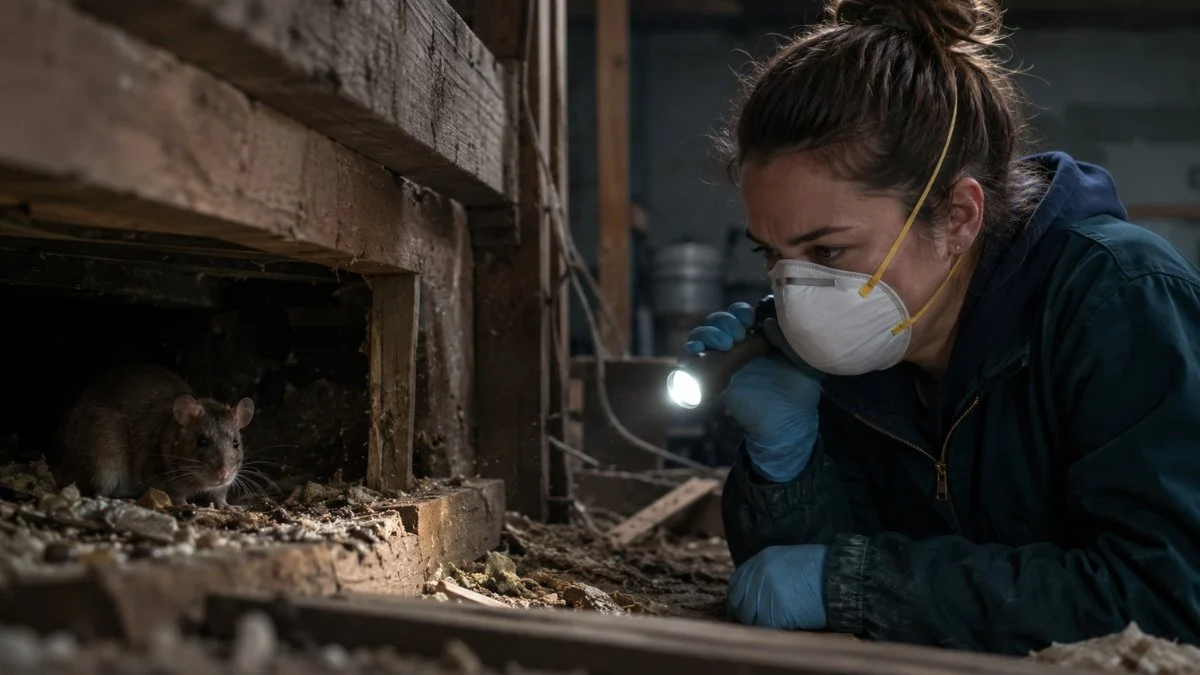
Sweeping or vacuuming areas with rat droppings without protection
Opening an infested shed, cabin, or storage space that was sealed for months
Handling rodent nesting materials without gloves or a mask
Working in fields or campsites with heavy rodent activity
The May 2026 cruise ship outbreak introduced a new concern: the Andes virus, unlike other strains, is the only known hantavirus capable of spreading person to person.
The CDC confirmed this transmission is rare and typically requires close, prolonged contact with a symptomatic individual. The risk to the general U.S. public remains extremely low, with zero U.S.-based cases confirmed as of May 2026.
Hantavirus Symptoms: What To Watch For
Knowing hantavirus symptoms can save your life. Early symptoms look a lot like the flu, which makes early diagnosis difficult.
Early symptoms (4–42 days after exposure):
Fever and chills
Muscle aches, especially in the thighs, hips, and back
Headaches
Fatigue and nausea
Later symptoms (within 4–10 days of early symptoms):
Difficulty breathing
Fluid buildup in the lungs
Low blood pressure
There is no specific antiviral cure for HPS. Treatment is supportive, oxygen, intravenous fluids, and close monitoring in a hospital setting.
If you have had rodent exposure and develop any of these symptoms, seek medical care immediately. Tell your doctor about the exposure. That information changes how you’re treated.
Which Rats Actually Carry Hantavirus?
The good news is that some of the most common rats found around homes, roof rats and Norway rats, are not carriers of the Hantavirus that causes HPS. That said, they may still be carriers of other, less serious Hantavirus strains.
Here’s a breakdown of the main rat species and their hantavirus risk:
Rat Species
Carries Andes Strain?
Where Found
Cotton Rat
Yes
Southern U.S., Central & South America
Rice Rat
Yes
Eastern/Southern U.S., Central & South America, Southeast Asia
Norway Rat
No (less serious strains only)
Worldwide, nearly every continent
Roof Rat (Black Rat)
No (less serious strains only)
Warm, coastal, tropical regions globally
The good news: the two most common household rats, Norway rats and roof rats, do not carry the Andes strain. That said, they still carry other hantavirus strains and numerous other pathogens.
The deer mouse, not a rat, is the most common carrier of Sin Nombre virus, the primary HPS strain in the U.S., according to the CDC. It’s worth noting because deer mice often share space with rats in rural and suburban settings.
While there have been no specific studies on the percentage of rats that carry the illness, in mice it usually ranges between 3% and 12% of the population.
Where You’re Most Likely To Encounter Hantavirus From Rats
Knowing where you’re most likely to be exposed to Hantavirus from rats is the first step to prevention. Think of places around the house that are rarely disturbed, with plenty of hiding places. These are rat oases!
Inside Your Home
Roof rats and Norway rats are the most common species found in and around homes. These two pesky rodents differ mainly in their preferred locations around the home.
As the name suggests,roof rats prefer elevated spaces, while Norway rats prefer ground-level areas.
Here’s where rats are most likely hiding around the home, and where their rat droppings, saliva, and urine are present:
If you plan on any renovations in the house, be especially careful around attics, wall voids, and ceiling voids. These undisturbed areas are harbangers for dried rat droppings and urine. Barns and sheds are another hot spot for dried pellets, urine, and saliva that could harbor the virus.
Ready to kick rats out of your home? Head over to our guide on the 4 best ways to keep rats away to learn how to send these rodents packing for good.
Outdoor and Recreational Areas
Most exposure to the hantavirus occurs in rural, residential areas (about 75% according to an article in Swiss Medical Weekly). The other 25% occur in recreational areas, such as campgrounds, where large numbers of people (and their garbage) gather.
Here are the recreational hot spots for rats:
Campgrounds
State and National Parks
Popular hiking trails
Backcountry trails
Recreational lake and river areas
These areas tend to attract rats because of dumpsters, garbage cans, discarded food scraps, and protection from predators.
Recognizing Signs of Rats In Your Home
Rats may be sneaky, but they still leave little clues behind of their presence. Knowing what to look for can help you understand whether you’re dealing with rats or something else.
Once you’ve confirmed that rats are present, you can employ several easy, attainable techniques to send them packing!
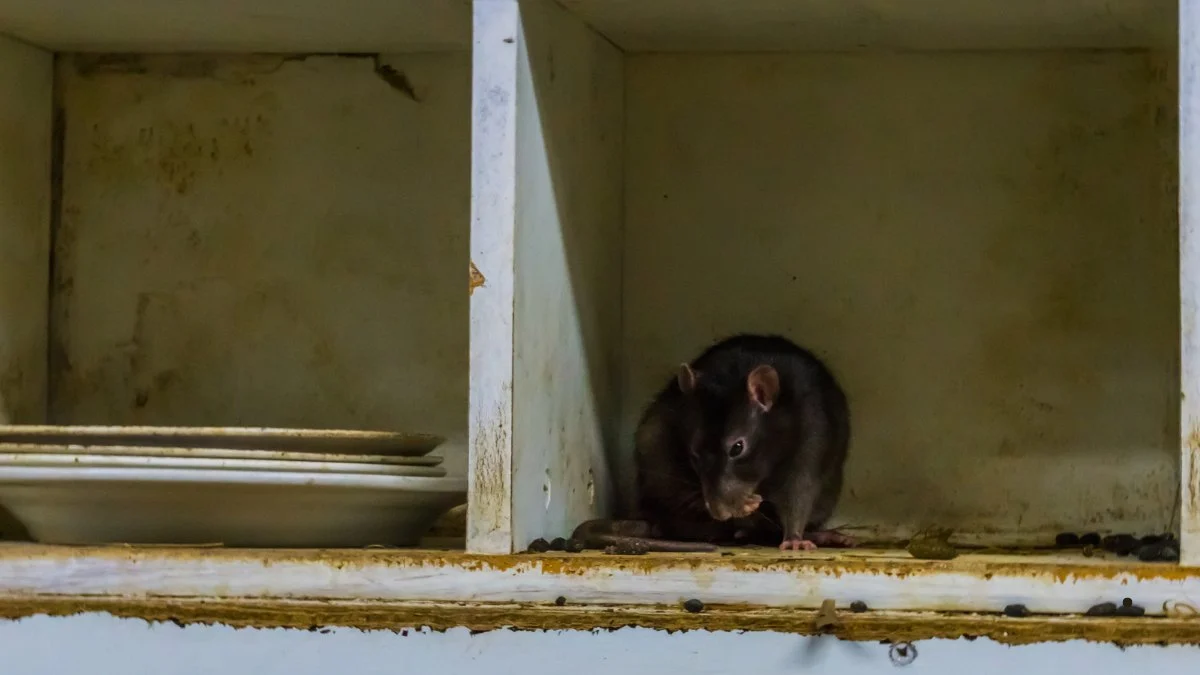
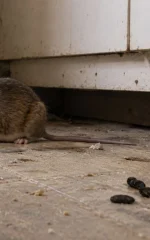
Rat droppings: one of the easiest signs that a rat is present. Look for dark brown to black pellets ½ to ¾ of an inch long (1 ¼ to 2 cm). If the pellets are grey, it means they are dried out.
Noise: Hearing scurrying in the attic or drop ceiling is a red flag indicator of rats. Our article on the 5 sounds and noises that rats make offers a more in-depth look what you might hear scurrying around the house.
Smudges: Look for oily smears on baseboards. Rats like to travel as close to walls as possible and leave smudges behind.
Chewed materials: Look for chew marks that are jagged or splintered and around ⅛ of an inch (0.3cm) long. Rats will chew on just about anything, but baseboards, cabinet corners, wire sheathing, and plastic or aluminum piping are common materials.
Nests: If you find a messy, loosely woven ball of chewed-up paper, foam, or cardboard, it’s likely a rat nest and a sure sign that one is living in or near your home.
Smell: Heavy infestations are usually accompanied by a distinct musty smell that accumulates from droppings and urine.
If any of these signs are present around the home, rats are probably nearby. Even if the rats are outside the house, it’s only a matter of time before they try to move indoors and live rent-free.
Keeping rats away from the home is one of the best ways to prevent exposure to the Hantavirus. No rats = no droppings = no virus!
These sneaky rodents can fit through anything ¼ an inch (0.6 cm) or larger, so it’s essential to seal entries and remove any attractants.
For a more in-depth guide to keeping rats out of the house, check out our rat control article!
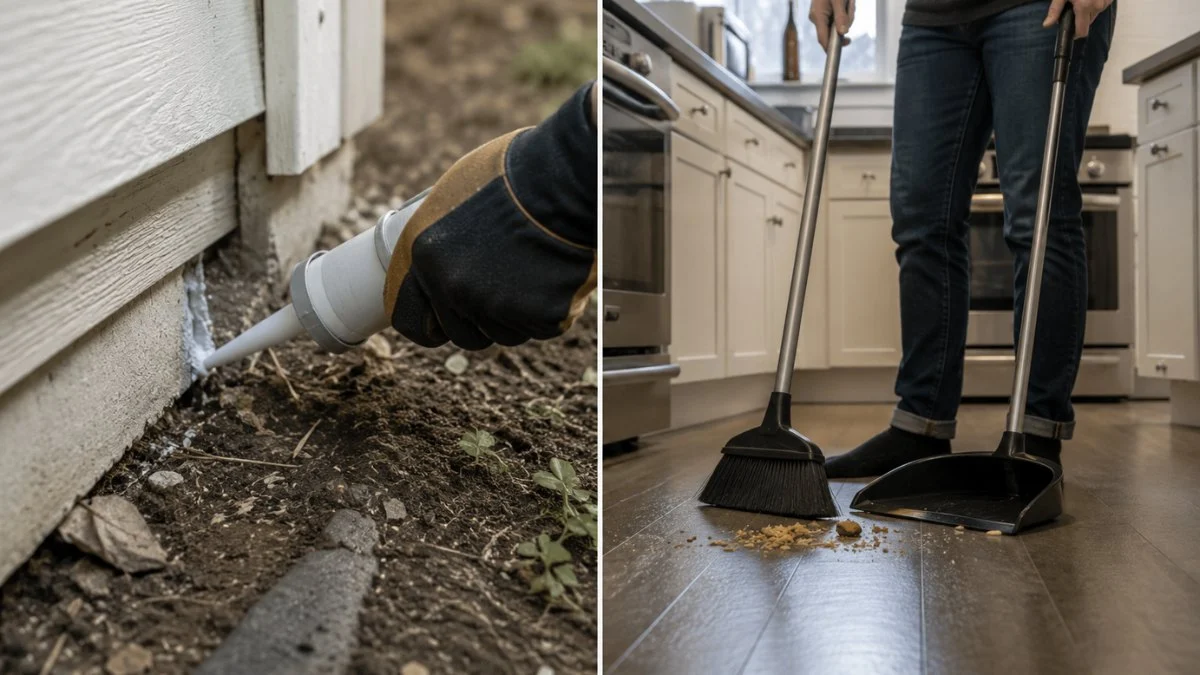
Seal All Entry Points
Juvenile rats can fit through openings as small as ¼-inch. That’s about the diameter of a No. 2 pencil! To truly keep rats out, it’s essential to seal up any holes that these rodents can finnangle through.
Here are the most common places where rats might sneak into the home:
Utility entrances: Look for the places where electrical and water lines enter and exit the house. The small gaps around the pipe are like little highways to rats!
Foundation cracks: Rats can squeeze through foundation cracks and make their way into wall and ceiling voids with ease, setting up nests and starting little, unwanted families.
Exhaust vents: Check where HVAC exhaust areas are and ensure the vents are tightly fit to avoid rat break-ins. Remember chimney tops and bathroom fan exhausts!
Doors: Rats can chew through weather stripping and slip beneath doors. You can check out our article on how to rat-proof your garage here to learn how to prevent rodents from sneaking through garage doors.
Drains: No, rats probably won’t crawl up your toilet. But they will utilize horizontal water pipes to sneak in through uncovered floor drains.
So, how do you prevent rats from getting in through these openings? There are several materials you can use to seal these spaces and prevent rat raves in your home.
Steel Wool: an extremely versatile material that can be stuffed into openings to prevent rats from getting inside. Check out Wizcave Steel Wool to stuff into openings around utility lines or gaps and cracks in the foundation.
Hardware Cloth: An excellent way to seal holes in vents or to block drain pipe entrances. Make sure the cloth is ¼ inch or less, such as the AggFencer Store ⅛ inch Hardware Cloth.
Caulking: For small openings around utility lines, consider using caulking in addition to steel wool. Rats can chew through the caulking, but if it’s used in combination with steel wool, it can be effective.
Keep Your Home Clean
Sanitation is one of the key ways to keep rats away from the home. If there’s no food or water, rats aren’t going to stick around very long.
Here are some ways to keep things clean so your home is less attractive to rats.
Storage: Keep firewood, pipes, lumber, and other landscaping supplies off the ground. This makes it less attractive to rats as a possible nesting location.
Garbage: Clean garbage bins frequently to remove food and oil residues. Keep cans stored with tight-fitting lids. Avoid open compost piles.
Fruit and nut trees: Pick up fallen fruit and nuts as soon as they drop, and harvest fruit from the trees as soon as it is ripe. Fruits and nuts are a coveted food source for rats!
Mowing and trimming: Keep the lawn mowed and trim bushes and creeping vines. This removes rat hiding places and makes them less likely to stick around.
Indoor sanitation: Keep counters, floors, and cabinets clean. Store food in glass or metal containers when possible.
Pets: Keep pet food in sealed metal or glass containers when possible. If pets must be fed outdoors, only feed them as much as they will eat for one meal at a time. Bring water inside at night. Keep water and food dishes off the ground inside the home.
Natural Repellents That Can Help
If you prefer to start with non-chemical approaches, certain scents deter rats from entering or nesting in an area.
Rats have a strong sense of smell. Scents they actively avoid include:
Peppermint oil: Apply to cotton balls near suspected entry points. Refresh every few days.
Ammonia: Mimics the smell of predator urine. Use in enclosed spaces like attics.
Clover and coffee grounds: Spread near perimeter areas where rats are active.
Natural repellents work best as a supplemental layer alongside sealing and sanitation. They are not a substitute for structural exclusion.
Rats are one of the most problematic pests to have around the home. Not only do they leave behind droppings and a musty smell, but they can also be carriers of diseases like the Hantavirus.
Knowing a few key facts about Hantavirus from rats can help you minimize exposure, understand the risks, and keep these pesky rodents out of your home permanently.
To recap, here are the 6 key facts about contracting the Hantavirus from rats:
Not all rats are carriers
Not all carriers are dangerous
Hantavirus is breathed in through airborne particles
Rats are found near humans
Signs of rats are a red flag
Pest control lowers exposure risk
If a rat infestation is ever unmanageable, consider hiring a pest control professional to take care of any pesky rodents. Our pest control finder will help locate a professional near you!
If you’d rather try to take care of the problem yourself, remember to seal all openings, keep things clean, and consider using natural repellents like scents that rats hate. Stay safe!
Resources
CDC – 2026 Multi-Country Hantavirus Cluster Health Advisory
Robyn is your friendly neighborhood writer, editor, and published author - boasting many years of experience in pest control, from which she magically weaves words into the captivating and engaging posts as we know them. When not tucked behind her laptop screen, she can be found embracing nature in the most thrilling ways possible. Rock climbing? Yes, please! Hiking? Absolutely! Traveling the U.S. with her husband, their lovable three-legged dog, and two mischievous cats? That’s her everyday reality. They live, love, and work in their cozy campervan, letting the road take them where it will, and finding inspiration in every sunrise, mountain peak, and wildlife sighting they encounter. Check out my Profile.
Pest Pointers was started in a cozy corner of Upstate New York, known for its expansive pastures, dense woods, and abundant wildlife pests. We are dedicated to providing YOU with solutions and insights into managing common pest issues. Starting out on over 50 acres of land and a freshwater bass pond with abundant pests, we combine firsthand experience with dedicated advice to help you tackle even the toughest of critters!