It’s a gut-wrenching feeling when you’re lying in bed at night, and you hear scurrying and scratching in the attic, drop ceiling, or wall voids. It’s a sure sign that you have rats living in your home.
And where there’s rats, there’s rat droppings. And where there’s rat droppings, there’s the potential for disease.
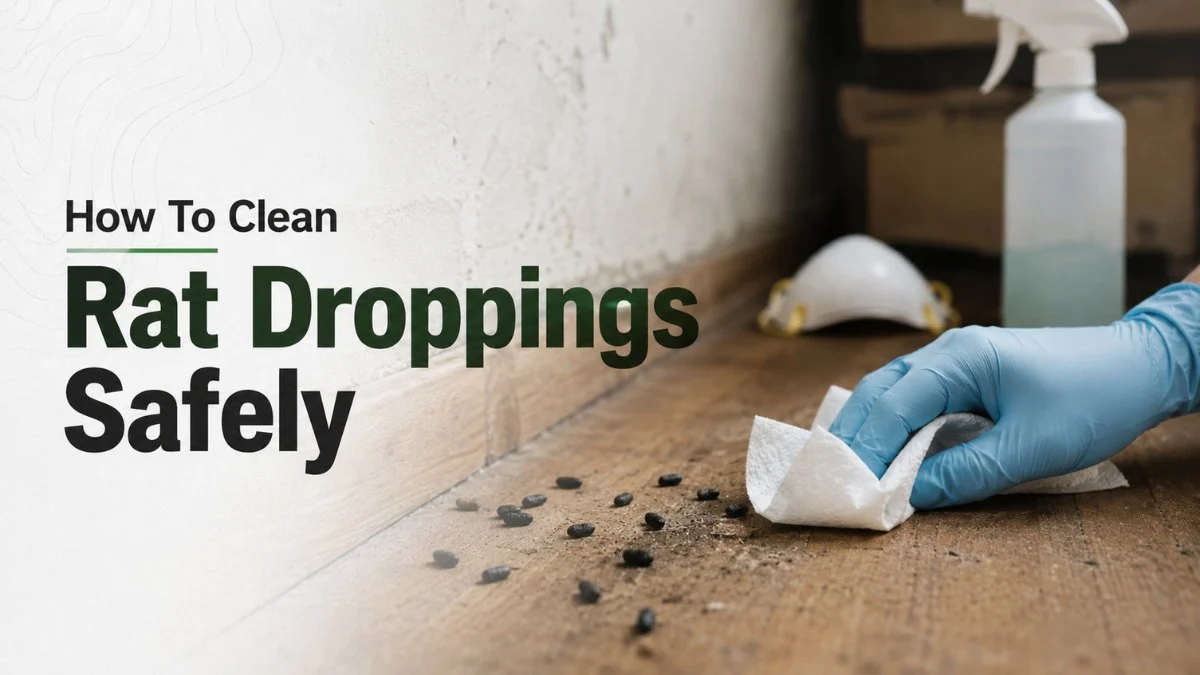
Here’s a quick overview of how to clean rat droppings safely:
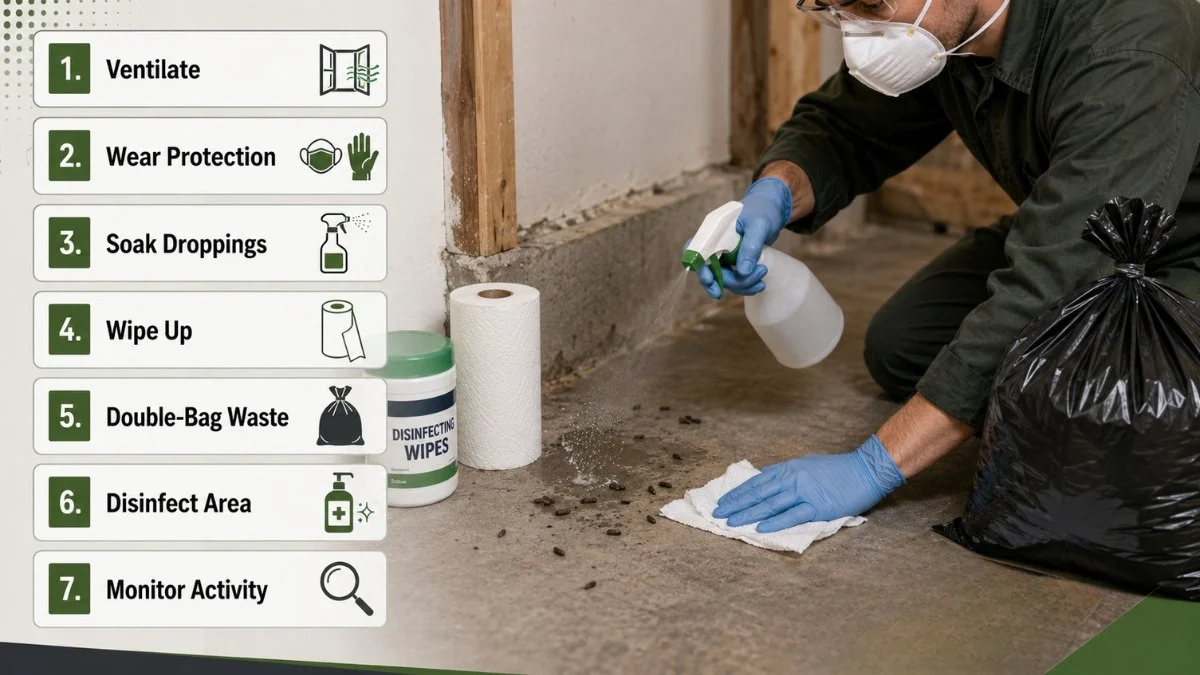
Ventilate the area.
Wear protection.
Spray the droppings with a bleach solution.
Wipe droppings up with a paper towel or disposable rag.
Dispose of the droppings appropriately.
Disinfect the area.
Monitor for activity.
Once the droppings are properly cleaned, it’s essential to implement pest control measures to ensure the rats (and their droppings) do not return. Below, I’ll go over each step of the cleanup process and offer attainable tips for keeping rats out of your home permanently!
* This post contains affiliate links.
How To Clean Rat Droppings Safely: 7 Steps
Let’s get right into it! An article in the Journal of Viruses reports that rodents, like common black rats and Norway rats, are potential carriers of nearly 60 diseases that can be transmitted to humans.
Rat droppings are especially concerning when they are old and dried out. Even small disturbances can send particles into the air, making them easy to inhale. And while not every rat dropping harbors a virus or bacteria, the idea of breathing in rat dropping particles isn’t exactly ideal.
One of the most concerning illnesses from rat droppings is the Hantavirus. If you’re concerned about this virus, head over to our article on Hantavirus from Rats. It offers key facts about how rats can transfer this illness to humans.
If you discover rat droppings in your house, it’s essential to follow the 7 steps below to ensure safe and effective removal of these deceptively dangerous droppings.
Step 1: Ventilate
The first step for how to clean rat droppings safely is to ventilate the area. Now, this doesn’t mean blast the air conditioning or heating. In fact, you’ll want to turn your HVAC system off as soon as you discover droppings.
Proper ventilation means opening windows and doors. Try to create a cross-breeze, but be sure to exit the area during the ventilation period.
Ideally, allow the area to air out for at least 30 minutes.
By the way, if you’re wondering where you might find rat droppings in your house, read our guide on where rats go during the day for information on where they’re most likely hiding.
Step 2: Protect Yourself
After the airing-out period, you’re ready to do some real cleaning. But, safety first!Put on some latex or rubber gloves and don a protective mask, like the 3M Particulate Respirator N95 mask.
Simple dust masks won’t cut it!
It’s not a bad idea to put on old clothing that you don’t mind getting dirty. Rats rarely travel out in the open, so you’ll most likely be in places that are dusty and grimy.
Step 3: Soak The Droppings
Soaking is one of the most important steps for how to clean rat droppings safely. You definitely don’t want to clean up dry rat droppings, as it can send the particles airborne.
Create a 10% bleach solution by combining 1.5 cups of bleach with a gallon of water. Place the solution into a spray bottle and completely saturate the droppings and the immediate area around the pellets.
Make sure the pellets are very wet. You really can’t overdo this part! Once the droppings are soaked, let the solution sit for at least 5 minutes. This not only reduces the chances of airborne particles, but it also eliminates any virus or bacteria within the pellets.
Step 4: Pellet Removal
Grab a garbage bag and a roll of paper towels or a stack of disposable rags. Wipe up all the droppings and place the paper towels or rags directly into the garbage bag.
It’s a good idea to use a work light or other bright light to illuminate the area. This will help you identify all the droppings so you don’t miss any tiny pellets hiding in corners or beneath joists.
Step 5: Proper Disposal
When all the rat droppings are wiped up, take the garbage bag, seal it, and place it in another garbage bag. Dispose of your gloves and mask in this second garbage bag and then seal it up tight.
Place the double-bagged droppings and protective materials outside, preferably in a trash receptacle that you put out for garbage night. This essentially eliminates any future risk of exposure.
Step 6: Disinfect
At this point, you’re probably ready to scrub your hands and jump in the shower, but there’s another important step to complete before washing up: Disinfecting the area.
So, grab another pair of rubber or latex gloves and your trusty spray bottle with the bleach solution. Return to the scene of the crime and spray down the entire area, making sure to cover an area at least two feet beyond where the droppings were.
Use a mop, sponge, or rag to wipe down the area completely, including baseboards, walls, counters, cabinets, and anything else within range that may have had skittering rat paws touching it. Rats can sometimes step in their own droppings and transfer particles to nearby surfaces, so it’s essential to disinfect anything near the site of the pellets.
Step 7: Monitor for Activity
Cleaning up rat droppings is essential for cleanliness, but if the rats are still hanging around your attic or yard, you’ll be cleaning up more pellets the next day. This is where pest prevention and monitoring come into play.
This final step for how to clean rat droppings safely is a three-prong approach:
Monitoring for rat activity
Employing pest prevention techniques
Monitoring again
One easy way to monitor for rat activity is by placing rat traps out to see if they are still present. Anyhall’s 2-Pack Rat Traps are perfect for catch-and-release.
Placement is important. Here are the best places to put the rat traps to monitor for rat activity:
Along baseboards
Against walls
In secluded corners
In cabinets
Beneath sinks
Basements
Attics
These areas are where rats feel the safest. Bait the traps with foods that are high in fat or sugar, like peanut butter, Nutella, cheese, or bacon.
Another way to monitor for rat activity is to look for signs of their presence. This might include gnaw marks, oily smudges on walls, or noises like scratching and scurrying in the attic or wall voids.
How To Keep Rat Droppings Out Of Your Home
To prevent rat droppings from finding their way into your home, you’ll want to keep the ones responsible for the droppings (rats) out of the house. Luckily, there are a few techniques you can use to make your home a no-go zone for these whiskered villains.
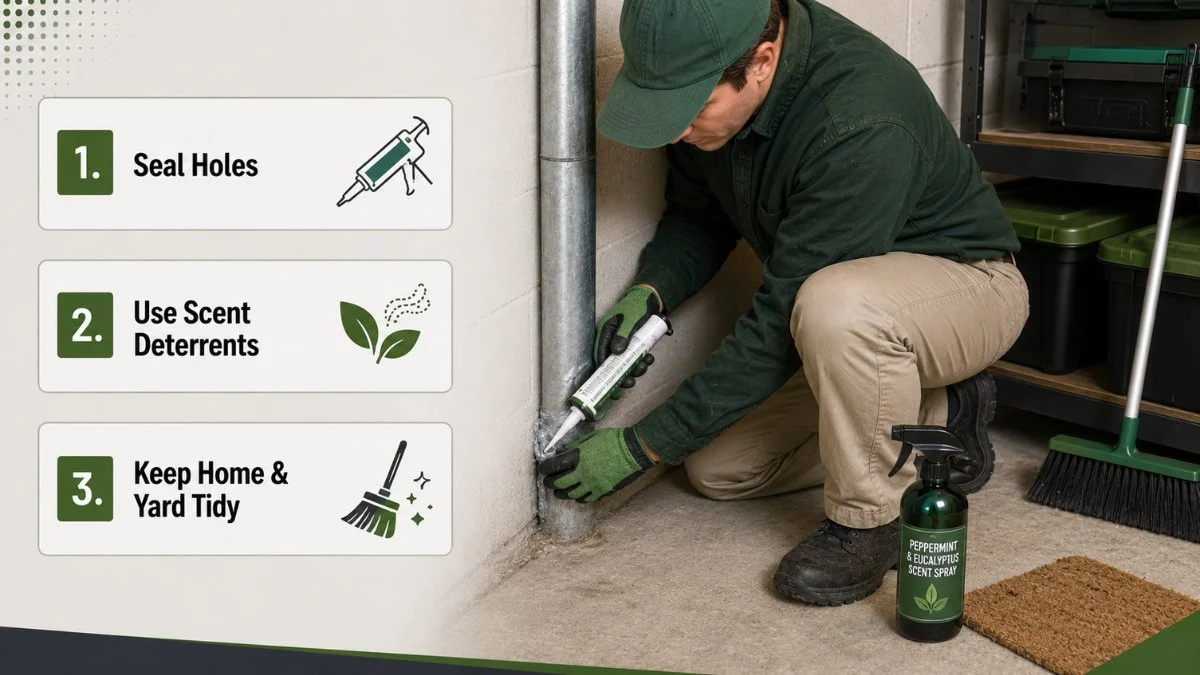
Seal Holes
Rats can squeeze through openings as small as ½-inch (1.27 cm). To prevent pesky rodents from entering the home, you’ll want to seal up all openings.
Here’s where you’re most likely to find openings around the home:
Utility lines: Check where water and electric lines enter and leave the house. Over time, gaps can appear here and can be sealed with caulking and steel wool.
Foundations: As the ground shifts, cracks can form in the foundation of your home. Seal these with caulking and cover them with hardware cloth, as rats can chew through caulking.
Vents: Check all the vents leading outside, including fans, heating and cooling systems, and the chimney. Ensure there is metal screening over the openings to prevent any sneaky rats from coming inside.
Drain pipes: Rats, especially Norway rats, have no qualms about running or swimming through drain pipes. Make sure floor drains have covers over them to prevent entry.
Doors and windows: Rats will chew through weather stripping to get inside. Frequently check the space beneath doors to ensure they are sealed, and repair any damage to window screens.
If you’re worried about rats sneaking in through your garage doors, check out our guide on the 9 tips to rat-proof your garage.
Use Scent Deterrents
Instead of reaching for those chemically-laden rat deterrents, why not try a few natural scents that are effective and safe? Simple scents like clover and citronella can be effective enough to deter rats from the home.
Here are some of the best scents to use to deter rats:
Clover
Garlic and onion
Hot peppers
Ammonia
Coffee grounds
Peppermint
Eucalyptus
White vinegar
Citronella
Cat scent (used litter!)
There are several different ways to utilize these scents, such as using the essential oil combined with water, creating a spray, or simply sprinkling the deterrent in undisturbed areas or where there are signs of rats.
Our article on the 15 scents that rats hate goes over each scent in more detail and how to use them to ward off those rambunctious rats.
Keep Your Home and Yard Tidy
Rats are attracted to yards and homes for three foundational reasons: Food, water, and shelter. If you can eliminate all three of them, rats are very unlikely to stick around for long.
Keeping your yard and home tidy hits two of the three rat necessities. By keeping up with dishes, cleaning up spills, and tidying up the yard, you’re eliminating sources of food and shelter.
Here are some areas to pay close attention to when tidying up your property:
Wood piles: Brush piles should be eliminated as soon as possible. Stack firewood off the ground. Store unused materials off the ground or in a shed.
Lawn maintenance: Keep the grass mowed short, bushes trimmed, and any tree limbs trimmed back from the house. This eliminates rat hiding places (shelter).
Spills: Clean up all food and drink spills as soon as they occur. Keep up with dishes to prevent food particles from building up in the sink.
Storage: If you must keep materials like paper and cardboard in storage, ensure they are in a hard plastic or metal container. Rats use this for nesting material and will move right in rent-free when these materials are freely available.
Read our rat control tips article for a more in-depth look at how to get rid of rats fast!
That’s A Wrap!
Rats are often associated with dirty streets, garbage, and spreading disease. Even when they’ve vacated an area, the small pellets they leave behind can still be a cause for concern.
Rat droppings may carry diseases like the Hantavirus, so it’s essential to use the proper technique to clean up pellets.
To recap, here’s how to clean rat droppings safely in 7 simple steps:
Ventilate the area
Put on protection
Soak the droppings
Wipe the droppings up
Dispose of the droppings properly
Disinfect the area
Monitor for rat activity
If you’re finding rat droppings all over the house, it may be beneficial to reach out to a pest control specialist instead of handling the situation on your own. Our pest control finder can locate a pest professional in your neighborhood!
Otherwise, sealing up entry points, keeping the yard tidy, and using scent deterrents are powerful, eco-friendly ways to keep rats and their droppings out of your home. Happy repelling!
Robyn is your friendly neighborhood writer, editor, and published author - boasting many years of experience in pest control, from which she magically weaves words into the captivating and engaging posts as we know them. When not tucked behind her laptop screen, she can be found embracing nature in the most thrilling ways possible. Rock climbing? Yes, please! Hiking? Absolutely! Traveling the U.S. with her husband, their lovable three-legged dog, and two mischievous cats? That’s her everyday reality. They live, love, and work in their cozy campervan, letting the road take them where it will, and finding inspiration in every sunrise, mountain peak, and wildlife sighting they encounter. Check out my Profile.
Pest Pointers was started in a cozy corner of Upstate New York, known for its expansive pastures, dense woods, and abundant wildlife pests. We are dedicated to providing YOU with solutions and insights into managing common pest issues. Starting out on over 50 acres of land and a freshwater bass pond with abundant pests, we combine firsthand experience with dedicated advice to help you tackle even the toughest of critters!