
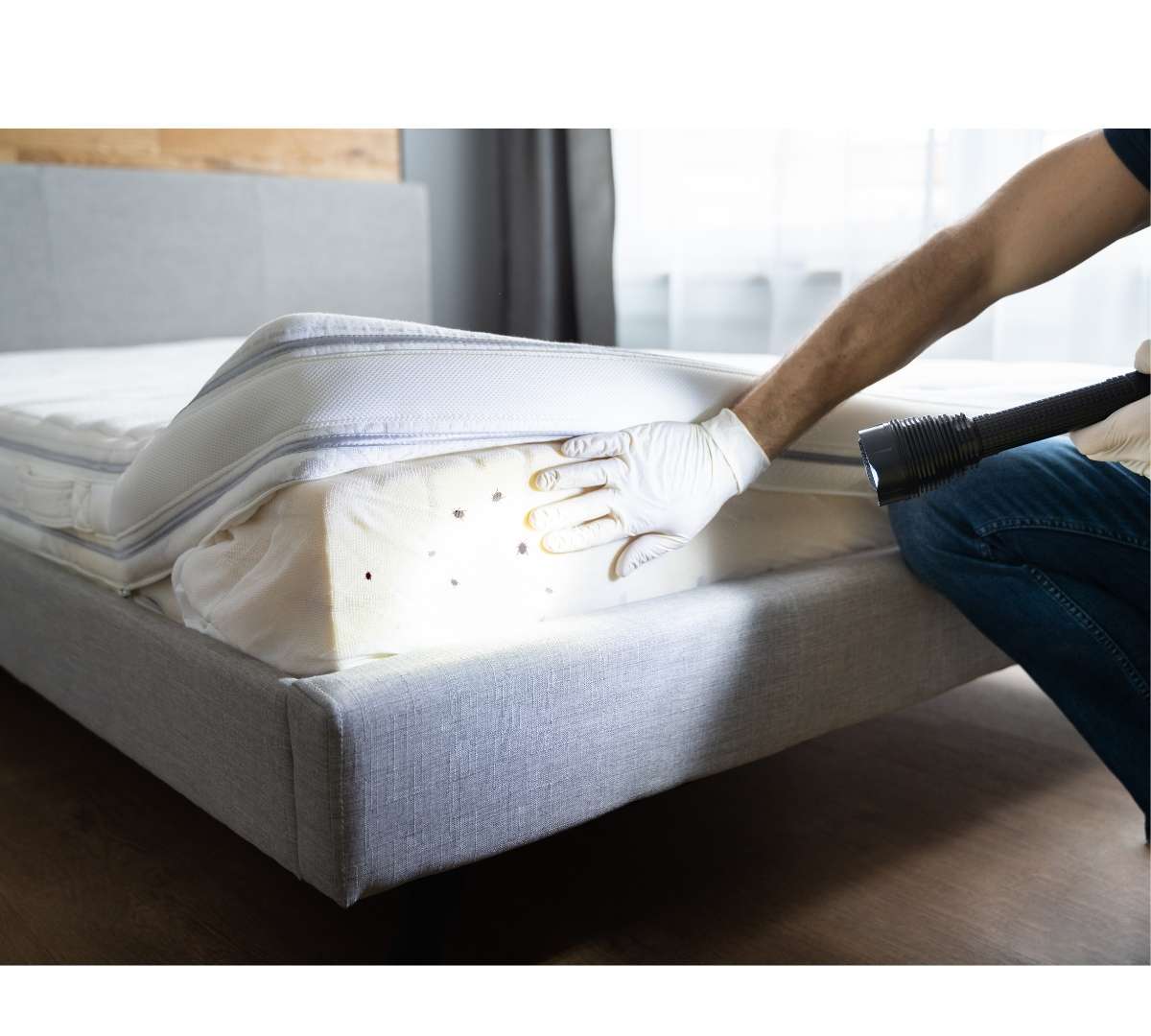
You can find bed bugs at any time of day or night. However, they are more active at night because they love the dark. So, you can stage an ambush on bed bugs in the daylight to get rid of those pests.
This guide covers how to find bed bugs in the daytime, including 10 easy ways to find and eliminate them. Bed bugs are usually dormant during the day, so you can find them by checking the areas they most commonly hide, like your mattress, furniture, luggage, living spaces, walls, and floorboards.
Read on for instructions on how to find bed bugs in the daytime and what to do once you find them. We’ll also cover some ways to repel these uninvited guests from your home using eco- and pet-friendly deterrent methods!
How To Find Bed Bugs In The Daytime: 10 Ways
Let’s get right into how to find bed bugs during the day! Bed bugs are a common pest in the home, especially the bedroom. This pest is on the rise and doesn’t distinguish between a rundown apartment building or a luxurious 5-star hotel – they can be found anywhere!
Bed bugs must feed on blood to continue their lifecycle, which is why they’re commonly found in the bedroom. These blood-sucking insects most often feed on humans at night.
During the day, bed bugs hide away in dark cracks and crevices, making it difficult to locate and eliminate them. In the hunt for how to find bed bugs during the day, it’s important to note that bed bugs are most likely to hide in materials made of wood, paper, or fabric as opposed to metal or plastic.
Luckily, this article will uncover all the favorite hiding places of bed bugs and offer tips on how to eliminate them now and repel them in the future.
1. How to find bed bugs in your Immediate Surroundings
The University of California tells us that most bed bug hiding places occur within 6 feet or less of areas where humans sleep. So, the first step for how to find bed bugs during the daytime is to check the immediate surroundings of your bed.
Bed bugs are small, around 1/5-inch (0.5 cm), oval, and lack wings. They have flattened bodies and are typically rusty red or mahogany colored.
Inspect the top of your bedding, linens, and mattress for the presence of bed bugs. You may notice red splotches on your bedding, which can happen when you roll over on an engorged bed bug at night. Carefully check beneath the sheets where bed bugs may lie dormant during the day.
It’s not common for bed bugs to hang out on top of your bed during the day. They prefer dark, hidden places. However, this is a good place to start and may reveal a few stragglers, giving you a positive ID on the pest in question.
2. how to find bed bugs in Mattress Seams
If you’re wondering how to find bed bugs during the day, mattress seams and tufts rank high on the list! If you have one, take a magnifying glass and thoroughly inspect the seams of your mattress, turning them over to get a visual on each side of the seam.
Do the same with any tufts or tags attached to the mattress. It’s best to do this after you have stripped the bedding off the mattress, making it easier to identify any crawling critters.
Even if you don’t see any actual bed bugs, check for small reddish-brown dust particles. These are bed bug fecal matter and are another way to positively identify that you have a bed bug infestation.
3. How To Find Bed Bugs In The Box Spring
Not all beds come with a box spring nowadays, but if your mattress sits on a box spring, bed bugs may sneak inside and hide away in the wooden joints. Most box springs are covered with fabric, making it a difficult task to identify bed bugs.
If you’re able, take a flashlight and check all the wooden joints of your box spring, especially near any openings or tears in the fabric where bed bugs are likely to crawl through. Remember, these pests are tiny! Even small pinholes in the fabric are a highway for bed bugs.
4. How to find bed bugs in bed frames
Another way to detect bed bugs during the day is to search the joints and screw holes of your bedframe. Any small opening or crack should be thoroughly investigated for the presence of bed bugs. These small insects can squeeze into the smallest openings, so a magnifying glass and flashlight may be helpful during your search.
If there are any areas of damage on your bed frame, such as cracks, dents, or crevices, check those areas as well.
Bed bug eggs may be found in any of the listed areas here, so be sure to look for egg casings as well. Our article on the 7 ways to identify bed bug eggs articulates what bed bug eggs look like and where you’re most likely to find them.
5. How To Find Bed Bugs In Baseboards and Headboards
During the day, bed bugs may hide behind baseboards and headboards. It may be difficult to detect bed bugs behind baseboards unless you are willing to remove the baseboard from the wall and physically look behind it.
Bed bugs may also find their way behind headboards, which often rest against a wall and offer a dark hiding place between the headboard and the wall. As long as your headboard is not attached to the wall, this can easily be achieved by moving the bed away from the wall and inspecting the space behind.
If you don’t wish to remove the baseboards, you can still check for evidence of bed bug activity by looking for signs of egg casings, fecal matter, or shed skin from moltings.
6. How to Find Bed Bugs On Nearby Furniture
Most bedrooms have more furniture than just a bed. You may have a dresser, nightstand, or TV stand. Similar to checking the bed frame, check any furniture that sits close to your bed for the presence of bed bugs.
Pay special attention to screw holes, cracks, crevices, and joints. Bed bugs like to be tucked away and hidden during the day, but with a flashlight and magnifying glass, you may see them snoozing on nearby furniture.
7. How To Find Bed Bugs In Electrical Outlets and Switches
Electrical outlets aren’t a common hiding place for bed bugs, but it is a dark place to hide with an easy opening from your bed. Trip the breaker for the electrical outlet before attempting to look for any bed bugs.
Once the power to the outlet has been shut off, carefully remove the outer casing with the proper screwdriver and inspect the space behind the outlet with a flashlight and magnifying glass.
Light switches are another place where bed bugs might hide during the day. They can squeeze behind the outer covering. Trip the breaker for the switch before using a screwdriver to remove the covering. Then, take your trusty flashlight and magnifying glass and search behind the light switch for any pesky bed bugs.
8. How To Find Bed Bugs In Drawers
Bed bugs are sneaky! If they’re hiding in the drawers of your dresser or nightstand, it’s important to check every inch of the drawer, including the tracks beneath.
Empty out the contents of your dresser or nightstand drawers and use your flashlight to inspect the corners of the drawers, paying special attention to any dents, cracks, or damaged areas.
Next, remove the drawer entirely and check all the space beneath and behind the drawer, including the tracks, screw holes, joints, cracks, and damaged areas.
9. How To Find Bed Bugs Behind Picture Frames
Picture frames or art that are hung on the wall are easy hiding places for bed bugs. Even if the picture frame feels secure against the wall, there is likely a minuscule opening somewhere between the wall and the frame.
That’s where these troublesome pests find their way in!
To find bed bugs behind picture frames or artwork, gently remove the frame from the wall and inspect the underside of the frame. Take special note of corners and where any wood parts join together.
It’s unlikely, but you should also check the wall behind the frame, as bed bugs may mistake this space as a hiding place and be revealed as soon as you remove the frame.
10. How To Find Bed Bugs in Luggage and Outside Sources
Anytime you bring a bag inside the home that has touched the floor in an area with high human traffic (such as an airport!), it’s essential to check every crevice for any unwanted hitchhikers.
Luggage, gym bags, and even furniture you buy from a store should all be inspected before entering your home.
- Luggage & Gym Bags: Use a flashlight and magnifying glass to inspect the seams, straps, and pockets of your luggage or gym bag. Use a nozzle attachment on a vacuum and go over every inch of the bags. Remember to empty the vacuum outdoors, away from your house.
- Furniture: Whether you got it at a bargain store or Facebook Marketplace, it’s critical to inspect used furniture before bringing it inside. Check all seams, zippers, tags, and tufts for any hidden bed bugs. If the furniture has drawers, remove them and check the tracks and inside corners.
- Laundromat Clothes: If you wash your clothes at a laundromat, be sure to scan your clothes before putting them back in storage. If someone with a bed bug infestation washes and dries their clothes at the same laundromat, these pests may sneak into your clothing, hitching a ride home with you.
The most important thing about bed bugs on luggage and outside sources is to search for these pests before bringing the item back into your home. Once a bed bug infestation begins, it’s very difficult to control.
What To Do If You Find Bed Bugs
If you try some of the tactics discussed above and discover bed bugs in your home, what should you do? While your first thought may be to sell your house, there are easy, attainable ways to repel and eliminate bed bugs from your bedroom and home.
That said, bed bug infestations can be difficult to control at every stage. If you find that the below recommendations aren’t working out, you can always contact a pest control specialist for help.
By the way, if you find a bug during your inspections but you’re not sure if it’s a bed bug, read our article on the difference between fleas, ticks, and bed bugs for clarification.
Physical Deterrents
To keep bed bugs off your bed, you can use ECOPEST Bed Bug Interceptors. These are placed beneath the legs of your bed and prevent bed bugs from crawling up onto your box spring and mattress.
Another option is to use Diatomaceous Earth, which is a silica-based substance that cuts into the shell of bed bugs when they walk over it, drying them out. Bed bugs will not cross diatomaceous earth, so it is an excellent physical deterrent to put around your bedroom.
Be aware that pets and children should not come in contact with diatomaceous earth, and it should always be applied according to directions to avoid creating dust.
We have an article on the 7 best diatomaceous earth products for bed bugs that dives into the details of using this physical deterrent for bed bugs.
Use Heat Or Cold
Bed bugs can be eliminated with temperatures above 130°F (55°C) for three hours or more. Alternatively, temperatures below 32°F (0°C) for several days will eliminate bed bugs.
To use heat or cold, wash all bedding on the highest heat possible and dry it at the highest heat. Do the same with any affected clothing or bags if they are machine washable.
Alternatively, place the affected items in a plastic bag in the freezer for a week to eliminate bed bugs.
Head over to our article on the 6 ways to kill bed bugs fast for more guidance on eliminating these troublesome pests.
Monitor with Sticky Traps
Sticky traps are an excellent tool to monitor how well you’re doing in your battle against bed bugs. Start using them as soon as you realize you have an infestation. This offers a baseline.
Something like the MaxGuard Bed Bug Traps works great, providing 24 sticky traps so you can keep replacing them when they get full.
After implementing the above deterrent and repellent techniques, keep placing new sticky traps to see if populations are decreasing. Just know that sticky and glue traps will not eliminate an infestation. They should be used for monitoring purposes only.
Sticky traps can also help in the search for how to find bed bugs during the daytime. Place sticky traps in some of the areas discussed above and see where you catch the most critters. Then, focus your repellent techniques there.
You can read more about whether glue traps work for bed bugs here.
That’s All We’ve Got!
Bed bugs are a stressful pest to have in the home, especially when you find them in your place of rest. Bedrooms are the most likely place to harbor bed bugs, as they need to blood feed to complete their lifecycle.
Bed bugs are most active at night when we are asleep and an easy prey. However, you can use this to your advantage by seeking these pests out during the day to eliminate them.
To recap, the 10 ways to find bed bugs during the day are:
- Immediate Surroundings of the Bedroom
- Mattress Seams
- Box Springs
- Bed Frames
- Baseboards and Headboards
- Nearby Furniture
- Electrical Outlets and Switches
- Drawers
- Behind Picture Frames
- In Luggage and Outside Sources
Once you find bed bugs, use a vacuum or other means to physically remove the bugs, employ sticky traps, and treat all affected items with high heat or cold. If the infestation is severe, reach out to a pest control specialist for help.
Hopefully this article has covered some ground on how to find bed bugs during the daytime. Happy hunting!
References
Abdel-Nasar MB, Lotfy RA, Al-Sherbiny MM, and Ali NMS. 2006. Patients with papular urticaria have IgG antibodies to bedbug (Cimex lectularius) antigens. Parasitol. Res. 98: 550–556.
Abou Gamra ESM, El-Sayed FA, Morsy TA, Hussein HM, and Shehata ESZ. 1991. The relation between Cimex lectularius antigen and bronchial asthma in Egypt. J. Egypt. Soc. Parasitol. 21: 735–746.
Doggett, S. L., Dwyer, D. E., Penas, P. F., & Russell, R. C. (2012). Bed Bugs: Clinical Relevance and Control Options. Clinical Microbiology Reviews, 25(1), 164–192.
Harlan, H. J. (2006). Bed Bugs 101: the Basics of Cimex lectularius. American Entomologist, 52(2), 99–101.
Bauer-Dubau, K. 2004. Invasion in deutschen Betten: Bettwanzen. Ärzte Zeitung, 30.09.2004. Blow, J., M. Turell, A. Silverman, and E. Walker. 2001. Stercorarial shedding and transtadial transmission of hepatitis B virus by common bed bugs (Hemiptera: Cimicidae). J. Med. Entomol. 38: 694–700.


