Quick answer: How to treat bed bugs at home: bag and dry all bedding and clothes on high heat for 30 minutes, vacuum and steam the mattress, bed frame, furniture, and baseboards, freeze small items at 0°F for four days, then encase the mattress and box spring and put interceptors under the bed legs. Use only EPA-registered bed bug products on cracks and crevices, and repeat every one to two weeks until you see no signs for several weeks.
Waking up to itchy bites and tiny rust-colored spots on your sheets is unsettling. Your first thought is probably how to get rid of them yourself, fast, without spending a fortune.
You can do a lot on your own, especially if you catch the problem early. In this guide, I’ll walk you through how to treat bed bugs at home room by room, what to buy, what doesn’t work, and when it’s time to call in a pro. If you’d like a longer-term plan, our guide on how to get rid of bed bugs permanently covers follow-up and prevention.
* This post contains affiliate links.
Before You Start: Make Sure It’s Bed Bugs
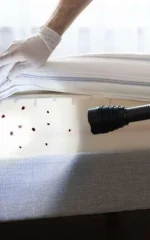
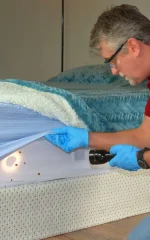
Bites alone don’t prove bed bugs, since many people don’t react to them and other pests bite too. Look for live bugs, dark fecal spots, pale eggs, and shed skins along mattress seams, the box spring, and the headboard. Our guide on how to find bed bugs shows you where to look, and bugs that resemble bed bugs helps rule out look-alikes such as carpet beetles and bat bugs.
What You’ll Need
Large plastic bags or bins with lids
A vacuum with a crevice tool and a disposable bag (or a canister you can empty outside)
A clothes steamer or steam cleaner that reaches at least 130°F, with a fabric diffuser
Bed bug-proof encasements for the mattress and box spring
Interceptor cups for each bed leg
An EPA-registered bed bug spray and a desiccant dust such as silica gel or pesticide-grade diatomaceous earth
A flashlight and a thermometer for checking your freezer
How to Treat Bed Bugs at Home: Step by Step
1. Contain the Problem
Keep sleeping in your bed. Moving to the couch or a guest room spreads bed bugs to new rooms. Bag anything that comes out of the infested room before carrying it through the house, and seal the bags tightly. The EPA recommends keeping items you can’t treat sealed in plastic for up to a year.
2. Heat Everything That Fits in the Dryer
Heat is your best home weapon. The EPA says putting bedding and clothing in the dryer at high temperatures for 30 minutes kills bed bugs, and that washing alone generally won’t. Shoes, stuffed animals, backpacks, and curtains can go in too if their labels allow it. University of Minnesota Extension notes that bed bugs and eggs die within 90 minutes at 118°F, or immediately at 122°F.
After drying, put items straight into clean bags and keep them sealed until the room is clear.
3. Freeze What You Can’t Heat
Books, electronics, and delicate items that can’t go in the dryer can be frozen. UMN Extension says a freezer at 0°F works if items stay in it for at least four days, counting from when the center of the item reaches 0°F. Many home freezers run warmer than that, so check yours with a thermometer first.
4. Vacuum Every Hiding Spot
Vacuum mattress seams, the box spring, the bed frame, headboard, nightstands, carpet edges, and baseboards. Scrape the crevice tool firmly along seams to dislodge eggs. Seal the vacuum bag in plastic and throw it away outside right after each session.
5. Steam the Mattress and Furniture
Steam kills bed bugs and eggs on contact. Move the steamer slowly, about an inch per second, along seams, tufts, and furniture joints. The EPA says the steam should reach at least 130°F, and a diffuser keeps the airflow from blowing bugs away. For more contact-kill options, see our guide on what kills bed bugs.
6. Encase the Mattress and Box Spring
Zip the mattress and box spring into bed bug-proof encasements. Any bugs inside are trapped and die, and the smooth surface makes new bugs easy to spot. Leave the encasements on for at least a year.
7. Treat Cracks and Crevices
Use only EPA-registered products that list bed bugs on the label, and follow the directions exactly. Spray cracks in the bed frame, behind baseboards, and around furniture joints, not the sleeping surface. Puff a thin layer of desiccant dust into wall voids, behind outlet covers, and under baseboards, where it keeps working for months. Read our guide to the best diatomaceous earth for bed bugs before you buy.
8. Isolate the Bed and Monitor
Pull the bed a few inches from the wall, keep sheets and blankets off the floor, and set an interceptor under each leg. Interceptors catch bugs going up or down and tell you whether the treatment is working. Check them weekly and repeat vacuuming and steaming every one to two weeks.
Home Treatment Methods at a Glance
Method
What it kills
Best for
Dryer on high, 30 min
All life stages
Bedding, clothes, shoes, soft toys
Steam (130°F or hotter)
Bugs and eggs on contact
Mattress seams, furniture, carpet edges
Freezer at 0°F, 4+ days
All life stages
Books, electronics, small items
Vacuuming
Removes bugs and some eggs
Seams, baseboards, carpets
Desiccant dust
Bugs that crawl through it, over weeks
Wall voids, outlets, under baseboards
Labeled insecticide spray
Bugs it contacts; some have residual action
Cracks in frames and furniture
What Doesn’t Work
Bug bombs and foggers: They don’t reach the cracks where bed bugs hide and can drive them deeper into walls.
Rubbing alcohol: It only kills bugs it soaks directly, and it’s a serious fire hazard.
Washing alone: The dryer’s heat does the work, not the wash cycle.
Throwing out the mattress: A new mattress gets reinfested if the room isn’t treated.
When to Call a Professional
UMN Extension says bed bugs are very difficult to control on your own and recommends working with a pest professional. Call a licensed pest professional if you still find live bugs after a month, if bugs have spread to several rooms, or if you live in an apartment where they can travel between units. Rutgers recommends a 30-minute dryer cycle for bedding and four days in a 0°F freezer for small items. Those steps protect your belongings, but they don’t reach bugs hiding in walls and furniture.
That’s a Wrap!
So, how do you treat bed bugs at home? Contain the room, run everything you can through a hot dryer, freeze what you can’t heat, vacuum and steam every seam, encase the bed, treat cracks with labeled products, and monitor with interceptors. Repeat every one to two weeks. If live bugs keep turning up after a month, bring in a pro. To spot new activity early, learn how to identify bed bug eggs.
Keep Pest Pointers in mind for all your pest control needs!
How to Treat Bed Bugs at Home: FAQs
Can you treat bed bugs at home yourself?
Yes, small infestations caught early can often be controlled with heat, freezing, vacuuming, steaming, encasements, and labeled products. Larger or multi-room infestations usually need a professional.
What kills bed bugs instantly at home?
Direct heat kills them fastest. Steam at 130°F or hotter kills bugs and eggs on contact, and the University of Minnesota says bed bugs and eggs die immediately at 122°F.
How long does it take to treat bed bugs at home?
Expect several weeks to a few months. Repeat vacuuming and steaming every one to two weeks and keep monitoring until you see no signs for several weeks in a row.
Do I need to throw away my mattress?
Usually not. Vacuum and steam it, then seal it in a bed bug-proof encasement for at least a year. A new mattress can get infested if the rest of the room isn’t treated.
Do bug bombs work on bed bugs?
No. Foggers don’t reach the cracks and crevices where bed bugs hide and can push them deeper into walls and furniture.
Will a freezer kill bed bugs?
Yes, if it holds 0°F. Keep items in it for at least four days after their center reaches 0°F, and check the freezer with a thermometer, because many run warmer.
Amos is your go-to editor and pest advice enthusiast, blending years of hands-on experience into clear, practical guidance for everyday pest problems. Growing up on a farm near Grandville, Michigan, he spent his days outdoors, learning to deal with wildlife, pests, and nature in real-world settings rather than just from a textbook. That upbringing turned him into a genuine nature lover, comfortable in fields, woods, and around all the critters that come with them. Today, he channels that background into approachable, science-informed articles that help homeowners protect their spaces without overcomplicating the process. When he’s not polishing guides or answering pest questions, you can imagine him most at home outside—observing animal behavior, walking the land, and turning those observations into practical tips you can actually use. His mission is simple: to give you straightforward, reliable pest pointers so you can spend less time worrying about infestations and more time enjoying your home and yard. Check out my Profile.