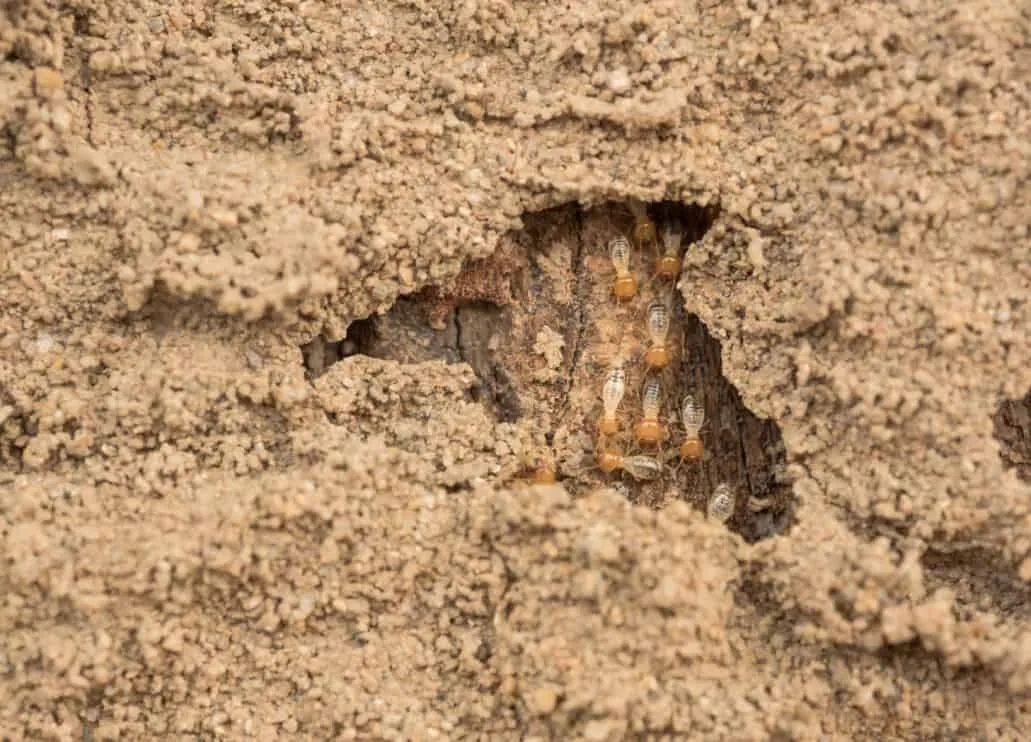
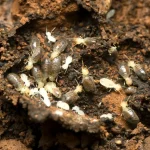
Termites are one of the most significant pests in the world, and it can be concerning to find them crawling around in your potted plants or emerging from mounds in the soil. When you find these pesky insects in plants and soil, you may be wondering how to repel them.
You can remove termites in soil and from your potted plants with barriers, essential oils, nematodes, fungi, bait, boric acid, and home treatments. These pests are a nuisance both in and out of your home. By eliminating an infestation outdoors, you’re more likely to prevent indoor infestations.
Termites prefer debris, fallen limbs, and tree stumps, but will also eat roots and fruit from plants, along with wood from the structure of your home. Read on to learn more about how to deter termites in soil and potted plants.
* This post contains affiliate links.
Where Do Termites Come From?
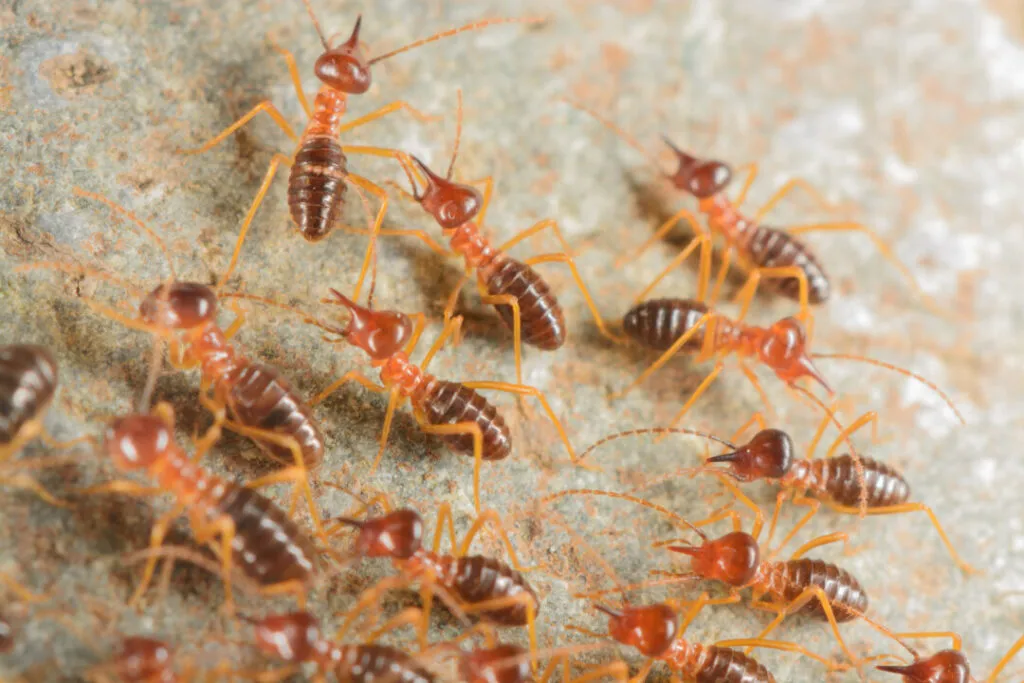
Termites in soil in North America are usually subterranean termites known as Reticulitermes flavipes, and they have been around for a long, long time. Like over 55 million years!
Termites in soil and potted plants are usually time-consuming to get rid of and require a bit more effort than other pests. If you find termites in soil or potted plants, there are a few places they may have come from:
Winged Swarmers: When a termite colony gets too large, it produces winged termites that swarm, mate, and disperse to form other colonies. The termites in your yard and potted plants may be simply a new colony forming. You can learn more about swarming termites and what they mean here.
Nearby Infestations: Termites don’t respect property lines. If your neighbor has termites, these insects are likely crossing borders into your yard and home.
Established Colony: The last possibility is that the termites you’re seeing in the soil and potted plants are an already-established colony. Termites are secretive and can survive unnoticed for years.
Termites in soil and potted plants are less of a threat than termites inside the home. However, an outdoor colony can quickly become an indoor colony, so it’s important to take precautions and repel these insects while they’re still outdoors!
You can read more about how termites spread here. The article dives deep into how termites make their way from your neighbor’s doorstep to yours.
Is It A Termite?
Finding an unknown pest around the home is concerning, but before you employ our recommended termite repellents, it’s important to make sure you’re actually dealing with termites and not some other, benign pest.
Termites are most commonly mistaken for winged ants. Several key characteristics can help identify the difference between a termite and a flying ant.
Types of Termites In Soil
A termite colony consists of reproductive queens and kings, workers, soldiers, and swarmers.
It’s unlikely you’ll ever see a king or queen termite because they remain in the nests, and their only job is to grow the colony. They are dark brown or black and can be up to 1/2-inch long (1.27cm).
Worker termites are wingless and light brown to creamy white. Workers are typically 1/4-inch (0.65cm) and comprise the largest portion of the colony. These termites do the most damage by eating wood, and are responsible for feeding the rest of the colony, creating new galleries and tunnels, as well as termite tubes.
Soldier termites are the same size as workers, but have enlarged mandibles that are used to protect the colony from predators. They typically have yellow heads.
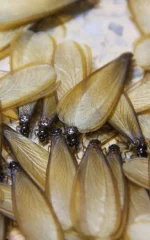
Finally, swarmer termites are a special caste that is only produced when the colony gets too large. Swarmers develop wings and leave the colony to form geographically distinct colonies. These are the termites you are most likely to see emerging from soil and potted plants.
Termite colonies have to get pretty big to produce swarmers. These flying termites are typically the only indication homeowners have that there are termites around. So, if you spot an insect that looks like a flying termite, you may be wondering if it’s actually a termite or, hopefully, something else!
Here are the major differences between termites and flying ants:
Body shape: If you’re brave enough to get close, check out the shape of the insect. A body with an oval waist is likely a termite. If it has a pinched waist (think of a wasp), then it’s probably a flying ant.
Wings: Flying termites have two sets of wings that are equal in size. Flying ants have unequal wings, with the front wings being longer than the rear wings.
Antennae: This may be too close for comfort, but if you can see their antennae, flying ants have bent antennae whereas winged termites have straight ones.
Termites in soil and potted plants are a cause for concern. On the other hand, flying ants are far less concerning for homeowners and easier to repel with DIY methods as opposed to a professional pest control specialist.
Here’s why termites are in your potted plants and Soil
A termite in a potted plant may seem like an unusual location, but it’s the perfect haven for these moisture-loving insects. While it’s unlikely to find a whole termite colony in a potted plant, it’s a great starting point or even a halfway point for termites to enter your home.
Moisture
Subterranean termites require moist environments to survive, and potted plants typically have high-quality potting soil that is regularly watered. Moisture is essential for termites because they, like many insects, have an exoskeleton that is susceptible to drying out.
Access to moisture is one reason why leaky hoses and gutters can attract termites to your home. Similarly, potted plants and soil that is regularly watered can also be a beacon for these voracious insects.
Access To Food
Potted plants are a great starting point for a new colony, especially if those plants are located near wooden structures like a porch or deck. Termites feed on cellulose, which comes in the form of wood and paper.
Roots are an excellent source of cellulose, making potted plants the perfect smorgasbord for termites. Cellulose can also be found in the potting soil itself, providing termites with a rich food source without ever having to leave home!
Close To Home
Potted plants are normally located close to the home. Whether it be on the porch, in landscaping, or even inside your home. Either way, this provides an easy bridge for termites to cross from the potted plants to the foundation of your home.
Once termites find the foundation of your home, they create termite tubes to safely and secretly travel from potted plants into the interior of your home, establishing colonies behind walls.
7 Ways to Repel Termites in Soil and Potted Plants
A variety of tactics can be used to repel termites in soil and from your potted plants. These eco-friendly, DIY methods are practical, effective, and safe for your family and pets when used as directed.
That said, it’s important to note that if you find termites inside your home, it’s best to consult with a pest control specialist. They have the knowledge and professional tools remove a termite infestation in the home.
You can check out our pest control finder here to find a pest specialist near you! Now, let’s discuss some DIY repellent methods you can try today.
1. Use Soil Replacements When Possible
Depending on the type of potted plant, you can use an alternative to cellulose-rich potting soil. For example, succulents can survive with minimal to no soil and can instead be planted with rocks.
Sand is another great soil replacement that improves water drainage. Unfortunately, many plants cannot survive with sand alone and require nutrient-rich soil. In these instances, it’s best to use alternative repellent techniques for termites in soil.
For plants in mulch, consider using a termite-resistant mulch. We have a fantastic article on 8 mulches that termites hate for tips and ideas!
2. Essential Oils Can Repel Termites
Essential oils are concentrated oils from plants, making them an eco-friendly alternative to synthetic pesticides. Not all essential oils will repel termites, and their effects are typically weaker than chemical termiticides. However, if you prefer natural, eco-friendly repellents, essential oils can be your best friend!
A study reported in the Journal of Chemical Ecology took a look at 8 essential oils and their effectiveness against termites. They found that vetiver and clove bud essential oils were the most effective against termites, with vetiver oil going beyond repelling and actually eliminating the termites!
There are several ways to use essential oils against termites in soil and potted plants:
Spray: Put 10-15 drops of essential oil per cup of water in a spray bottle. Shake up the bottle to evenly distribute the oil throughout the mixture. Spray this anti-termite concoction around the yard and potted plants to repel termites. Essential oils are concentrated, so a little bit goes a long way.
Remember, essential oils are natural products, so they need to be replaced often to keep the scent strong. Consider replacing your cotton balls or re-spraying once a week. You’ll also need to reapply after heavy rains, as the essential oils will get swept away in the water.
Check out our article on the 8 scents that termites hate for a more in-depth list of essential oils that are effective against termites in soil and potted plants.
3. Fungus Can Keep Termites Out Of Your Potted Plants
There is a common backyard fungus, Metarhizium anisopliae, that is documented to eliminate termites. It just needs to be mixed into your potting soil and is easy to come by.
This MET MASTER Metarhizium anisopliae is an excellent choice, just be sure to read all the directions for the proper water-to-fungus ratio.
4. Beneficial Nematodes Feast On Termites
Beneficial Nematodes are a type of worm that can only be seen on a microscopic level. These eco-friendly pest warriors come in many different kinds, but they all have one thing in common: They feed on the larvae of pest species.
If you’ve noticed termites in soil or potted plants, consider purchasing beneficial nematodes like Nature’s Good Guys Beneficial Nematodes. It comes in powder form and just needs to be mixed with water at the appropriate dilution level and added to the soil. Easy enough, right?
Here are some tips to get the most out of your beneficial nematodes:
Avoid sunlight: Apply your nematode mixture in early morning, evening, or on a cloudy day to avoid exposing the nematodes to sunlight.
Water: Wet the soil before and after applying the nematode mixture, but do not soak the soil.
Temperature: Nematodes work best when soil temperatures are between 42°F and 95°F (5.5°C and 35°C).
Avoid fertilizer: The high levels of nitrogen found in fertilizers can negatively affect nematodes. It’s best to wait at least two weeks after application to start using fertilizer again.
Nematodes are not an immediate fix. It takes time for the worms to eliminate every larvae of the termite colony. However, it is a very eco-friendly way to remove termites in soil and potted plants.
5. Boric Acid Repels Termites
Boric acid is derived from borax and comes in many forms, including powder, liquid, and pellets. It works in two ways to eliminate termites:
Ingested: when termites ingest boric acid, it reacts with their stomache and nervous system to eliminate them.
Contact: When termites come in contact with boric acid, the rough crystals scrape their exoskeletons, helping to dry them out.
You can find boric acid in the pest control aisle of most stores. It’s also widely available online in easy-to-use forms like baits and powders. Simply apply the boric acid or bait to areas that are affected by termites in soil and potted plants.
6. Wood Treatments Keep Termites At Bay
Treating wood to deter termites is an excellent way to prevent them from infesting your yard, home, and beloved potted plants. Boric acid is one method of treating wood, but there are many others.
Unfortunately, treating wood post-construction can be difficult and may be best handled by professionals with access to high-grade termiticides. If you prefer to go the DIY route, aim for borate-based products, neem oil, or ‘over-the-counter’ termiticides to treat the wood.
7. Cellulose Baits Can Rid You Of Your Termite Problem
Cellulose baits laced with a termiticide are another way to repel termites in soil and potted plants. Termites are attracted to the cellulose bait as a food source. Once they ingest the insecticide, it works to disrupt their nervous and digestive system, effectively eliminating them.
Baits are especially effective because the termites that typically eat the bait are workers. Worker termites are responsible for feeding the rest of the colony, including the king and queen.
With enough time, cellulose baits can potentially bring down an entire colony of termites. However, patience is key here, as it could take weeks to fully eliminate highly infested areas.
Preventing Termites From Returning
Now that you know how to repel termites from your yard and precious potted plants, it’s time to make sure they don’t come back! With a few DIY repairs and adjustments, you can make sure these destructive pests never step one of their six legs on your property again.
Start by making your home as unappealing to termites as possible. This means:
Remove moisture: Fix leaky pipes, damaged gutters, or low spots in the yard. Termites need moisture to survive.
Lower humidity: Try to make the area directly near your home as dry as possible. Add gravel, trim trees, and remove dense vegetation near your foundation and potted plants.
Replace mulch with rocks: If possible, replace mulching with rocks to further reduce humidity near the home.
Making your yard, potted plants, and home less hospitable to termites is a big step in repelling these pests for good! For more in-depth information, jump over to our guide on the 7 simple steps to keep termites from returning.
Wrapping Things Up!
Finding termites in soil or your potted plants may seem like a disaster, but the truth is you can use DIY pest control methods to repel termites once and for all.
To recap, the 7 ways to repel termites in soil and potted plants includes:
Soil alternatives
Essential oils
The fungus Metarhizium anisoplia
Beneficial nematodes
Boric acid
Wood treatment
Cellulose baits
Finding termites in soil and potted plants doesn’t necessarily mean you have an infestation in your home. However, if you suspect termites are also in your home, it’s best to reach out to a pest control specialist. Check out our pest control finder to locate one near you!
References
Benson, Chang, Zungoli. (2000). Screening of Natural Insecticides From Tropical Plants Against Fire Ants, Termites and Cockroaches. Clemson University. Pgs. 2-7.
Bodine, Uekert. (1975). Effects of Desert Termites on Herbage and Liter in Shortgrass Ecosystems in West Texas. Texas Tech University. Pgs 1-4.
Thamer. (2008). The Effect of Some Plants Extracts and Essential Oils on the Workers of Termites Laboratory Microcerotermes Gabriles. University of Basrah, Iraq. Vol. 7, 2-4.
Robyn is your friendly neighborhood writer, editor, and published author - boasting many years of experience in pest control, from which she magically weaves words into the captivating and engaging posts as we know them. When not tucked behind her laptop screen, she can be found embracing nature in the most thrilling ways possible. Rock climbing? Yes, please! Hiking? Absolutely! Traveling the U.S. with her husband, their lovable three-legged dog, and two mischievous cats? That’s her everyday reality. They live, love, and work in their cozy campervan, letting the road take them where it will, and finding inspiration in every sunrise, mountain peak, and wildlife sighting they encounter. Check out my Profile.
Pest Pointers was started in a cozy corner of Upstate New York, known for its expansive pastures, dense woods, and abundant wildlife pests. We are dedicated to providing YOU with solutions and insights into managing common pest issues. Starting out on over 50 acres of land and a freshwater bass pond with abundant pests, we combine firsthand experience with dedicated advice to help you tackle even the toughest of critters!