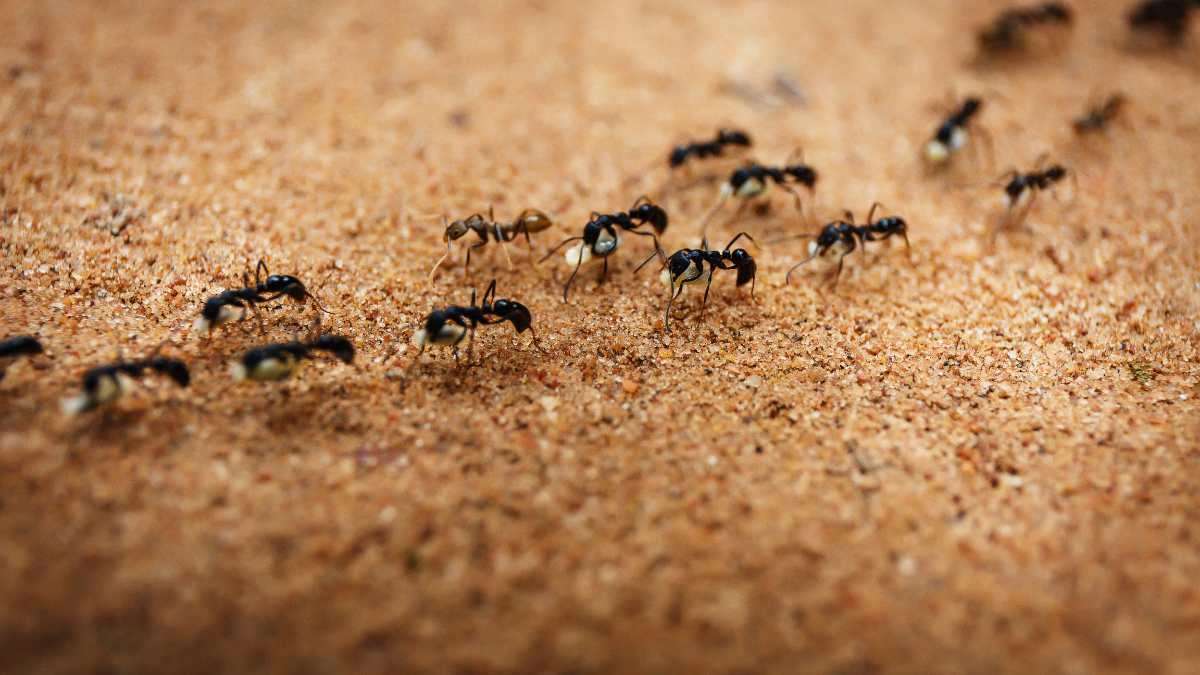
Ants are a common springtime pest that invades homes in large numbers. Ants may also affect garden plants, protecting honeydew-producing insects like aphids, soft scales, and whiteflies, which damage garden plants. One way to take care of these pests naturally is by encouraging their predators, but you may be wondering what eats ants?
So, what eats ants naturally? Well, several predators can control ant populations:
Birds
Spiders
Lizards
Toads
Other insects
Bears
In addition to answering what eats ants, we’ll review some eco-friendly DIY pest control methods for ants that’ll remove them from your home and garden and keep them from coming back!
* This post contains affiliate links.
6 Predators That Eat Ants
Ants are plentiful, making them an easily accessible food source for many wild animals. The University of California states that there are over 12,400 species of ants worldwide, however, only a few species are considered pests.
Ants are attracted to food sources such as those found in buildings or by honeydew-producing insects in gardens and flowerbeds. Many ant predators are attracted to these same places as they search for a tasty meal.
But ants aren’t without their defenses! Depending on the species, these social bugs can bite, sting, and spray foul-smelling liquids at their enemy. Ants are social creatures, so their colonies band together to defend nests and food sources, attacking predators in numbers.
Despite this, many animals are still determined to have their ant snack. Below are 6 common predators that eat ants. Some you can attract to your yard using simple means, while others you might say are worse than the ants!
What eats ants? Read below to find out!
1. Birds Eat Ants
If you’re wondering what eats ants, birds are definitely at the top of the list! Insect-eating birds like woodpeckers, swallows, sparrows, wrens, grouse, flickers, and starlings will all readily eat ants when they are available.
Most birds will only eat ants opportunistically, meaning when ants are readily available. However, flickers consume ants as the main part of their diet, making them more effective at controlling ant populations.
How To Attract Birds For Ant Control:
Bird Feeder: Consider hanging a bird feeder near your garden or where you’ve noticed anthills. Fill the feeder with a mix of seeds, but make sure to include sunflower and thistle seeds. This will attract flickers, wrens, sparrows, and other ant-eating birds.
Suet Feeder: Woodpeckers love suet feeders. Suet is essentially the hard fat found on cattle, sheep, and other animals. Try Birds Choice Suet Bird Feeder paired with a suet cake to attract ant-eating woodpeckers.
Bird bath: Another way to attract ant-eating birds is to set up a bird bath or water source in your yard. Birds use water not only for drinking, but also to aid in cleaning their feathers.
Plants: Sunflowers are a fantastic addition to the yard and have the added benefit of attracting ant-eating birds! Daisies, coneflowers, asters, and goldenrod are also great choices.
When attracting natural predators like birds to your yard, remember that they can bring their own problems. Birds may leave their droppings on cars, build nests, and scatter seed that attracts other animals like mice, snakes, and coyotes. Always weigh the pros and cons before deciding to attract insect-eating birds or other ant predators to your yard.
If you’re wondering why ants are in your home in the first place, check out our article on why ants are in your room! It lists common things that attract ants and how to remove those attractants.
2. Spiders Hunt Ants
Another answer to the question of what eats ants is spiders. Now, if you don’t like having ants in your home, chances are you don’t want spiders either! However, spiders are an effective option for controlling ants that have invaded your garden.
Ants can be a detriment to gardens because they protect insects like aphids and soft scales, which will eat and destroy your garden plants.
Spiders aren’t picky about their meal, and just about any spider you find around your home would be willing to eat ants. Wolf spiders, brown recluse spiders, cellar spiders, yellow sac spiders, and orb weaver spiders are common eight-legged critters you may find around your home that will eat ants.
How to attract spiders to your garden and flowerbed:
Native Plants: Native plants are more likely to have native insects (like ants) crawling on them, which provides food for spiders.
Organic Gardening: Avoid using pesticides and herbicides in your garden, as this not only eliminates harmful insects and weeds, but also beneficial critters like spiders.
Leave Places Unkempt: Spiders prefer to build their homes and webs in undisturbed places. Leave some sections of your garden to grow wild and avoid disturbing that area, giving spiders a chance to build nests and homes so they can continue to feed on ants. Check out our guide on the 7 hidden places spiders go during the day for more inspiration on how to make these creepy crawlers feel welcome in your garden.
3. Lizards Chow Down On Ants
Wondering what eats ants other than birds and spiders? Lizards! Lizards can be found in most regions around the world and will readily feed on ants when they are available. The Texas Horned Lizard is an especially voracious predator of ants, making ants a staple of their diet.
Other lizards like the green anole, fence lizard, and some species of skinks will eat ants when they are available. Like spiders, you may not want lizards inside your home, but they can be beneficial predators in your garden.
How to attract lizards to your garden:
Sunning spots: Lizards are ectotherms, or cold-blooded. They depend on external sources of heat to regulate their body temperature and are attracted to objects that retain heat. Lay out some medium-sized rocks to attract ant-eating lizards to your garden.
Hiding spots: Lizards might eat ants, but in turn, lizards are food for other predators! Give them plenty of places to hide by creating rock piles, brush piles, or planting bushy plants that offer protection.
Avoid chemicals: Avoid pesticides and herbicides inside your garden. These are detrimental to the health of lizards, pollinators, and a host of other beneficial critters.
4. Toads Catch Ants
Toads are another critter that is easy to attract to your yard to control ant populations. Even though you don’t want them in your house, toads can actively control ant populations outside, lowering the chances of an ant invasion in your home or garden.
There are hundreds of species of toads, but the American Toad is the most common in North America. They commonly prey on invertebrates like spiders, slugs, worms, and those pesky ants!
How to attract toads to your yard:
Provide shelter: Toads like to hide beneath shady plants that provide a humid environment. You can also buy a toad house like the Design Toscano Store Toad Abode to attract them. Make sure to place your toad house in a shady location!
Water: Toads, like any other animal, require water to survive. Provide a shallow dish, such as the water tray from a flower pot, and fill it with small pebbles and add water. This doubles as a water source for pollinators, too!
Nightlight: Consider installing a solar light in your garden that comes on at night. It will attract flying insects and bugs, which helps lure toads into your garden.
5. Other Insects Prey On Ants
Insects may be small and insignificant to us humans, but in the bug world, there’s a hierarchy. Ground beetles, antlions, doodlebugs, assassin bugs, praying mantis, and phorid flies all prey on ants.
Attracting these predatory insects to your yard can be done similarly to enticing spiders to your yard. They need hiding places to live, a source of food (ants), and a pesticide-free garden and yard.
Native plants: Provide predatory insects with a source of food by planting native plants in your yard and garden. This will attract them to your yard, where they will soon start feeding on those pesky ants.
Avoid chemicals: Whenever possible, avoid using pesticides and herbicides in your yard. These chemicals are detrimental to insects, pollinators, and a host of other beneficial insects for your yard and garden.
Hiding places: Insects are pretty low on the food chain. Provide them with places to hide from bigger predators by providing rock or leaf piles in your yard or garden.
There’s one more critter that is an answer to ‘what eats ants.’
6. Bears Dig Up Ants
Bears are the only critter on our list of what eats ants that you really don’t want to attract to your yard because they will cause bigger problems than the ants! However, these big teddies are voracious predators of ants.
About 90% of a bear’s diet consists of plant material. The other 10% is made up primarily of insects like ants and bees. Bears use their claws to rip open snags (downed trees) to look for ants or to dig up anthills, consuming hundreds of ants at a time.
Black bears are fairly widespread throughout North America except in the central and north-central United States. Grizzlies are far less abundant. Regardless, bears are typically only found in secluded forests with a mix of dense forest and dappled sunlight, especially in forested areas where wild berries grow.
Other Ways To Control Ants Naturally
Letting predators take care of ants is the most natural way to deal with an ant infestation. However, it’s time-consuming, and most homeowners want those pesky ants out of their homes and gardens ASAP. We get it!
Below are a few DIY pest control options that will start working immediately.
Scent Deterrents
Ants use their sense of smell to follow pheromones left behind by other ants. It leads them to food and helps them navigate back to their nest. When these chemical scents are disrupted, ants will leave the area, fearing danger or a lack of food.
Here are some of the best scents to use to deter ants:
Vinegar: If you’ve ever caught a whiff of vinegar, you know how powerful the scent is! Mix equal parts vinegar and water in a spray bottle and spray in areas where you’ve noticed ants. You can read more ways to use vinegar to repel ants here!
Hot Peppers: Your favorite hot peppers contain a powerful ingredient: capsaicin. It’s what gives hot sauce its kick, and it can kick ants right out of your house! Sprinkle some cayenne pepper in areas you’ve seen ants and watch them disappear.
Peppermint: This powerful plant gives off a strong scent, disrupting an ant’s sense of smell and making them leave the area. Create a spray with essential oil or soak cotton balls in the oil to repel ants.
If you’re looking for more scent repellent ideas, check out our article on the 12 Scents That Ants Hate. It provides details on how to use these scents against those pesky insects!
Plant Power For The Win!
Believe it or not, there are some plants that ants can’t stand. Planting these ant-repelling plants around your home, or even having them in pots inside your home, is another way to repel these intrusive pests.
If you’re looking for a quick fix for ants you see in your home, there are a few products that can eliminate these pests on contact. However, many of these products contain harmful chemicals that are not safe for kids and pets, so we don’t recommend them.
Instead of harsh chemicals, there are a few products that will work quickly to eliminate ants and are more natural and safe for your home.
Diatomaceous Earth: This natural substance is made from fossilized aquatic organisms called diatoms. They are crushed into powder, which acts as a drying agent. As ants walk over it, their exoskeleton gets dried out, eliminating them.
Baking Soda: Mix sugar with baking soda and place it in small dishes in areas where you’ve seen ants. The sugar attracts the ants, but the baking soda reacts with their digestive system, eventually eliminating them.
What about vinegar? Does vinegar kill ants? While this is a common DIY method for eliminating ants, it’s not effective at killing ants. Instead, this is an excellent repellent method or a way to remove pheromone trails left by other ants. Use vinegar mixed with water to wipe down counters and floors, removing scent trails left by other ants.
You can read more about DIY pest control here for inspiration on dealing with those pesky ants naturally.
Wrapping Up What Eats Ants
Whether you’re dealing with an ant infestation in your home or yard, you may be wondering what eats ants. Using natural predators is a fantastic way to take care of pests organically, instead of using harsh or toxic chemicals.
Here’s a recap of what eats ants, including 6 natural predators of these pesky insects:
Birds
Spiders
Lizards
Toads
Other Insects
Bears
Providing favorable habitat for these predators is a simple way to control ant populations naturally. However, if you want to fast-track your ant-repelling solution, you can always use scent deterrents, plants that ants dislike, and cleaning your home with solutions like vinegar and water.
Remember, some DIY ant killers are just myths. Vinegar does not eliminate ants on contact, but it is effective at removing pheromone trails left by other ants, thus making your home less attractive to these pests. Happy repelling!
Robyn is your friendly neighborhood writer, editor, and published author - boasting many years of experience in pest control, from which she magically weaves words into the captivating and engaging posts as we know them. When not tucked behind her laptop screen, she can be found embracing nature in the most thrilling ways possible. Rock climbing? Yes, please! Hiking? Absolutely! Traveling the U.S. with her husband, their lovable three-legged dog, and two mischievous cats? That’s her everyday reality. They live, love, and work in their cozy campervan, letting the road take them where it will, and finding inspiration in every sunrise, mountain peak, and wildlife sighting they encounter. Check out my Profile.
Pest Pointers was started in a cozy corner of Upstate New York, known for its expansive pastures, dense woods, and abundant wildlife pests. We are dedicated to providing YOU with solutions and insights into managing common pest issues. Starting out on over 50 acres of land and a freshwater bass pond with abundant pests, we combine firsthand experience with dedicated advice to help you tackle even the toughest of critters!