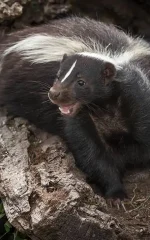
Skunks have a bad reputation as smelly pests that get into chicken coops, garbage cans, and gardens. Their infamous spray has had many pet owners frantically scouring the internet for solutions. Luckily, there are easy ways to identify these trundling mammals by their sounds!
If you’re wondering ‘what sound does a skunk make,’ you’ll be surprised to learn that these normally silent animals can make 7 different sounds to communicate with other skunks, animals, and potential predators.
Below, I’ll discuss each sound a skunk makes and how it can help you identify a skunk around your property. I’ll also review some pest control practices to keep these odorous animals out of your yard!
* This post contains affiliate links.
7 Sounds That Skunks Make
According to Montana State University, 4 species of skunks can be found in North America: The striped, hog-nosed, hooded, and spotted skunks. While there are subtle differences between each skunk, the sounds they make are remarkably similar.
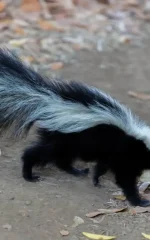
The striped skunk is the most common species of skunk found across North America, easily identifiable by its black fur with white stripes.
Skunks are solitary animals, typically only hanging out with other skunks during the mating season or during winter when they may den communally. Because of their solitary nature, skunks use scent to communicate more often than noise. However, there are times when these noxious nuisances communicate audibly.
Below are the 7 sounds that skunks make and why they make those noises. Since skunks are most active at dusk, dawn, and nighttime, these noises can help you identify them even if you can’t see them.
By the way, some noises can scare away skunks. Check out our guide on the 9 sounds and noises that scare skunks to learn how to keep them away using simple things like noisemakers or the radio!
1. Hiss
Hissing has a pretty universal meaning: you’re coming too close, and I don’t like it. Cats and snakes do it, and so do skunks! When a skunk hisses, it is meant to warn predators that are coming too close.
Skunks only use their spray as a last resort because it can take up to 10-14 days to fully replenish their glands. Hissing is one way a skunk communicates to potential predators to back off.
If you happen to encounter a skunk in your yard, our article on how far skunks can spray will help you determine what a safe distance is!
If hissing doesn’t work, skunks may use some acrobatic methods to scare predators off, such as doing a handstand and arching their tail over their backs. When a skunk hisses, it sounds like it is breathing out in a raspy breath.
2. Growl
A skunk’s growl can sound very similar to a pig’s snort. Like their hiss, a growl is used to warn predators to back off. A growl may also be used in an attempt to scare off another male skunk during mating season.
3. Screech
When a skunk makes a screeching noise, it is usually in distress. This can be because it is facing off against a predator or because it is frightened or injured. Screeching is not used as a warning, and is only made when the skunk is in a dire situation.
A screeching skunk will sound like a high-pitched scream, similar to the frightening noises made by foxes. However, they do not sound as human as a fox scream.
4. Grunt
Think about all the different meanings of a grunt in human communication. It could mean condescension, acknowledgement, or even scorn. The same can be said for skunks.
When a skunk grunts, it may feel frightened or upset. On the other hand, skunks may grunt when they are searching for food, such as peeling back the lawn in search of insects. If a skunk encounters another animal like a raccoon or opossum, it may grunt in surprise.
5. Chirp
Skunks, especially young and babies, will chirp when encountering other skunks or calling for their mother. Chirping is not an aggressive form of communication, but rather a happy noise made by skunks.
Skunk chirps will follow one after the other in quick succession as opposed to a single chirp. Skunks may also chirp if they are upset and looking for the attention of other skunks, such as their mothers, or when playing with other young skunks.
If you happen to have a den with little chirping skunks on your property, check out our guide for information on how long skunks stay in the same den.
6. Whimper
Whimpering is a common noise used by baby and young skunks to get the attention of their mother. It may signal that the skunk is hungry, tired, or otherwise upset. Whimpers will typically be drawn out into multiple sounds, unlike a chirp, which will sound the same between each noise.
7. Cooing
Like whimpering, cooing is a skunk noise that is usually made by baby or young skunks. Unlike chirps and whimpering, cooing is a contented noise that skunks make when they are happy.
If you hear a skunk cooing, it is likely a baby or young skunk that is out and about following its mother or perhaps tucked away in a den having just finished a tasty meal.
Repelling Skunks From Your Yard
If any of these sounds are present around your home or yard, you may have a skunk on your hands! Not all skunks are so vocal, so it’s best to look for other signs that a skunk has taken up residence on your property.
Here are some other telltale signs of a skunk skulking around your yard:
Odor: The most obvious clue is a distinctive skunk smell. If you notice skunk odors, especially in late winter, it indicates that skunks are around. If skunks frequent your yard, you may notice a mild odor over time. You can read more about why skunks are spraying in your yard here!
Barking Dogs: While this isn’t a sure sign, barking dogs are indicators that nighttime prowlers like skunks are around. However, barking dogs could be related to raccoons, opossums, and other nocturnal critters.
Missing Chickens: If you raise chickens, skunks may go after them to get to their eggs.
Holes in the lawn: If you notice 3-4 inch cone-shaped holes in the yard, this indicates the presence of skunks digging for insects. If you’ve found a skunk hole in your yard, check out our guide on the 5 steps to fill a skunk hole for tips on repairing your lawn!
Upturned Earth: Skunks may peel back lawns searching for grubs and other insects, leaving behind a clue to their presence.
Dens: Skunks use burrows left by other animals for dens. Look for medium to large holes in the yard with a smooth entrance. You can read more about the signs of a skunk den here!
Luckily, there are several ways to deter and repel skunks from your yard using eco- and pet-friendly pest control techniques!
Fencing: Can Skunks Climb Fences?
Fencing is a good option for most pest control situations, but can skunks climb fences? The answer depends on which type of skunk you have in your yard.
The most common type of skunk, the striped skunk, is not a good climber. Their long, non-retractable nails are a hindrance when attempting to climb fences. However, the rare spotted skunk is quite a skilled climber and will even scamper up trees!
That said, keeping skunks out from under your porch or shed will require exclusion techniques like fencing, which are very effective at deterring skunks from burrowing beneath structures.
Use hardware cloth like AMAGABELI GARDEN & HOME Hardware Cloth, which has ¼-inch holes, making it effective at keeping out skunks and other unwanted critters like mice and rats. Skunks are talented burrowers, so be sure to bury the cloth at least 6 inches into the soil to prevent skunks from digging beneath your fencing.
Use Powerful Scents to Deter Skunks
Use their own ammunition against them! Skunks are repelled by a variety of scents that overwhelm their olfactory system, making it difficult for them to locate food and pick up on predator scents.
Here are a few scents that are strong enough to repel these odorous pests:
Capsaicin: You may not recognize ‘capsaicin’, but it’s the main ingredient in many people’s favorite sauce – hot sauce! The pungent, spicy ingredient can keep skunks away from specific areas.
Peppermint Oil: Peppermint is known for its strong, clean scent that humans enjoy but skunks detest. Put 10-15 drops of peppermint essential oil into a spray bottle filled with water. Spray the solution near areas where you don’t want skunks to go, such as near your chicken coop, garden, or trash cans. SVA Peppermint Essential Oil works great to make a homemade skunk repellent!
Skunks only stick around near humans if there’s something in it for them. Your yard may inadvertently be providing skunks with food, water, or shelter. If you eliminate these attractants, skunks will likely trundle off to some other area.
Here are a few ways to modify your yard to make it less attractive to skunks:
Remove sources of cover: Remove brush and wood piles. Keep the grass and bushes trimmed. Place fencing around the bottom of structures to remove denning locations and cover.
Remove sources of food: Use a birdseed catcher tray to remove birdseed from the ground. Pick up all fruit as soon as it falls. Place fencing around vegetable gardens. Secure garbage cans with a lid lock. Feed pets indoors when possible.
Remove sources of water: Remove any type of object that collects water, such as upturned buckets, tools, tires, and flower pots. Place covers over pools. Give pets water indoors.
Think about what might be attracting a skunk to your yard. Do you have a nice big open space beneath your shed? Or maybe you love feeding birds, but those clumsy avians spill the birdseed all over the ground. By removing these attractants, you’re making it far less likely for a skunk to make your yard their home.
Skunks aren’t likely to leave your yard if they have a safe space to stay or an adequate food source. Our article on whether or not skunks leave on their own can provide more insight into why these animals might call your yard their home.
What Sound Does A Skunk Make? Our Conclusion!
Skunks are timid and docile animals, but they occasionally get vocal. These nocturnal animals prefer to stay out of sight, so they are usually most active at dawn, dusk, and nighttime. This makes it difficult to identify if they’ve been in your yard or not, which is why it can be helpful to know what kind of sounds a skunk makes!
To recap, skunks can make 7 different sounds, all of which have different meanings:
Hiss
Growl
Screech
Grunt
Chirp
Whimper
Cooing
If you find a skunk skulking around your property, there are several pest control options you can use to repel and deter them, such as habitat modification, scent deterrents, and noise deterrents.
Remember, some species of skunks, like the spotted skunk, are talented climbers. For this reason, fencing is not always effective. However, fencing that blocks the spaces beneath porches and sheds is effective at preventing any skunk from denning under the structure.
When DIY pest control doesn’t seem to work, you can always contact a pest control professional for help!
Robyn is your friendly neighborhood writer, editor, and published author - boasting many years of experience in pest control, from which she magically weaves words into the captivating and engaging posts as we know them. When not tucked behind her laptop screen, she can be found embracing nature in the most thrilling ways possible. Rock climbing? Yes, please! Hiking? Absolutely! Traveling the U.S. with her husband, their lovable three-legged dog, and two mischievous cats? That’s her everyday reality. They live, love, and work in their cozy campervan, letting the road take them where it will, and finding inspiration in every sunrise, mountain peak, and wildlife sighting they encounter. Check out my Profile.
Pest Pointers was started in a cozy corner of Upstate New York, known for its expansive pastures, dense woods, and abundant wildlife pests. We are dedicated to providing YOU with solutions and insights into managing common pest issues. Starting out on over 50 acres of land and a freshwater bass pond with abundant pests, we combine firsthand experience with dedicated advice to help you tackle even the toughest of critters!