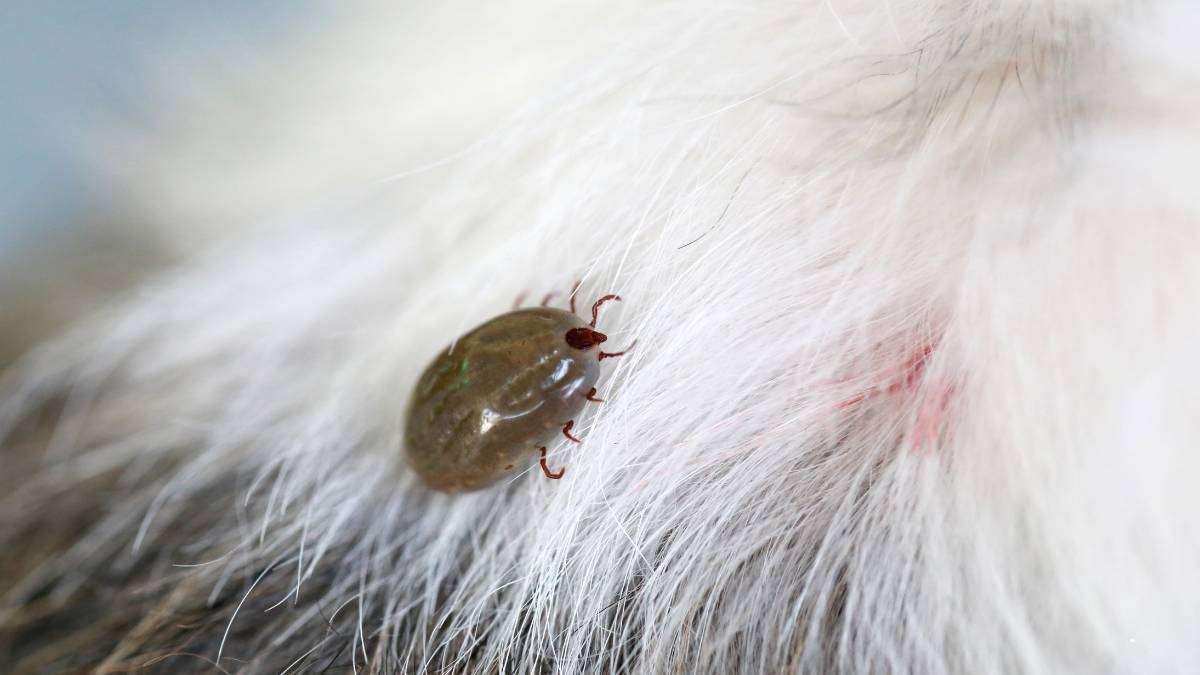
Ticks are not only creepy and crawly, but they also carry unwanted diseases like Lyme and Spotted Fever. Finding a tick on your dog is understandably concerning for pet owners, and you may be wondering what to do and how to prevent the transmission of disease.
Ticks on dogs can be repelled using 4 simple steps:
- Tick Prevention Medication
- Identifying Tick Zones
- Habitat Modification
- Tick Deterrents
Finding ticks on dogs doesn’t necessarily mean you have a tick infestation in the yard. This article will discuss how to repel ticks from your beloved furbabies and reduce tick populations around your home using easy DIY methods.
Step 1: Keep Dogs Up To Date On Tick Preventative

Flea and tick prevention is normally bundled into one medication that you give your pet on a regular interval. If you want to prevent ticks on dogs and the transmission of disease, this is the absolute best way.
Many flea and tick preventatives do not prevent ticks from biting your pet. In fact, many tick control medications require the pest to bite your pet to ingest the ingredients that eliminate the tick.
Luckily, disease transmission requires ticks to be attached to your canine companion for more than 24 hours, while tick preventatives typically do their job in just a few hours. You can read about the different types of ticks here to figure out what kind of tick may be pestering your pooch.
Types Of Tick Preventatives For Dogs
Many different types of tick preventatives can be found for both dogs and cats, from topicals to collars. Veterinarians consider some to be more effective than others, but even a low-grade tick preventive is better than nothing! This is one of the best ways to prevent ticks on dogs.
There are three main types of tick prevention medication for dogs:
- Topical: This treatment comes in a tube that is applied to your dog’s skin beneath the fur. The fluid gets absorbed into the sebaceous glands and spreads throughout their body. The chemicals interfere with the tick’s nervous system, preventing it from feeding, effectively eliminating them. Topicals are usually reapplied every 30 days. Frontline is a great example of a topical tick preventative.
- Collars: Tick collars work similarly to topicals, but the liquid is released slowly over a longer period. The liquid is absorbed and spread through the sebaceous glands, eliminating ticks when they come in contact with the liquid. Collars usually last between 6 and 8 months before needing to be replaced.
- Chewables: Tick prevention chewables are given orally. The active ingredient enters your dog’s bloodstream, and when ticks feed on your dog, they ingest the active ingredient, perishing quickly after feeding. Chewables are usually given every 30 days and require a prescription from a licensed veterinarian.
Other tick preventatives like sprays, powders, and shampoos can also be used to remove ticks on dogs, but they normally target current infestations instead of being used as a preventative.
Here are a few tips for effective tick prevention:
- Always give your dog’s medication on time at the proper interval.
- Choose the correct dosage for your dog based on their weight.
- Never give medication meant for a cat to a dog, and vice versa.
By the way, if you find ticks on dogs but you’re not sure if it’s a tick, our guide on fleas, ticks, and bed bugs can shed light on how to tell the difference between these three similar pests.
Vaccines
Lyme disease vaccines are now available for dogs and highly recommended by veterinarians, especially in the eastern United States. Lyme vaccines are given yearly and require a booster given 14 days after the initial shot.
Dogs who live in areas with low instances of Lyme disease may not need a vaccine, so it’s best to consult with your vet for the best options. Vaccines do not prevent ticks on dogs, but they help lower the chances of your pup contracting Lyme Disease.
Step 2: Identify Tick Zones

Whether you’re out hiking in the woods or simply walking around the yard, your dog can pick up a tick anywhere. According to the Commonwealth of Pennsylvania, 95% of Lyme disease cases occur in just 12 states: Pennsylvania, New Jersey, New York, Massachusetts, Connecticut, Wisconsin, Maryland, Minnesota, New Hampshire, Delaware, Maine, and Virginia.
Suffice it to say, tick-borne diseases are most prevalent in the Eastern United States. Ticks on dogs are also more prevalent in the eastern half of the US.
There are a few ways to identify areas that are heavily infested with ticks. This will help you determine where to focus your DIY methods to kick these pests out of your yard for good!
Edge Environments
Ticks like to hang out in places where forests meet open areas, such as your yard. These are called edge environments or ecotones and attract other critters like deer and dogs, which ticks latch on to. This is the most likely place where ticks on dogs will take place.
Survey your yard and try to identify any edge environments. This will be a prime location to focus your tick repellent methods. More on that later!
Tick Drags
One way to know for sure where the most ticks are around your home is to do a tick drag. It’s an easy maneuver that may not even require a trip to the hardware store!
Here’s how to do it:
- Grab a piece of white fabric, preferably flannel or corduroy. The fabric should be at least 1 square yard (about one square meter).
- Affix the fabric to a piece of wood similar to a banner.
- Tie a string to the piece of wood.
- Drag the ‘banner’ behind you as you walk around your yard, taking note of which sections of your yard you’ve gone over.
- Drape the cloth over a fence or railing and examine the fabric for ticks.
Once you’ve identified the area of your yard with the most ticks, you can focus your DIY repellent techniques there. Tick drags do not prevent ticks on dogs, but they’re one of the best ways to identify areas with heavy tick infestations and, therefore, areas you should keep your furry pal away from.
Take care when performing a tick drag and do a thorough inspection of yourself and your clothing afterward. If you happen to find a tick on you, remove it immediately with a pair of tweezers. Check out our guide on the 6 steps to remove a tick embedded in skin.
Step 3: Habitat Modification

Habitat modification is one of the most effective ways to repel pests permanently and prevent ticks on dogs. It involves making your yard less desirable to pests like ticks. This could mean removing a food source, a source of shelter, or a combination of things. Don’t worry, we’ll dive into the details here shortly!
Ticks are hardy creatures that don’t require much to survive. However, there are certain things they’re attracted to, like:
- Tall grass
- Leaf litter
- Wood piles
- Deer
- Mice
- Edge environments
- Moisture
- Shade
You can read more about the things that attract ticks here. The article discusses exactly what might be attracting ticks to your yard and how to modify or remove those attractants.
Mow The Grass
One easy habitat modification you can do around the yard to repel ticks on dogs is to keep the lawn mowed. Ticks prefer grass to be about knee-high, the perfect height to latch onto their favorite host: deer. By keeping the grass trimmed, you’re making it more difficult for ticks to hitch a ride on your dog and other critters.
Remove Debris Piles
Stacks of unkempt wood, leaf piles, and grass clipping piles are all very attractive to ticks. They provide a cool, moist environment for them to inhabit.
Debris piles are also a prime location for other pests, like mice, rats, and chipmunks. These small rodents are a food source for ticks. If you remove the debris pile, it not only discourages ticks but also their food, making your yard less desirable for ticks. It also lowers the chances of finding ticks on dogs!
Create Barriers
As mentioned before, ticks prefer to attach to hosts near edge environments. While it’s impossible to eliminate edge environments, you can make them less attractive to ticks by creating a barrier or buffer zone between your yard and the woods.
To do it, add 3 feet of gravel, stone, or wood chips to separate your lawn from the woods. Ticks are susceptible to drying out, so are unlikely to cross a barren stretch of gravel or wood chips. This makes it less likely for ticks to crawl into your lawn and onto your doggo.
Let In The Sun
Ticks require moisture and shade to survive, and don’t do well in the sun because they can dry out. While we’re not recommending you chop down every tree in your yard, you can make your yard less desirable to ticks by pruning your trees and shrubs to let more sunlight into your yard.
More sunlight = fewer ticks = less ticks on dogs!
Deter Hosts
Ticks will use a variety of animal hosts during their lifetime, from white-tailed deer to a tiny house mouse. Hosts play an important role in spreading ticks from one area to the other, and can even be the reason they are in your yard.
One way to prevent ticks on dogs is by preventing tick hosts from entering your yard. Here are a few recommendations to keep them out:
- Fence: Use fencing to keep white-tailed deer out of your yard, or at least away from areas where your dog frequents.
- Bird feeders: Spilled bird seed attracts rodents, which in turn attract ticks. Keep bird feeders away from pet areas or use a catcher tray to avoid spills.
- Gardens: Gardens are attractive to deer, raccoons, skunks, mice, and many other critters. Try to pick your fruits and vegetables as soon as they are ripe, and consider fencing in your garden.
- Shelter: Any source of shelter for pests may increase the likelihood of having ticks in the yard. Seal off spaces beneath porches and sheds, seal cracks or openings into your home, and repair any broken windows or screens.
Modifying the yard may be a little time-consuming, but it’s an effective DIY method to lower the tick population close to home.
Step 4: Use Deterrents

Once you’ve made your yard less desirable to ticks, it’s time to bring in the deterrents to keep them away permanently. Deterrents come in many forms, from pesticide sprays to essential oils. Unfortunately, ticks have become resistant to some acaricides due to overuse.
Deterrents are a great way to lower the chances of finding ticks on dogs. Note that using a deterrent once will not eliminate ticks in the yard. They must be used repeatedly to keep repelling ticks. A combination of habitat modification and the use of deterrents is the best way to keep ticks away permanently.
Below are some recommendations for eco-friendly tick deterrent formulas:
- Natural Sprays: Wondercide’s Outdoor Pest Control Spray utilizes essential oils like cedarwood and sesame. It contains no DEET or other harmful chemical pesticides and can treat up to 10,000 square feet. Always read the directions on the label for proper dilution before use.
- Plant Power: Some plants contain properties that show promise of repelling ticks naturally. Plants like lavender, rosemary, chrysanthemum, marigolds, and thyme can be planted around the yard to repel ticks naturally.
- Essential Oils: Lavender, eucalyptus, geranium, and thyme essential oils are all reported to have repellent effects on ticks. To use essential oils, put 10-15 drops for every cup of water into a spray bottle and spray the mixture around the yard.
Eco-friendly tick repellents are a great way to keep ticks away while being kind to nature. It’s also better for your family and pets when used as directed.
So, what’s the catch?
Natural repellents like the ones listed above don’t pack a permanent punch like synthetic chemicals. This means the repellents must be reapplied often to truly work.
Consider replenishing essential oil sprays every week or after heavy rain. For natural sprays, follow the recommended reapplication instructions on the label.
Synthetic sprays, like those containing DEET, are effective at repelling and eliminating ticks, but they aren’t the best preventative. You can read more about whether or not bug spray works on ticks here for more information about using chemical-based repellents.
Preventing Ticks On Dogs: Wrap-Up!
That’s all we have for now on preventing ticks on dogs. If you live in an area with high tick populations, it’s understandable to want to protect your precious furbaby from unwanted hitchhikers.
To recap, the 4 steps to prevent ticks on dogs include:
- Keep dogs up to date on tick preventative medication
- Identify tick zones
- Habitat modification
- Use deterrents
It’s unlikely you’ll eliminate all ticks in your yard permanently. These sneaky arachnids hitch rides on wild animals and drop off after feeding, so they’re likely to ebb and flow. But by using the techniques described above to prevent ticks on dogs, you’re lowering the chances of one of these blood-feeding pests attaching to your canine companion.
And hey, if your yard seems to be a tick magnet and you can’t get rid of them, use our pest control finder to locate a pest control specialist near you! They can help you understand what is attracting ticks and how to eliminate them.