Bees are beneficial insects that help pollinate essential plants and crops, but these buzzing insects aren’t always welcome in our yards and homes. Since bees are so important to the environment, you may be searching for natural, organic ways to repel them. We’ve got solutions!
A natural bee repellent may come in the form of essential oils, dried herbs, cayenne pepper, citronella, almond oil, and citrus. These natural deterrents are friendly to the environment and won’t harm bees, but they sure will keep them away!
Consider this article your guide to a bee-free space, whether you want to deter them from your home, shed, or kids’ play area. A natural bee repellent will keep bees away while being kind to the environment, which is a smart choice if you have a garden or flower bed that needs pollinating.
* This post contains affiliate links.
Which Bee Is Buzzing In Your Yard?
When dealing with a bee problem, three bees are most likely to be a nuisance around the home:
Honey Bee (including African and Africanized honey bees)
Carpenter Bee
Bumble Bee
Other bee species, like leafcutter bees and sweat bees, typically do not become a nuisance because they are solitary in nature and do not establish large nests.
While we don’t advise getting close enough to the bee to see which kind it is, there are a few easy ways to tell the difference. Knowing which bee is buzzing in your yard can give you a wealth of information about how to deter it.
Honey Bee
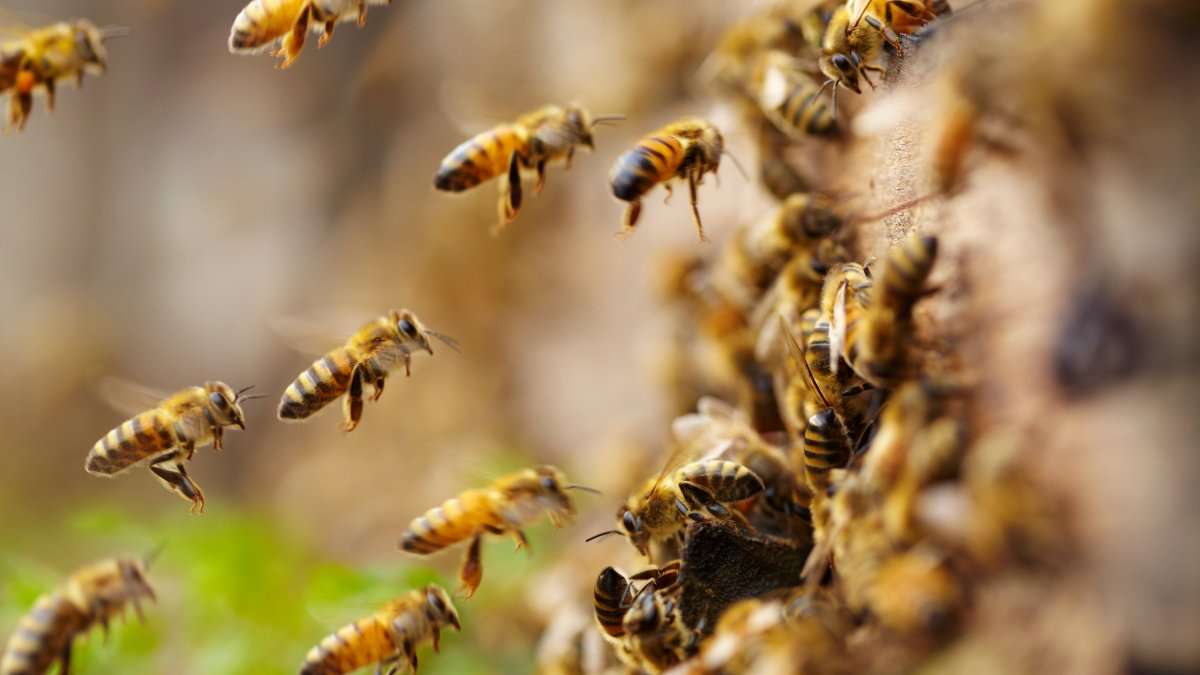
Honey bees are social creatures who live in large colonies with tens of thousands of individuals. They are somewhat aggressive when guarding an active nest, but typically do not sting unprovoked. Africanized honey bees are slightly more aggressive.
One thing to note about honey bees is that, every spring, they swarm. During this period, the queen of the current colony leaves, taking approximately 60 percent of the colony with her, according to Mississippi State University.
While these traveling bees search for a new home, they may amass on structures like mailboxes, fenceposts, the side of houses, or tree branches. Once the bees find a new home, they will leave. These types of swarming bees are not a cause for concern, as they will leave on their own.
Only honey bees that have established a nest should cause concern for homeowners.
Here are some ways to identify honey bees:
Nest: nests are typically built in small cavities or openings aboveground. Inside the nest are perfectly hexagonal cells. Nests are built from wax.
Behavior: Honey bees are typically only aggressive when protecting an active nest with honeycombs, where immature larvae and food must be protected.
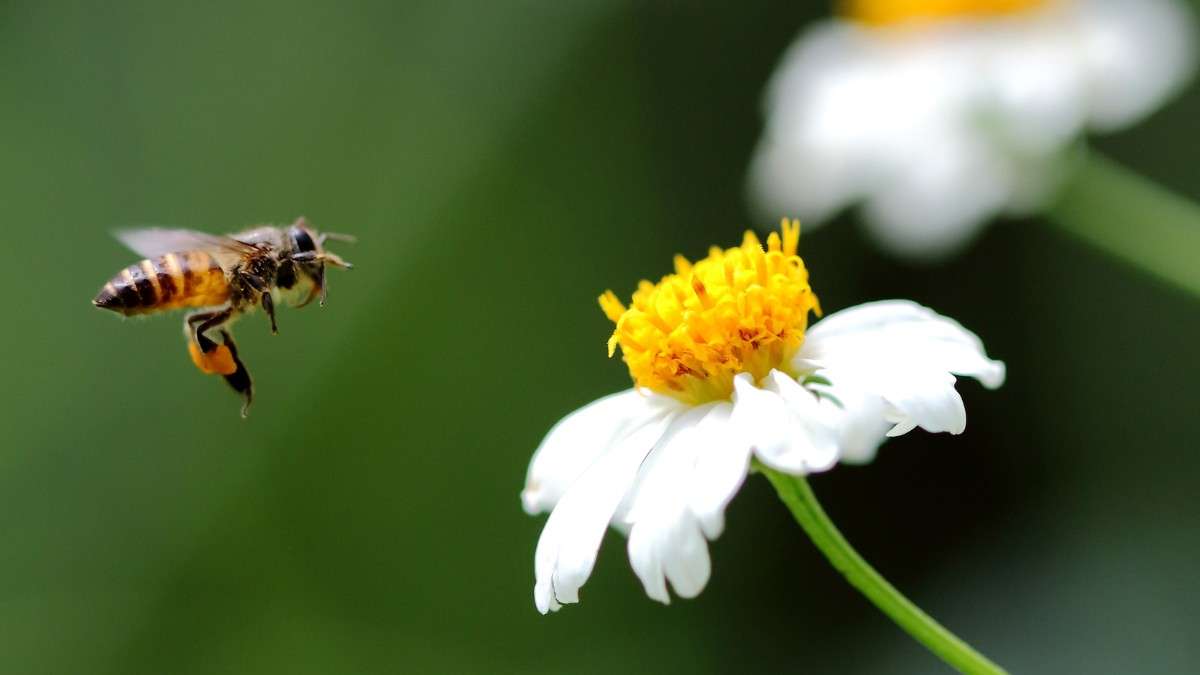
Physical appearance: Honey bees are sleek and do not appear as fuzzy as other bee species.
Honey bees are known for nesting in unwanted places, like inside your home’s walls! Head over to our article on the reasons to remove bees from your walls for more tips on removing these pesky insects from walls.
Carpenter Bee
Carpenter bees, also known as wood boring bees, are easy to identify by the location of their nest: they love boring into wood. You may find them buzzing around your porch, fence posts, or eaves. They’re not the most acrobatic and may appear intoxicated as they fly around searching for wood to bore through.
Nest: Carpenter bees nest inside wood, boring nearly perfectly circular holes in the wood. Their nests are aboveground.
Behavior: Carpenter bees are non-aggressive. Male carpenter bees cannot sting but may dive-bomb people who get too close to their nest. Female bees can sting multiple times, but rarely do so.
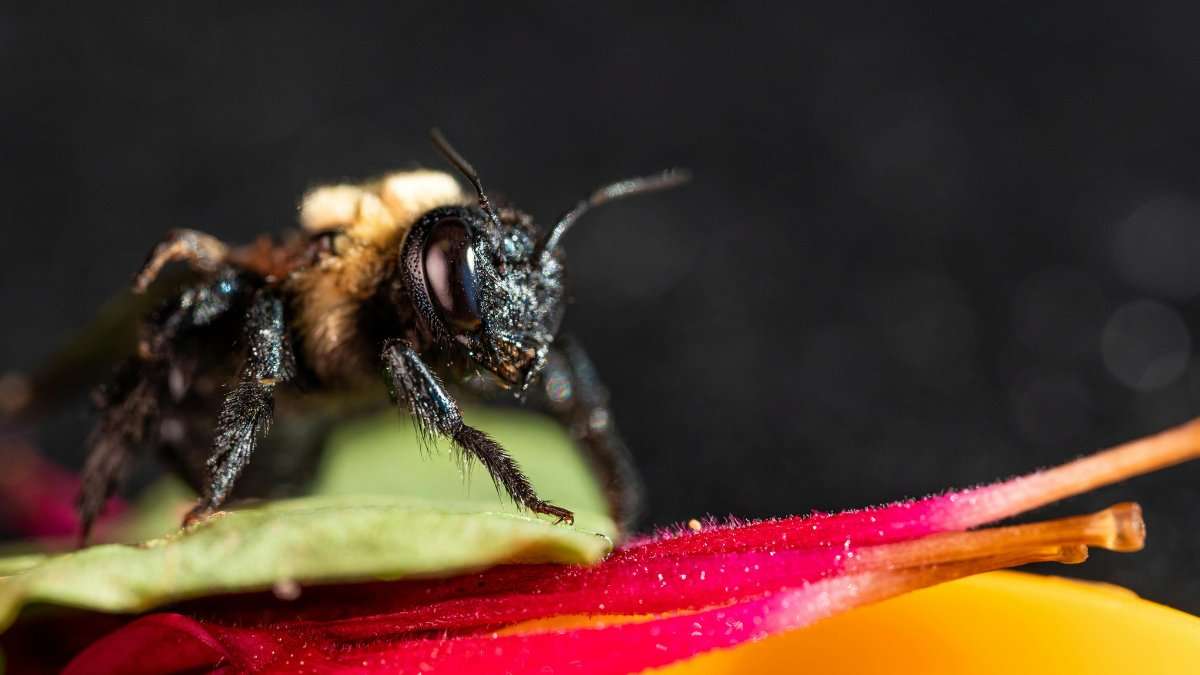
Appearance: Carpenter bees are large, around 1 inch long. They have a shiny black abdomen (rear end) and a fuzzy yellow thorax (near the head).
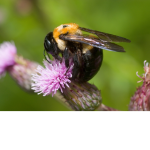
Bumble bees aren’t quite as large as carpenter bees, but they are easily distinguished from honey bees because they are very fuzzy. Like other bees, bumbles are black and yellow. The major difference between bumble bees and other bees is that they nest underground.
Nest: Bumble bees nest underground in existing holes, such as those made by voles or chipmunks. They may also nest aboveground in old birdhouses, compost piles, or even tangled grass.
Behavior: Bumble bees are non-aggressive unless threatened. They can sting multiple times, but only do so when their nest is in danger.
Appearance: Bumble bees are fuzzy, black and yellow, and round-shaped.
Knowing which type of bee is invading your yard will help you narrow down a natural bee repellent that works best for the specific bee species. By the way, we have a fantastic article on what to do if you have bees in your wall if those pesky insects happen to invade your home.
Natural Bee repellent To Keep Bees Away: 6 Solutions
Let’s dive into a natural bee repellent that will work for your specific situation. Whether you have honey, carpenter, or bumble bees, there’s a natural solution below that is bound to work!
Be sure to never apply the suggestions below directly to bees, as it could cause them harm or even lead to their demise. The idea here is to deter bees, not eliminate them.
By the way, it’s important to address bee nests promptly. Once bees have established a home, they’re unlikely to leave. You can read more about why bees won’t leave on their own for tips on preventing nests.
1. Citronella
Citronella is touted for its effectiveness at keeping mosquitoes away, but did you know it can deter other flying pests as well? The main repellent ingredient in citronella is a chemical called citronellal.
There are several ways to use citronella as a natural bee repellent:
Candles: This is a practical choice for carpenter bees that are trying to drill holes in your porch. Light a citronella candle, ensuring the scent reaches the areas where carpenter bees are trying to bore into the wood.
Essential Oil Spray: Purchase citronella essential oil and put 10-15 drops into a spray bottle filled with water. Spray the solution in areas where bees are congregating or where you think they may build a nest. Essential oils are concentrated, so always make sure to dilute them with water.
Citronella Grass: Another approach is to grow citronella grass around your home. This is a slow and steady approach that works over time as the scent of citronella fills the air each spring and summer.
Citronella is an effective natural bee repellent. The powerful scent makes it difficult for bees to locate food and communicate with the rest of the colony. When they get a whiff of citronella, they’re likely to buzz off!
Citronella isn’t the only scent that deters bees. Check out our article on the 9 scents that bees hate for a complete list of smells that bees can’t stand.
2. Clove
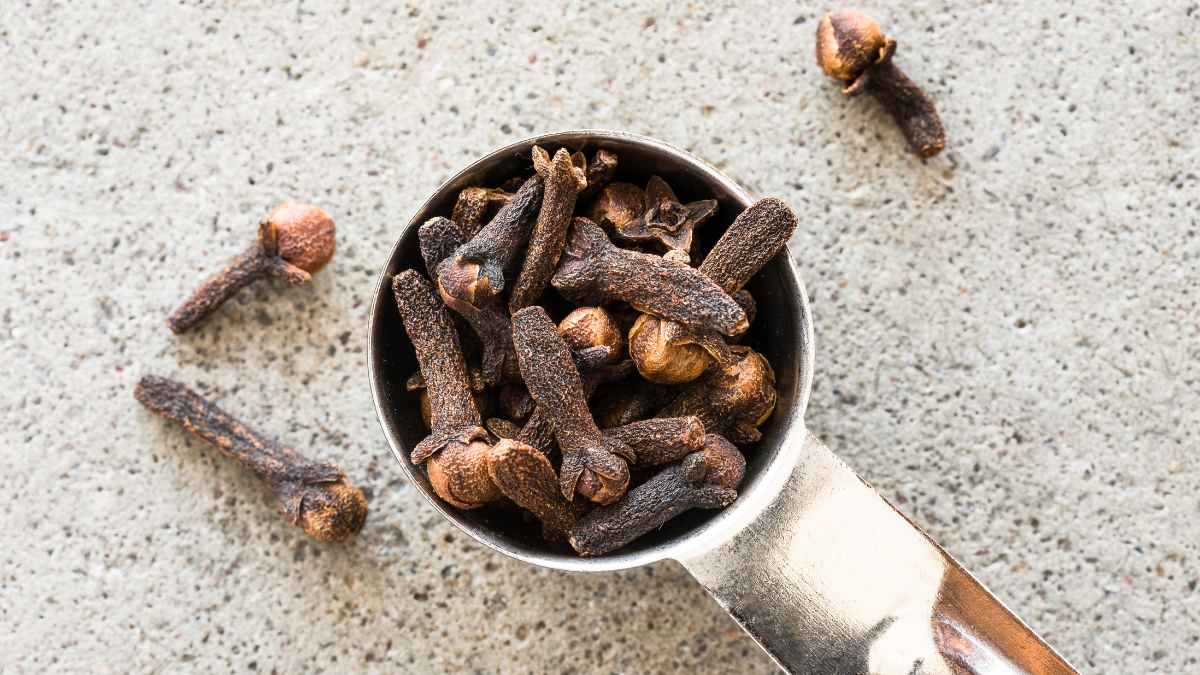
Clove is another strong natural bee repellent that is effective due to its powerful scent. Eugenol is the main chemical that gives cloves their strong scent and the main deterrent property of this wonderful natural bee repellent.
To use cloves to ward off bees, try these recommendations:
Essential Oil Spray: Like citronella, you can purchase clove essential oil and make a spray. This is an effective option for honey bees and carpenter bees, as you can spray it in areas where these bee species might nest.
Whole Cloves: You can purchase whole or ground cloves and place them in areas where honey bees or bumble bees are likely to nest. Think about any crevices around your home, porch, shed, or garage, and place your deterrents there.
Combine with lemon: To make an extra potent natural bee repellent, place whole cloves in lemon halves and scatter the lemon halves in areas prone to bees.
Cloves are another excellent natural bee repellent that works by using a powerful scent to repel those pesky bees.
Bees can turn up in all kinds of strange places. If you notice these pests buzzing around your car, it may be because something inside your vehicle is attracting them. Cloves are an easy deterrent you can use in and around your car. Check out our article on how to apply natural bee deterrents around your car for more information.
3. Cayenne Pepper
Cayenne pepper may add flavor to our dishes, but bees can’t stand it.Capsaicin is the main constituent that gives cayenne peppers their distinct kick, and it’s what will keep bees away from your home, too.
To use this spicy ingredient as a natural bee repellent, try one of these options:
Cayenne Powder: Sprinkling cayenne pepper powder is a great option for ground-nesting bees like bumblebees.
Cayenne Spray: Mix 2 tablespoons of ground cayenne pepper to 1 quart of water and add the mixture to a spray bottle. Put a few drops of dish soap in the mixture and spray in areas prone to bees.
Bees are most active during the day, so applying your repellents in the evening or morning may help avoid unwanted stings. You can read more about where bees go during the day to figure out the best times to apply your repellents.
4. Almond Oil
Almond oil is a fantastic natural bee repellent and is especially effective against carpenter bees. This anti-bee oil is made of mostly oleic acid, tocopherols, and phenolic compounds, giving it its bitter and pungent smell.
To use almond oil as a natural bee repellent, check out the recommendations below:
Almond Oil: Apply almond oil like NOW Foods Solutions Sweet Almond Oil directly to the wood where carpenter bees are buzzing. If bee holes already exist, try coating the outside of the hole to encourage the bee to leave, then filling the hole with steel wool.
Spray: For a wider application, you can combine almond oil with water in a bottle, shake the solution, and apply it to wooden structures that are vulnerable to carpenter bees.
Almond oil is also effective against honey and bumble bees. If you have problems with these bee species, consider using almond oil or a spray to keep them away by applying it to outdoor spaces.
5. Peppermint
One way to repel not only bees but a whole host of pests is by utilizing peppermint. Menthol and limonene are the main chemicals that give peppermint its pizazz and repellent effect.
Have you ever gotten too big a whiff of peppermint and it cleared your sinuses? Now imagine a tiny bee taking in that scent!
Here are some ways to use peppermint as a natural bee repellent:
Mighty Mint:Mighty Mint Peppermint Oil Insect Repellent comes in a ready-to-use spray bottle. Spray it in any area you want to protect from bees, such as around the door, porch, driveway, or anywhere else bees may be lurking.
Essential Oil Spray: To make your own spray, put 10-15 drops of essential oil in a spray bottle with water. Spray the solution outdoors in places you want to protect from bees.
Cotton Balls: For carpenter bees, soak cotton balls in peppermint essential oil and stuff them into carpenter bee holes to deter them from coming back. Just make sure the holes are empty before you try this!
Make sure not to plant peppermint to deter bees. When peppermint blooms, the flowers will attract bees. There are plenty more essential oils that deter bees other than peppermint. Head over to our list of 10 essential oils to keep bees away for more inspiration.
6. Catnip
Believe it or not, catnip makes for an excellent natural bee repellent! This herb that makes cats go crazy is part of the mint family and has similar repelling effects as peppermint.
Nepetalactone is the chemical that makes cats go batty and keeps bees away. It activates a bee’s TRPA1 receptor, which acts as an irritant, like a slight food allergy, and deters them.
There are plenty of ways to use catnip as a natural bee repellent:
Dried Catnip: Sprinkle dried catnip around areas where bees could become a problem, such as unused vole and mole holes for bumblebees.
Catnip Spray: You can buy a ready-made catnip spray from a pet store or create a spray with catnip essential oil. This is a great solution for carpenter bees and honeybees. Target areas like untreated wood surfaces for carpenter bees and small crevices for honey bees.
Note that you don’t want to plant catnip to deter bees. When catnip flowers, it will actually attract bees! For optimal results, stick to dried catnip or a catnip spray.
A natural bee repellent is a great start to repel bees from your home and yard, but it works best when combined with other tactics. Check out our article on the 6 things to do if you find bees in your home for tips on sending these buzzing insects packing for good!
That’s A Wrap!
Bees are beneficial pollinators that are essential for ecosystems to function, but they can occasionally become nuisances around the home and yard. If you’re finding bees a little too close for comfort, there are plenty of solutions for a natural bee repellent.
To recap, the 6 natural bee repellents discussed in this article include:
Citronella
Clove
Cayenne Pepper
Almond Oil
Peppermint
Catnip
For large nests or those that encroach on your home, it may be best to contact a professional. Check out our pest control finder to get in contact with a local expert near you! Until next time, happy repelling!
Robyn is your friendly neighborhood writer, editor, and published author - boasting many years of experience in pest control, from which she magically weaves words into the captivating and engaging posts as we know them. When not tucked behind her laptop screen, she can be found embracing nature in the most thrilling ways possible. Rock climbing? Yes, please! Hiking? Absolutely! Traveling the U.S. with her husband, their lovable three-legged dog, and two mischievous cats? That’s her everyday reality. They live, love, and work in their cozy campervan, letting the road take them where it will, and finding inspiration in every sunrise, mountain peak, and wildlife sighting they encounter. Check out my Profile.
Pest Pointers was started in a cozy corner of Upstate New York, known for its expansive pastures, dense woods, and abundant wildlife pests. We are dedicated to providing YOU with solutions and insights into managing common pest issues. Starting out on over 50 acres of land and a freshwater bass pond with abundant pests, we combine firsthand experience with dedicated advice to help you tackle even the toughest of critters!