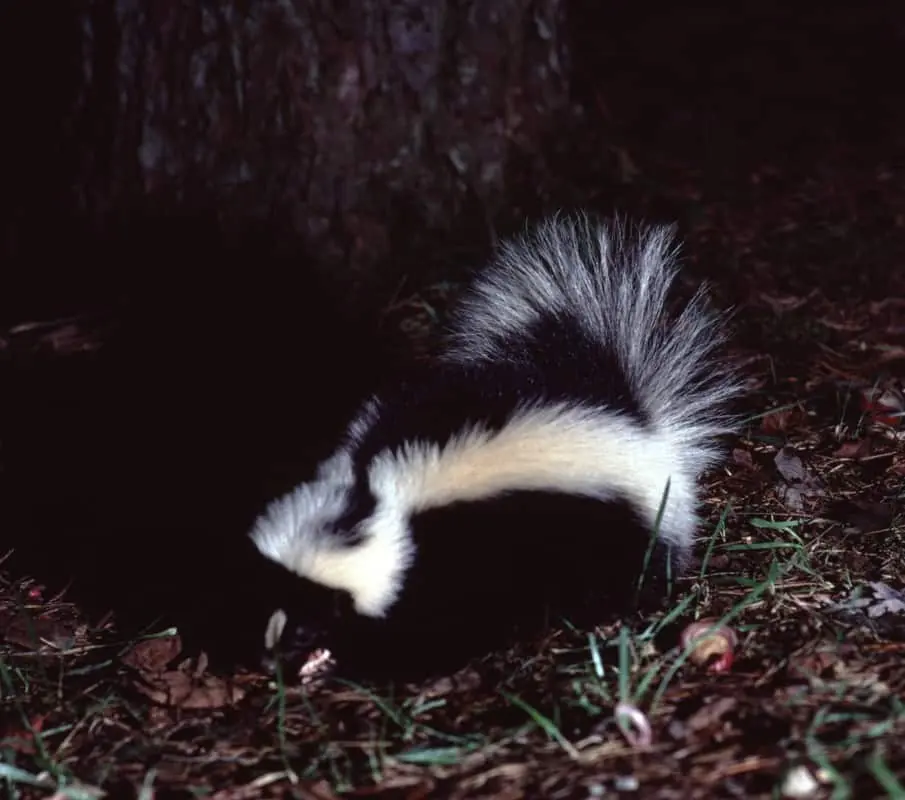
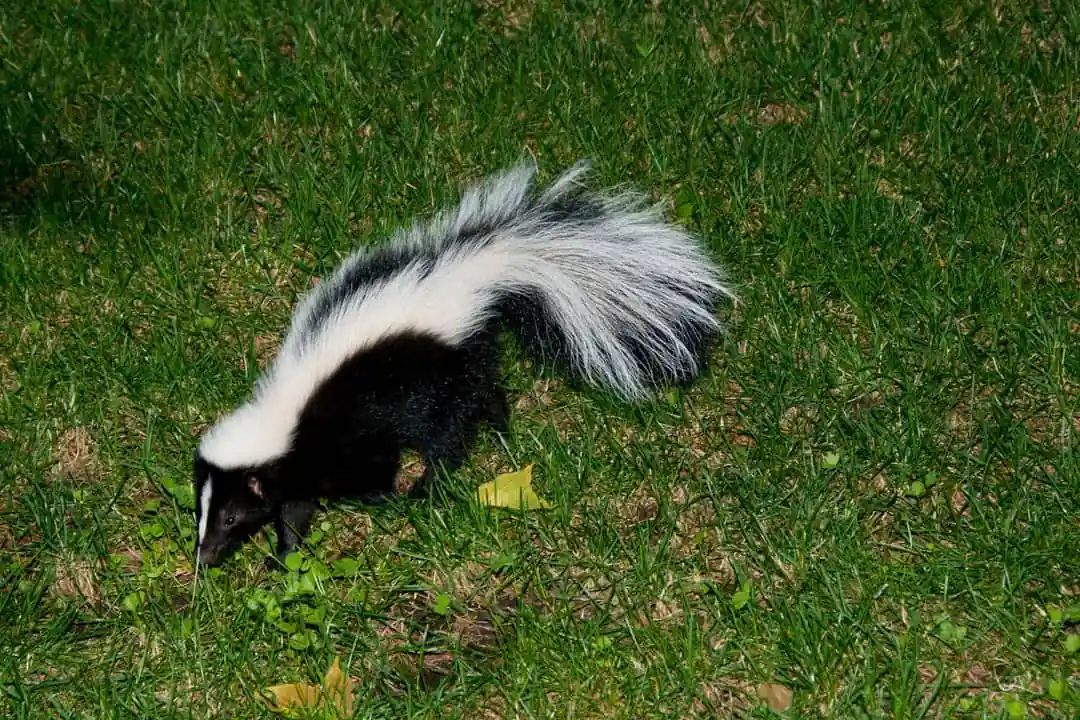
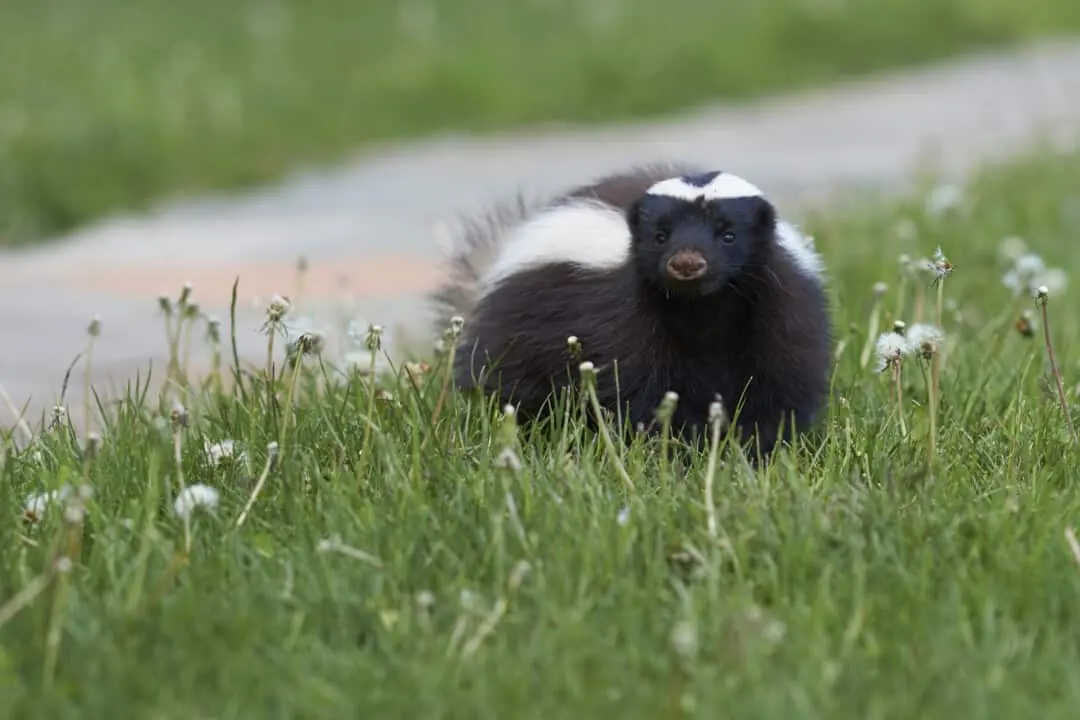
Quick answer: Are skunks nocturnal? Yes. Skunks are mainly nocturnal and most active from dusk until dawn, with busy periods around sunset and before sunrise. They sleep in dens during the day. Seeing a skunk in daylight is fairly common in late winter, during breeding season, and in late spring and summer, when nursing mothers forage longer to feed their kits.
Smelled skunk at 10 p.m.? Spotted one waddling across the lawn at dusk? That’s no coincidence. Skunks run on a night schedule, and knowing when they’re active makes it much easier to avoid a close encounter, or a spray.
In this article, I’ll answer are skunks nocturnal, explain what time skunks come out at night, why you might see one during the day, and what skunks do in winter.
* This post contains affiliate links.
Are Skunks Nocturnal?
Yes. The Pennsylvania Game Commission describes skunks as chiefly nocturnal, hunting from dusk until dawn, except during the breeding season, when they’re frequently seen in daylight. The Wildlife Center of Virginia adds that skunks are typically most active at dusk and dawn.
Scientists sometimes call this pattern crepuscular, meaning active at twilight. Animal Diversity Web notes that striped skunks are primarily nocturnal, with some crepuscular activity, and that their daily activity begins around twilight and can continue until daybreak.
What Time Do Skunks Come Out at Night?
Most skunks leave their dens around sunset and forage for much of the night. Here’s a typical day in a skunk’s life:
Time
What skunks are doing
Dusk (around sunset)
Leaving the den and starting to forage
Early night
Peak feeding: digging for grubs, eating insects, raiding pet food and trash
Late night
Foraging continues, often slower; traveling between food spots
Before dawn
A second burst of activity, then heading back to the den
Daytime
Sleeping in a den under a deck, porch, shed, log, or burrow
Because skunks forage mostly at night, that’s when you’ll notice the signs: small cone-shaped holes in the lawn, tipped trash, and that unmistakable smell. If one is visiting your yard, read reasons skunks spray in your yard.
Why Skunks Are Active at Night
Food: Many of the insects, grubs, and small animals skunks eat are active or easier to find at night.
Safety: Darkness helps skunks avoid many predators, although great horned owls hunt at night and aren’t bothered by the smell. See predators that eat skunks.
Poor eyesight: Skunks rely on smell and hearing more than vision, so they don’t need daylight to find food.
Do Skunks Come Out During the Day?
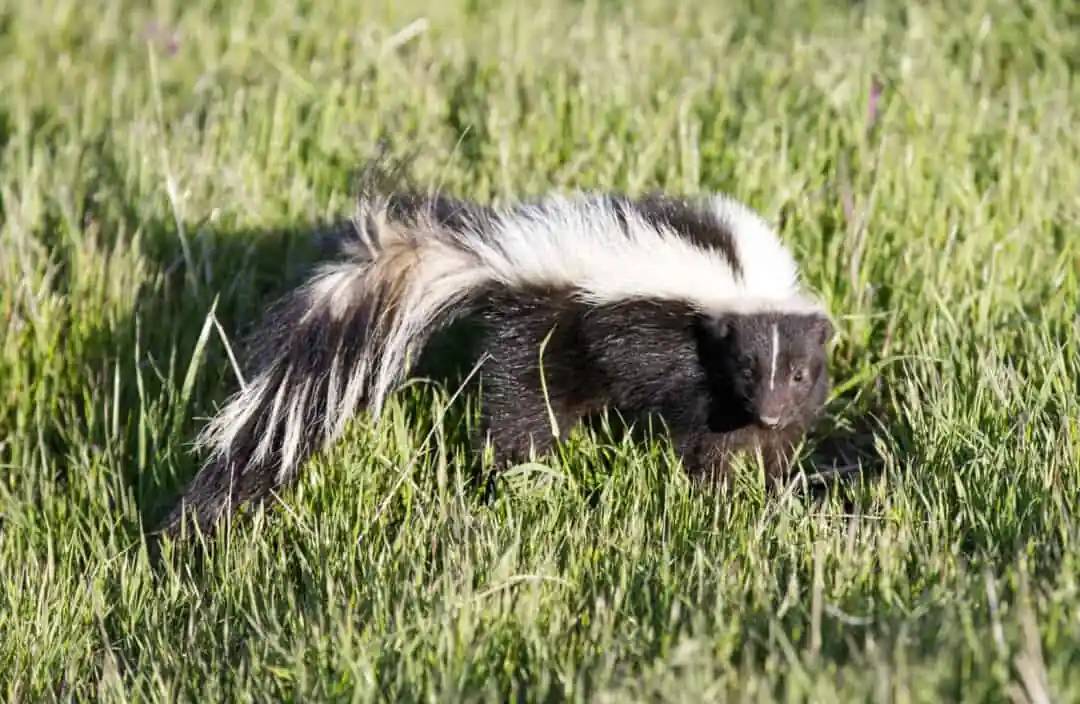
Sometimes, and usually for a good reason. The Wildlife Center of Virginia says skunks are sometimes seen during the day, particularly nursing mothers looking for food. Other common reasons:
Breeding season: The U.S. Fish and Wildlife Service says skunks breed in late February through March, and males roam widely, sometimes in daylight.
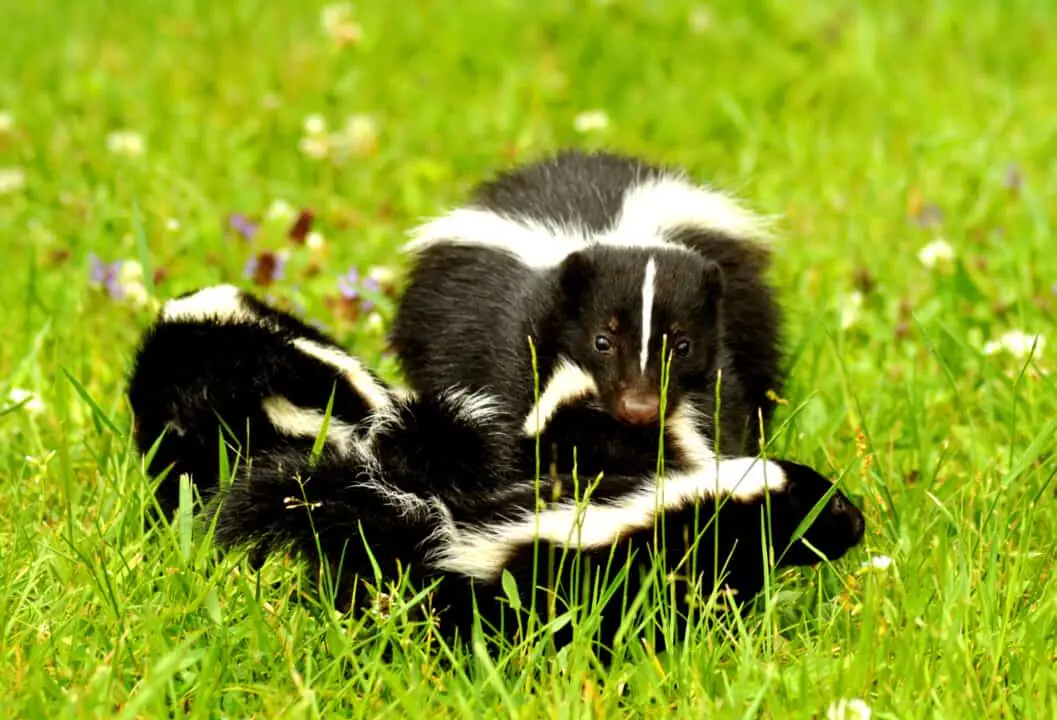
Nursing mothers: Kits are born in May, according to the U.S. Fish and Wildlife Service. A mother feeding a litter may forage in the morning or late afternoon.
Young skunks: The National Park Service notes that the mother raises her young in the den for a couple of months until they’re ready to follow her out. Young, inexperienced skunks often wander out at odd hours.
Disturbance: Construction, flooding, or a dog can drive a skunk out of its den during the day.
Food shortages: A hungry skunk may stretch its foraging into daylight.
Skunks can carry rabies. Humane World for Animals lists limb paralysis, circling, staggering, unprovoked aggression, and unusual tameness as signs a skunk may be sick. If you see any of these, keep people and pets away and call animal control or your state wildlife agency. Never try to handle the animal.
Are Skunks Active in Winter?
Less so, but they don’t truly hibernate. The National Park Service explains that skunks bulk up in fall, then become mostly dormant during the coldest stretches, sleeping in a state of torpor for weeks at a time. They wake up and even leave their dens on occasion, especially on warm winter days. Skunks will also den together to keep warm.
The New Jersey Division of Fish and Wildlife notes that skunks may den for long periods from November until March, and that in the southern part of their range they stay active year-round. In the north, females may stay denned through cold spells, while males usually come out to forage in milder weather.
How to Use a Skunk’s Schedule to Your Advantage
Let pets out with a light: Turn on a porch light and look around before letting dogs out after dark. Skunks usually move away from bright light and noise.
Bring in food before dusk: Pick up pet bowls, birdseed, and fallen fruit before sunset.
Check for a den at night: Watch a suspected den entrance around dusk to see if a skunk leaves. Our guide on how long skunks stay in the same den can help.
Evict at the right time: If a skunk lives under your deck, make the den unpleasant while it’s out at night. See how to get rid of skunks humanely.
Natural deterrents work best at night too. Try scents that skunks hate and motion-activated lights around areas skunks visit.
That’s a Wrap!
So, are skunks nocturnal? Yes. Skunks are mostly active from dusk to dawn, with peaks around sunset and before sunrise, and they spend the day asleep in dens. Daytime sightings are common during breeding season and when mothers are feeding kits, and usually aren’t a cause for alarm unless the skunk is acting strangely. In winter, skunks slow down and sleep through cold snaps but don’t truly hibernate.
Keep Pest Pointers in mind for all your pest control needs!
Are Skunks Nocturnal? FAQs
Are skunks nocturnal or diurnal?
Skunks are nocturnal. They’re mostly active from dusk until dawn and sleep in dens during the day, though they’re sometimes seen in daylight.
What time do skunks come out at night?
Most skunks leave their dens around sunset and forage through the night, with busy periods in the early evening and again before dawn.
Do skunks come out in the daytime?
Sometimes. Daytime sightings are common during breeding season in late winter and in late spring and summer, when nursing mothers forage longer to feed their kits.
Is it bad to see a skunk during the day?
Not usually. Watch for warning signs such as staggering, circling, paralysis, unusual tameness, or aggression. If you see them, keep away and call animal control.
Are skunks active in winter?
They slow down a lot. Skunks don’t truly hibernate, but they sleep through cold spells in a state of torpor and come out on warmer days.
What time of year are skunks most active?
Skunks are most active from spring through fall. Activity picks up in late winter during breeding season and peaks in summer when young skunks start foraging.
Amos is your go-to editor and pest advice enthusiast, blending years of hands-on experience into clear, practical guidance for everyday pest problems. Growing up on a farm near Grandville, Michigan, he spent his days outdoors, learning to deal with wildlife, pests, and nature in real-world settings rather than just from a textbook. That upbringing turned him into a genuine nature lover, comfortable in fields, woods, and around all the critters that come with them. Today, he channels that background into approachable, science-informed articles that help homeowners protect their spaces without overcomplicating the process. When he’s not polishing guides or answering pest questions, you can imagine him most at home outside—observing animal behavior, walking the land, and turning those observations into practical tips you can actually use. His mission is simple: to give you straightforward, reliable pest pointers so you can spend less time worrying about infestations and more time enjoying your home and yard. Check out my Profile.