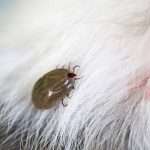
Ticks may be small, but the damage they can do is not. These tiny arachnids find their way onto humans and beloved pets looking for a blood meal. If you happen to find a tick embedded in skin, you may be wondering how to get the tick out safely and what to do next.
If you find a tick embedded in skin, follow these six steps to get it out fast:
Find narrow, pointed tweezers
Grab the tick as close to the skin as possible
Pull up with steady, even pressure
Dispose of the tick properly
Sanitize the bite area
Monitor the bite site for signs of a bullseye rash
Other home remedies, like nail polish, gasoline, matches, and petroleum jelly, are not effective and should be avoided.
Ticks can carry harmful diseases, such as Lyme and Rocky Mountain Spotted Fever, so proper removal is imperative if you find a tick embedded in skin. Read on to discover how to remove these troublesome arachnids correctly, and a few things you should avoid.
* This post contains affiliate links.
6 Steps To Remove a Tick Embedded in Skin
An article from the Journal of Ticks and Tick-Borne Diseases tells us that there is no evidence that Lyme Disease can be transmitted to humans within the first 24 hours of tick attachment. However, the infection rate increases to 10% by 48 hours and to 70% by 72 hours.
For this reason, it’s crucial to remove a tick embedded in skin as soon as it is discovered to reduce the chances of contracting Lyme Disease.
The good news is that removing a tick embedded in skin is a simple process that can be done at home.
Step 1: Grab Some Tweezers
The first step to remove a tick embedded in skin is to find a good pair of tweezers. Tweezers like those found in TickCheck’s Tick Remover Kit are pointy, making them effective at removing ticks. Tweezers with flat ends may be too bulky to remove these tiny arachnids, which can be as small as a poppy seed.
Ticks in the nymphal stage are even smaller than adults and can be incredibly difficult to remove with flat or dull tweezers. Flat tweezers also run the risk of squeezing the tick and forcing germs into the host (aka – you!).
Ensure you have the right tools by grabbing a pair of pointy, precision tweezers.
Step 2: Grasp The Tick
Use the tweezers to grasp the tick as close to the skin as possible. This gives you the best chance of removing the entire tick, including the head. This second step in removing a tick embedded in skin is essential and should be handled with precision and care.
Avoid grabbing the tick towards the back end, as this can squeeze fluids back into you. By grabbing near the head, you’re in the best position to remove the tick without any unwanted complications.
Step 3: Steady As She Goes
The third step for a tick embedded in skin involves removing the tick from your body. With the tick firmly grasped close to the skin, pull upward with steady, even pressure. Do not twist or jerk the tweezers hard and fast. You want to dislodge the tick by forcing it to let go naturally.
Pressing down on the skin to either side of the tick can help keep the skin from pulling up while removing the tick. This lessens the pinching, which can be helpful when removing ticks from children or pets.
If the tick’s head remains in the skin, this is not a cause for alarm. Disease transmission is not possible with only the head. The skin will eventually expel any remaining pieces of the tick. It’s not recommended to go digging for treasure inside the wound after removing the tick, as this can open the wound up to germs.
Step 4: Dispose Of Tick Or Save For Testing
The worst part is over! Now that the tick is out of the skin, it’s time to dispose of this pest properly. The easiest thing is to flush it down the toilet. You can also submerge the tick in alcohol to eliminate it.
Take care when disposing of a tick embedded in skin, as these tiny arachnids are incredibly resilient! Crushing ticks is not recommended because of how difficult it is. Ticks have an extremely tough exterior that can be difficult to crush. Additionally, drowning in water is ineffective as ticks can use an alternative respiration system to breathe underwater for long periods.
Yeah…ticks may be more durable than cockroaches!
Alternatively, if you’re concerned about disease transmission, you can send the tick in for testing to a certified laboratory. Once they receive the tick, they will check for the presence of any diseases the tick is known to transmit.
Not all ticks transmit Lyme Disease. You can check out our article on the 8 types of ticks to learn more about the most common ticks, how to identify them, where they live, and what illnesses they may carry.
Step 5: Sanitize
Step five for a tick embedded in skin is all about taking care of the bite zone. Once the tick is disposed of properly, it’s important to sanitize the bite area. This can be done with something as simple as warm water and soap. You can also use rubbing alcohol or iodine to sanitize the bite.
Even if you sanitize the bite area, you may notice a small, pimple-like red mark for a few days. This is a normal reaction and isn’t a cause for concern.
Step 6: Monitor
The final step for removing a tick embedded in skin is to keep an eye on the bite area. Over the next two weeks, monitor the bite area for the appearance of a bullseye rash that indicates the transmission of Lyme Disease. Between 60 and 80 percent of Lyme transmissions are accompanied by a bullseye rash.
Even if you don’t see a bullseye rash, keep an eye out for symptoms of early Lyme Disease, such as flu-like symptoms and aching joints. If you’re unsure how long the tick was embedded, it’s best to consult a doctor to receive a preventative dose of antibiotics.
Tick Removal Remedies That Don’t Work
Some recommendations that you find online are not effective and should be avoided when removing a tick embedded in skin. If you find a tick embedded in your skin, avoid the following DIY remedies:
Gasoline: Some sites may recommend pouring gasoline on the tick. The idea is that this caustic substance will cause the tick to detach and fall off. Not only is this method ineffective, but it can be dangerous and cause skin irritation.
Petroleum Jelly: The idea behind petroleum jelly is that it will cause the tick to suffocate due to the sticky characteristic of the jelly. However, ticks have an alternate respiration system called a Plastron that helps them survive in low-oxygen conditions for long periods.
Nail Polish: Similar to gasoline, many think this caustic substance will cause a tick to detach on its own. Ticks are extremely resilient and unlikely to detach on their own until they are done feeding.
Lit matches: Many people think that a lit match will cause a tick to detach. The truth is, applying heat to the tick may only cause it to burrow deeper and remain attached longer. The same can be said by applying ice packs.
The above methods are not recommended for a tick embedded in skin and can cause more harm than good. It may be creepy and gross, but using tweezers to physically pull out the tick is the best removal method!
What About Tick Removal Tools?
With Lyme cases on the rise, tick removal tools are more prevalent than ever for removing a tick embedded in skin. These tools come in many forms, such as the TickCheck Tick Remover, which utilizes a slow twisting motion to remove the tick safely.
So,are tick remover tools a good option to remove ticks? Yes!Tick remover tools work similarly to tweezers and can be more effective in some cases because they do not squeeze the tick.
Over the years, I’ve gotten dozens of ticks on me while hiking, and I always use the TickCheck tick removal tool. It’s also very effective for removing ticks from pets, as it can get below their fur and up against their skin.
Tick Removal Tool vs. Tweezers
While both tools are effective for removing a tick embedded in skin, let’s check out the major differences between a tick removal tool and a pair of handy dandy tweezers.
Tick Removal Tool Pros:
Specialized shape for the most effective tick removal
Designed to remove the entire tick, including the head and mouthparts
Some do not squeeze the tick, reducing the chance of infection
Tick Removal Tool Cons:
Typically not found in regular stores (can be found in pet stores)
It may not be as effective for small ticks or those found in difficult-to-reach places.
Tweezer Pros:
Typically already found around the house, so no additional purchase is necessary
More durable than plastic tick remover tools
Widely available in stores
More precision when grasping the tick in hard-to-reach places
Will work on small ticks if fine-tipped tweezers are used.
Tweezer Cons:
Potential to squeeze the tick, forcing fluids back into the skin
Flat-edged tweezers may be ineffective at grasping small ticks.
Overall, both options are effective at removing a tick embedded in skin. It may be prudent to have both on hand, especially if you often go in tick-infested areas.
If the tick is easy to reach and hasn’t been attached for long, a tick remover tool is your best bet. For hard-to-reach places or ticks that are embedded in the skin for long periods, a pair of fine-tipped tweezers may be a better option.
How To Keep Ticks Away
Ticks are found all over North America, but they are most prominent in the eastern half of the United States, especially the northeast.
If you live in an area with a high tick population, there are things you can do around the house and yard to make it less desirable for these bothersome arachnids. This makes it less likely for you to have a tick embedded in skin, whether it’s yours or your pet’s!
By the way, if you see a crawling critter but aren’t sure it’s a tick, head over to our article on ticks, fleas, and bed bugs for a detailed look at identifying these pests!
Remove Wet Areas In The Yard
Ticks are attracted to cool, moist areas because ticks are susceptible to drying out. If you have a low spot in the yard that collects water, it increases the humidity of your yard, attracting ticks.
If possible, fix low spots that collect water and avoid leaving things like upturned buckets and plant pots lying around to collect water.
Additionally, prune bushes and trees to allow more sunlight into the yard. This can help decrease humidity and eliminate potential hangout spots for ticks.
Remodel Edge Environments
Ticks gravitate toward areas where forest meets open grass, such as near a clearing. If your yard borders a thicket of woods, you’re likely attracting ticks to the edge of the yard. This is where their favorite host, the white-tailed deer, is likely to walk through.
To remove edge environments, try adding a 6-inch-wide strip of gravel against the edge environment. Ticks aren’t likely to crawl across this dry barrier. Additionally, it will encourage potential host animals to walk further away from the edge, denying ticks a source of food.
Keep Pets Up To Date On Tick Prevention
Pets are one of the easiest ways for ticks to make their way inside. Keep your furbabies up to date on their flea and tick prevention to keep ticks out of your yard and home.
There are plenty of options out there, from topical spot treatments to chewables to collars. Researching each option is a fantastic idea to figure out which preventative works best with your beloved pet.
Clear Brush and Leaf Piles
Brush and leaf piles are a common hiding place for rodents. Rodents are common hosts for nymphal ticks and are usually the carriers of Lyme and other diseases that then get transmitted to the tick.
Clear away any brush or leaf piles you have in the yard to eliminate these rodent hiding places. If ticks do not have a food source, they’re not likely to keep hanging around.
Mow The Grass
Despite what many think, ticks cannot jump like fleas, and they do not jump from trees to land on people and animals. Instead, ticks lie in wait on the tips of grass, waiting for something or someone to brush by. They then crawl from the grass onto the host.
By keeping the grass mowed, you’re eliminating a launching point for ticks to jump on hosts. Ticks generally prefer to be at about knee-high to latch onto new hosts.
Keeping weeds under control and below knee height will also help make your yard less attractive to ticks.
For a more in-depth look at what attracts ticks, head over to our article on the 11 things that attract ticks. It also provides details on how to eliminate these attractants to keep your yard and home tick-free!
Wrapping Up
Having a tick embedded in skin is not a fun experience. It’s creepy enough that something has bitten you, but the fact that they latch on and feed on blood is just gross!
If you find a tick embedded in skin, follow these six steps to remove it quickly and efficiently:
Find tweezers or a tick removal tool.
Grasp the tick as close to the skin as possible.
Pull up with steady, even pressure. Avoid jerking motions.
Dispose of the tick properly or send it in for testing.
Sanitize the bite area with soap and water, rubbing alcohol, or iodine.
Monitor the bite site for signs of a rash or infection.
Remember, there are several ways you can make your yard less attractive to ticks, such as allowing as much sunshine as possible into the yard, eliminating wet spots, and adding gravel around edge environments.
If you’re not sure how long the tick has been attached, it’s a good idea to consult a doctor. They may recommend a round of antibiotics as a preventive measure.
Robyn is your friendly neighborhood writer, editor, and published author - boasting many years of experience in pest control, from which she magically weaves words into the captivating and engaging posts as we know them. When not tucked behind her laptop screen, she can be found embracing nature in the most thrilling ways possible. Rock climbing? Yes, please! Hiking? Absolutely! Traveling the U.S. with her husband, their lovable three-legged dog, and two mischievous cats? That’s her everyday reality. They live, love, and work in their cozy campervan, letting the road take them where it will, and finding inspiration in every sunrise, mountain peak, and wildlife sighting they encounter. Check out my Profile.
Pest Pointers was started in a cozy corner of Upstate New York, known for its expansive pastures, dense woods, and abundant wildlife pests. We are dedicated to providing YOU with solutions and insights into managing common pest issues. Starting out on over 50 acres of land and a freshwater bass pond with abundant pests, we combine firsthand experience with dedicated advice to help you tackle even the toughest of critters!