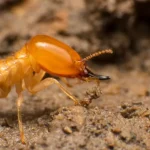
The careful observer will see signs of termites long before seeing the termite itself. These insects are secretive and excellent at hiding in hard-to-reach places. If you find termite mud tubes, you may wonder what they mean and what you should do about them, if anything.
Termite mud tubes are used by termites to travel from the soil into wooden structures. Finding a mud tube usually means there is an infestation, but not always. Hiring a pest control specialist to inspect your home is the best thing to do after discovering a termite mud tube.
Below, this article will take a deep dive into termite mud tubes: what they are, where to find them, what they mean, and what to do about them.
* This post contains affiliate links.
The Basics Of Termite Mud Tubes
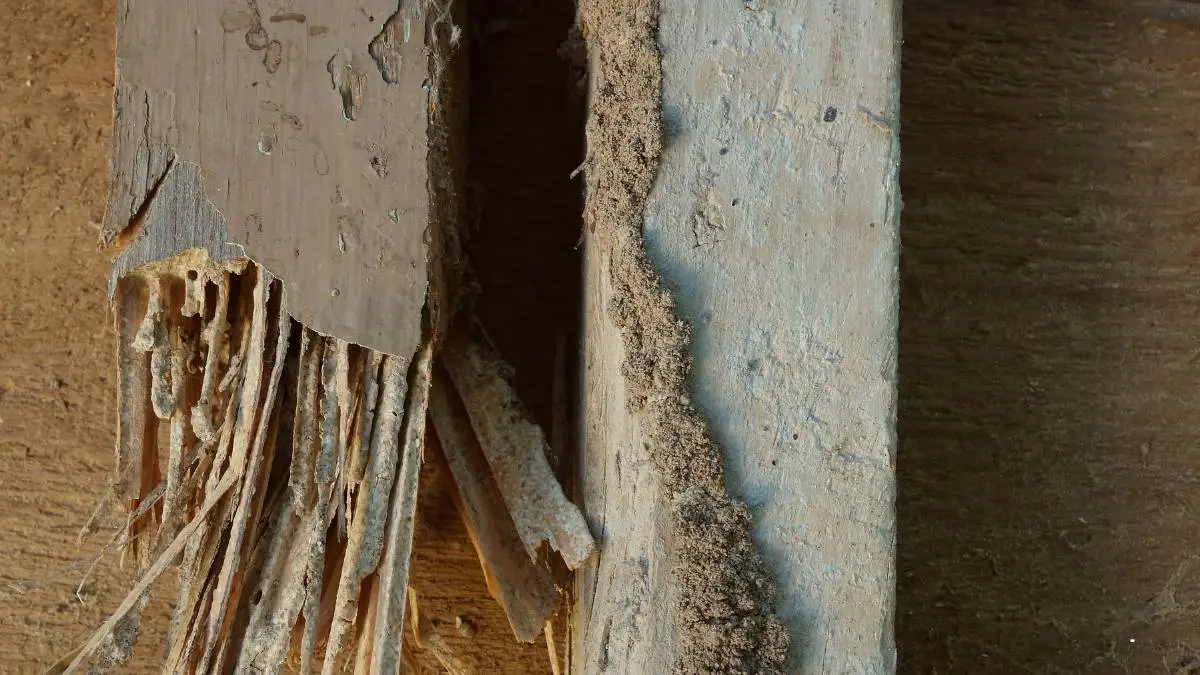
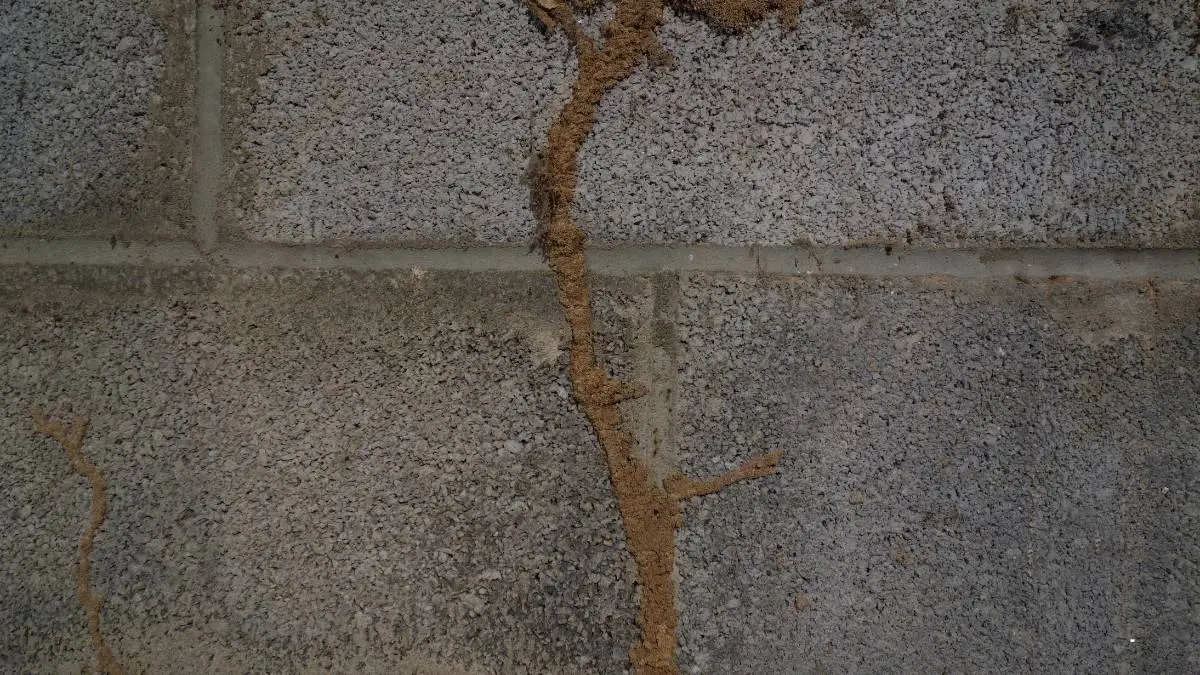
The name says it all! Termite mud tubes are small tunnels that termites create out of mud, saliva, and wood. The tubes vary in diameter, but are most commonly around the size of a pencil.
The tubes are hollow inside, allowing termites to travel unnoticed from the soil to wooden structures that are not in contact with the ground. Subterranean termites (including Formosan termites) are the most common pest species that utilize mud tubes.
By the way, if you’re wondering how you ended up with termites in the first place, head over to our article on the 10 ways termites spread from house to house to learn more!
Why Termites Use Mud Tubes
Mud tubes allow termites to move unseen from the soil to their favorite food source: wood. This makes it difficult to detect infestations until the colony is large enough to produce swarmers that can be seen inside the home.
There are a few reasons why termites use mud tubes:
Moisture: Termites require high moisture content to avoid drying out. Termite mud tubes allow workers to travel from the soil to forage for food without being exposed to air.
Avoid predation: Termite mud tubes not only prevent drying out, but also predation. Termites can travel anywhere they want without worrying about predators scooping them up for a snack.
Foraging: Worker termites must forage for food and new areas to expand the colony. Mud tubes allow the workers to travel safely from the nest in the soil to new areas where potential food sources may be present.
Types Of Termite Mud Tubes
Believe it or not, not all termite mud tubes are the same! Utah State University tells us that there are three main types of termite mud tubes: working, exploratory, and drop tubes.
Here’s a breakdown of what each one means:
Working Tubes: These babies are like a highway system for termites. They range from ¼ to 1 inch in diameter (0.64 to 2.54cm) and can support thousands of foraging termites.
Exploratory/Migratory Tubes: These fragile termite mud tubes are extremely narrow, usually less than 1/16-inch (0.16cm). They’re used to explore new territory to find food sources.
Drop Tubes: Drop tubes are narrow like exploratory tubes, but their purpose is simply to make working tubes more accessible. They’re normally suspended from wooden ceilings or other wooden surfaces and drop down toward working tubes.
Where To Find Termite Mud Tubes
Termite mud tubes are meant to bridge the gap between an underground nest and a food source, such as the wooden materials in your home. They can be found in a variety of places, and knowing where to look can aid in your quest to remove these destructive insects.
Concrete
Plaster
Brick
Metal
Foundation wall
Support piers
Plumbing under the house
Interior and exterior walls
Ceilings
Soffit
Fascia boards
Foam insulation
Floor joists
Sill plates
Termites aren’t very particular when creating mud tubes, using any material to connect their nest to a food source. The most obvious and common place to find termite mud tubes is on the foundation.
Our article on the 13 places where termites live can shed some more light on where you might discover Termite mud tubes.
Does Finding Termite Mud Tubes Mean An Infestation?
If you find a termite mud tube somewhere around your home, it is a cause for concern. Either there is an active colony infesting your home and yard, or a new colony is starting to establish itself and travel into your home.
Usually…Yes
Termite mud tubes usually mean there is an infestation either starting or already established in your home.
Termite colonies can take between 3 and 10 years to establish a colony large enough to do damage to your home. Spotting termite mud tubes early is one way to improve your chances of catching and eliminating an infestation early, before significant damage occurs.
On Rare Occasions…No
On the other hand, if you know your home has been treated for termites, finding a mud tube may not be a cause for concern. Old mud tubes will likely stay in place until they are destroyed, so you may find them around your home even if no termites are active.
The best way to truly know if the mud tube is active or a cause for concern is to consult a pest control specialist. We’ll talk more about that later!
By the way, mud tubes aren’t the only sign that termites are in your home. Head over to our post on termites with wings to discover other clues that termites are invading your home.
6 Things To Do If You Find Termite Mud Tubes
If you spot a termite mud tube, there are several steps you can take to begin your journey toward a termite-free home. The first step? Figuring out if it’s really a termite mud tube or an imposter!
1. Make Sure It’s Termites
The first thing to do if you find termite mud tubes is to make sure it’s actually termites and not other lookalike pests. Termite mud tubes are often confused with mud dauber nests and ant nests. Surprisingly, roots can also be mistaken for termite mud tubes!
Here’s how to spot the difference:
Mud Dauber: Mud daubers are a type of wasp that creates mud tubes. The nests are found plastered to the sides of buildings, usually under some type of protection like an overhang or eave.
Major Differences: Mud Dauber nests will not connect soil to wood like termite mud tubes, and they are elevated high off the ground. Nests are rarely longer than 6 inches.
Ants: Ant tunnels will occasionally look similar to termite mud tubes. Carpenter ants are often confused with termites because they also create tunnels in wood.
Major Differences: Ant tunnels are easily destroyed when touched and usually look more like mounds than tubes.
Roots: Believe it or not, root systems can also mimic the size and shape of termite mud tubes. However, careful inspection will reveal obvious differences.
Major Differences: The texture and sometimes the color of roots are vastly different than termite tubes when closely inspected.
So, before calling a pest specialist, make sure the termite mud tubes you’re seeing are actually termites.
2. Break Open The Tube
If you’ve confirmed the mud tube is in fact from a termite, the next step is to break a small section of the tube open. Aim to break open a section of about one or two inches of the tube, not the entire thing.
By breaking a small section, you are still making it possible for the termites to repair the tube, which helps us identify an active tube from an inactive one.
Here’s how to do it:
Grab a putty knife or similar object.
Cut into the tube, making sure not to damage the surface beneath.
Remove one to two inches of the tube by scraping or cutting.
There are two reasons why we recommend breaking open a termite mud tube. The first is to determine if the mud tube is still in use. The second is to observe any unwanted critters inside the tubes. More on that next!
3. Wait For Termites To Appear
After breaking open the tube, observe what happens. If you see creamy white worker termites or big-jawed soldier termites coming to investigate who or what broke open the tube, you’ll know the tube is active.
This information is helpful to pest control specialists in identifying the area where the termite nest is located. If you don’t see any termites, it doesn’t necessarily mean the tube is inactive. It may be that the termites aren’t using it at the present moment or are using a nearby tube instead.
If you don’t see termites, there are still ways to figure out if the tube is active or not.
4. Observe For A Week
If no termites appear after breaking open the tube, leave the tube alone for about a week, avoiding the area and making sure it isn’t disturbed.
Once a week has passed, check back to see if the termite mud tube has been repaired. If it has, that indicates the tube is still active. If it hasn’t been repaired after a week, chances are the tube has been abandoned.
Abandoned mud tubes do not mean there is no infestation. It just means the termites have moved on to a different route to reach your home’s interior.
5. Do Not Destroy
It’s tempting, but it’s recommended not to destroy termite mud tubes. Termite mud tubes can help pest control specialists learn more about the specific termites that are infesting your home.
It may be just an ugly mud tube on your foundation, but it holds key information like the species of termite, an approximation of how many termites use the tube, and potentially point to nest locations.
Pest control professionals can use this information to tailor pest control methods for your specific situation, making their efforts more effective and bringing you closer to a less termite-y home!
6. Call A Professional
While we pride ourselves on recommending effective DIY pest control here at Pest Pointers, termites are one bug we don’t mess with! Termites infest areas that are hard to reach for most homeowners, making them difficult to remove with DIY methods.
Instead, it’s best to contact a pest control specialist if you think you have a termite infestation. Even if you’re not sure, or if the termite mud tubes seem abandoned, it’s best to call for an inspection or professional advice at the least.
Check out our pest control finder to locate a pest control professional near you! Once your home is treated for termites, it’s important to take preventative steps to keep them from reinfesting your home.
Spotting termite mud tubes around the home is a cause for concern since termites often go unseen for years. Termites use mud tubes to travel from their nest in the soil up to wooden structures like your home. The tubes provide safety and moisture for traveling worker termites.
If you discover one of these dreaded tubes around your home, here’s a recap of the 6 steps to take:
Determine if it’s actually a termite mud tube or another pest.
Break a small section of the tube open.
Look for termites inside the tube.
Wait a week to see if the mud tube gets repaired.
Do not destroy the mud tube – it provides key information for pest professionals.
Call a pest control specialist.
Termites are pests that are best handled by professionals. They have the knowledge of building construction and the access to professional-grade termiticides to truly eliminate a termite infestation. After all, a termite-free home is a happy home!
Robyn is your friendly neighborhood writer, editor, and published author - boasting many years of experience in pest control, from which she magically weaves words into the captivating and engaging posts as we know them. When not tucked behind her laptop screen, she can be found embracing nature in the most thrilling ways possible. Rock climbing? Yes, please! Hiking? Absolutely! Traveling the U.S. with her husband, their lovable three-legged dog, and two mischievous cats? That’s her everyday reality. They live, love, and work in their cozy campervan, letting the road take them where it will, and finding inspiration in every sunrise, mountain peak, and wildlife sighting they encounter. Check out my Profile.
Pest Pointers was started in a cozy corner of Upstate New York, known for its expansive pastures, dense woods, and abundant wildlife pests. We are dedicated to providing YOU with solutions and insights into managing common pest issues. Starting out on over 50 acres of land and a freshwater bass pond with abundant pests, we combine firsthand experience with dedicated advice to help you tackle even the toughest of critters!