Quick answer: How to get rid of skunks humanely: first make sure no babies are in the den, then make the den unpleasant with light, noise, and a vinegar-soaked rag, or fit a one-way door so the skunk can leave but not get back in. Once the den has been empty for two to three nights, seal it with an L-shaped wire barrier and remove the food that drew the skunk in, such as pet food, open trash, and lawn grubs.
Finding out a skunk has moved in under your deck, porch, or shed is never fun. You want it gone, but you also don’t want to get sprayed, hurt the animal, or end up with an orphaned litter of kits under your floorboards.
The good news is that skunks are easy to persuade. In this guide, I’ll show you how to get rid of skunks humanely, step by step, and how to keep them gone for good. The same methods work whether the skunk is living under a structure or just visiting your yard at night.
* This post contains affiliate links.
Why Humane Removal Works Better
Trapping a skunk seems like the fast fix, but it causes more problems than it solves. A trapped skunk is likely to spray, many states and provinces restrict moving skunks because they’re a rabies vector species, and relocated animals often don’t survive in unfamiliar territory. American Humane advises against trapping and relocating skunks, and recommends sealing their denning spots instead.
A trapped or relocated skunk also leaves the den open for the next skunk. Humane eviction plus exclusion fixes the actual problem: the opening that made your yard attractive in the first place.
How to Get Rid of Skunks Humanely: 7 Steps
1. Confirm a Skunk Is Using the Den
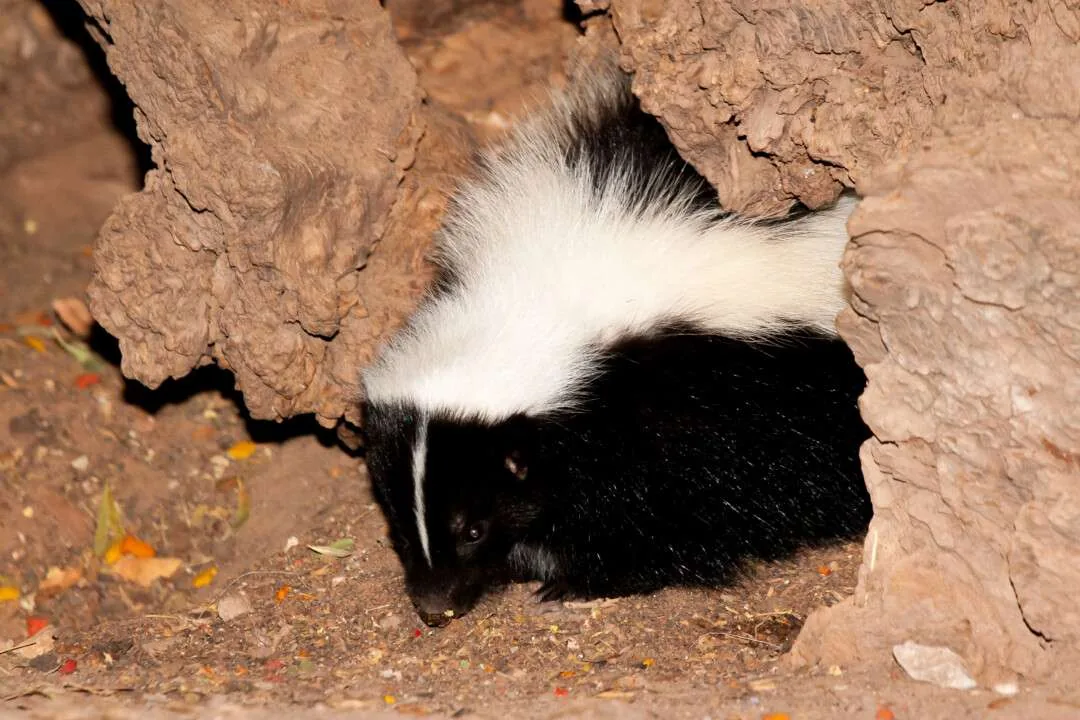
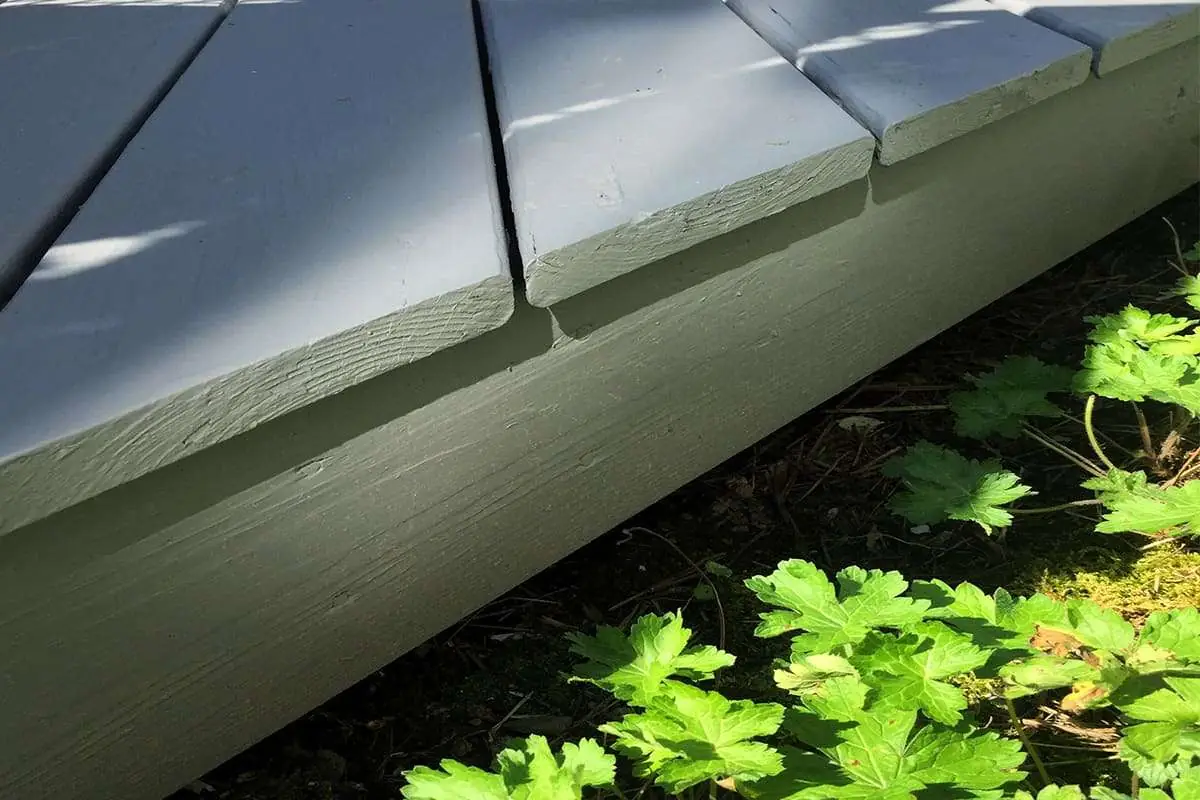
Look for a fresh hole under a deck, porch, slab, or shed, fresh digging, small cone-shaped holes in the lawn, and a musky smell. To check whether the den is active, Humane World for Animals suggests loosely plugging the hole with soil, leaves, straw, or crumpled paper. If a skunk is inside, it will push its way out overnight and reopen the hole.
2. Check for Babies First
This is the most important step. Skunk kits are born in spring and can’t follow their mother for several weeks. If you block the den while they’re inside, they’ll starve, and the mother may tear at your deck trying to reach them. Humane World for Animals says that when in doubt, assume young are present and wait until they start following their mother out to forage.
The Toronto Wildlife Centre notes that September through December is a good window for eviction, because tiny babies are unlikely and the ground is still soft enough for the skunk to dig a new den. If you see a line of small skunks trailing behind an adult at dusk, the family is mobile and you can move ahead.
3. Make the Den Unpleasant
Skunks pick dark, quiet, safe-smelling spots. Take those away and most will leave on their own within a few nights. Make sure the skunk is out foraging before you set up any of these:
Light: Point a fire-safe work light or a motion-activated light at the den entrance.
Noise: Leave a radio tuned to a talk station near the opening at night.
Smell: Soak a rag in apple cider vinegar, put it in a plastic bag with holes poked in it, and set it by the entrance. Our list of scents that skunks hate has more options.
If the skunk won’t budge, a one-way door is the most reliable humane tool. It’s a wire flap mounted over the entrance that swings outward only. The skunk leaves at dusk to feed and can’t get back in. Seal any other openings first so the door is the only way in or out.
Humane World for Animals recommends leaving the door in place for two or three nights to a week to be sure the skunk is gone. Never use a one-way door if kits might be inside.
5. Confirm the Den Is Empty
Before you seal anything, do the plug test again. Loosely fill the hole with crumpled newspaper, or tape a double sheet of newspaper over it. If it stays undisturbed for two to three nights, the den is empty. In winter, skunks can stay inactive for longer, so give it a few extra nights.
6. Seal the Area With an L-Shaped Barrier
Skunks are strong diggers, so a board across the front won’t hold. The Toronto Wildlife Centre recommends this method for sheds and decks:
Dig a trench about 12 inches deep and 12 inches wide around the structure.
Fasten 1/4-inch wire mesh to the bottom edge of the deck or shed.
Run the mesh 8 to 12 inches straight down, then bend it outward at a 90-degree angle to form an “L.”
Refill the trench. A skunk that digs at the wall hits the buried wire and gives up.
According to Humane World for Animals, skunks are mainly drawn to easy food like garbage and pet food left out at night, and to den sites such as wood piles, elevated sheds, and gaps under porches and slabs. Skunks also dig for grubs, which can be a sign of an overwatered lawn.
Feed pets indoors, or pick up bowls right after they eat.
Use trash cans with locking lids and put them out the morning of pickup.
Store birdseed in sealed containers and clean up spilled seed under feeders.
Pick up fallen fruit and move wood and brush piles away from the house.
Cover window wells and treat lawn grubs if skunks keep digging.
How to Get Rid of Skunks Permanently
Permanent results come from making your property less useful to skunks, not from scaring one animal away. Once the den is sealed with buried wire and the food is gone, there’s no reason for the next skunk to stay. Natural deterrents help too. Try plants that keep skunks away around beds and foundations, or rotate the best skunk repellents so skunks don’t get used to one smell.
Call a licensed wildlife control operator if a skunk is inside your home or crawl space, if you can’t find all the entry points, or if you know kits are present and need to be reunited with their mother. Also call animal control right away if a skunk is acting strangely. Humane World for Animals lists limb paralysis, circling, staggering, unprovoked aggression, or unusual tameness as warning signs. A skunk out in daylight alone isn’t a reason to panic; see seeing a skunk during the day.
So, how do you get rid of skunks humanely? Check for babies, make the den uncomfortable or fit a one-way door, confirm the den is empty, and then seal it with an L-shaped wire barrier. Finish by removing pet food, trash, and grubs so the next skunk has no reason to move in. It takes a few nights, but nobody gets hurt and nobody gets sprayed.
Keep Pest Pointers in mind for all your pest control needs!
How to Get Rid of Skunks Humanely: FAQs
What is the most humane way to get rid of skunks?
Make the den unpleasant with light, noise, and a vinegar-soaked rag, or install a one-way door once you’re sure no babies are inside. After the den is empty, seal it with an L-shaped wire barrier.
How do I get a skunk to leave from under my deck?
Wait until it leaves to feed at dusk, then shine a light into the opening, play a radio nearby, and place a vinegar rag at the entrance. Most skunks move out within a few nights. A one-way door works if they don’t.
How long should a one-way door stay up?
Leave it in place for two or three nights to a week, then do a plug test with crumpled paper. If the plug stays undisturbed for two to three nights, the den is empty and you can seal it.
Is it legal to trap and relocate a skunk?
It depends on where you live. Many states and provinces restrict relocating skunks because they’re a rabies vector species. Check with your state wildlife agency, and consider eviction and exclusion instead.
When should I not evict a skunk?
Avoid evicting in spring and early summer if kits might be in the den, and during the coldest part of winter. Late summer through early winter is usually the safest time.
How do I keep skunks away permanently?
Seal den sites with buried L-shaped wire, feed pets indoors, use locking trash lids, clean up birdseed and fallen fruit, and treat lawn grubs so skunks have nothing to eat or hide in.
Amos is your go-to editor and pest advice enthusiast, blending years of hands-on experience into clear, practical guidance for everyday pest problems. Growing up on a farm near Grandville, Michigan, he spent his days outdoors, learning to deal with wildlife, pests, and nature in real-world settings rather than just from a textbook. That upbringing turned him into a genuine nature lover, comfortable in fields, woods, and around all the critters that come with them. Today, he channels that background into approachable, science-informed articles that help homeowners protect their spaces without overcomplicating the process. When he’s not polishing guides or answering pest questions, you can imagine him most at home outside—observing animal behavior, walking the land, and turning those observations into practical tips you can actually use. His mission is simple: to give you straightforward, reliable pest pointers so you can spend less time worrying about infestations and more time enjoying your home and yard. Check out my Profile.