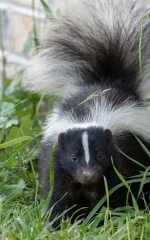
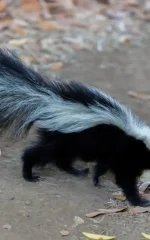
Quick answer: Do skunks dig holes in yard? Yes. Skunks dig small, cone-shaped holes about 3 to 4 inches wide while hunting grubs, and larger den holes under porches, sheds and woodpiles. To fill a skunk hole, plug it loosely with straw or leaves, wait two or three nights, and if the plug hasn’t moved, pack the hole firmly with soil.
You know the scent from a mile away. It’s easily detectable while you’re cruising down the road with your windows down or when you open your backdoor on a cool, crisp morning. And you most definitely know the scent – and may even fear it – when you’re taking your four-legged friend out for their nightly walk. What is this potent scent that can strike panic in even the most stoic folks? SKUNKS!
The best way to fill a skunk hole is to place straw inside the hole and leave it for two or three nights. If you come back and the straw is undisturbed, it’s likely there isn’t a skunk living inside their makeshift den and you can go ahead and pack it full of dirt.
So what can we do to help make sure that these skunks don’t take up residence in your yard and keep them out permanently? We’ve got you covered! Keep reading to learn about the steps to fill a skunk hole, why they make these dens in your yard, and ways that you can prevent them from coming to your yard altogether.
* This post contains affiliate links.
Do Skunks Dig Holes in Your Yard?
Yes. Skunks dig holes in lawns, gardens and golf courses to reach insect grubs in the soil. Penn State Extension describes the damage as small cone-shaped holes or patches of upturned earth up to 3 to 4 inches across. The University of Maryland Extension adds that skunk holes are about 3 inches wide and deep, and usually clustered close together.
Because skunks are active at night, you’ll rarely catch one in the act. They may come back to the same spot night after night until the grubs are gone, so a few holes can quickly turn into dozens.
Type of hole
What it looks like
Who dug it
Skunk feeding holes
Small cone-shaped holes about 3 to 4 inches wide, clustered together
Skunk hunting grubs
Skunk den hole
Larger opening, often under a porch, shed, slab or woodpile
Skunk denning or raising young
Rolled-back sod
Pieces of sod lifted or flipped over in chunks
Usually a raccoon
Not sure which animal is visiting? Our guide to signs of a skunk den can help you confirm it before you start filling holes.
Why Are Skunks Making Holes In My Yard?
There are two main reasons that skunks may be making holes in your yard: for food and for shelter.
Let’s take a look at the difference between the characteristics of these two skunk holes and how you’ll be able to differentiate them to determine whether a skunk is just passing by or if you’re looking at a skunk who wants to stay for a while.
1. Skunks Dig Holes Looking For Food
From fallen birdseed to worms and grubs that live in your grass, skunks have quite the meal readily waiting for them in backyards across the county.
When skunks are digging holes for food, these holes are generally smaller and more shallow in size, however entire chunks of grass may be uprooted while they’re looking for their meal.
Since skunks are more than willing to feast on grubs, which are located within the layers of dirt, this digging of layers could be the cause for these larger grass chunks being removed.
Other insects that skunks may be searching for in your grass include hornworms and cutworms and Japanese beetles, but skunks may also eat pieces of fruits and vegetables that have fallen from surrounding vegetation.
2. Skunks Dig Holes To Make Their Burrows And Nest
By all means, nesting holes are the more significant of the two types of holes that skunks will dig. Other than the size difference between these two skunk holes, the other key identifier is the location of the hole.
Skunk holes made for nesting and for use as a den can have an opening of eight inches wide and are deep enough that you may not be able to see the actual nest or occupants.
Additionally, these larger holes will be more commonly spotted around protective structures to help limit entry.
However, it can be hard to identify a skunk hole – but don’t worry, we got you covered with an in-depth article about signs of a skunk den and how to find them! We recommend heading over to identify if you’re dealing with skunk holes before you go and fill them!
5 Steps to Fill a Skunk Hole in Your Yard
You’ve seen the hole in your yard, and you’ve maybe even caught a whiff of that well-known scent, so you know that you’ve got a potential problem – but what do you do?
If you’re comfortable working in an area where you know skunks may be passing by, we’re going to share some recommended steps for filling a skunk’s den hole, however, we always suggest contacting a professional first before taking on any pest problem yourself!
1. Make Sure There Aren’t Any Skunks Around
We know that this is probably a given, but before you do any sort of work in or around the area of a skunk hole, make sure that there aren’t any skunks spotted nearby.
Skunks are mostly nocturnal, so you’re less likely to see them during the day, but because their dens can be so deep, you may not know if there’s a skunk slumbering inside the hole either. Here’s more on when skunks come out at night.
Check for babies first. Skunks use dens to raise their young, and babies can’t leave on their own until they’re old enough to follow their mother. Humane World for Animals advises that if you’re not sure, assume young are inside and wait until they start following their mother out to forage before you seal a den.
You may want to do some research on how long skunks stay in a den to know how long your prevention methods may take.
2. Loosely Fill the Skunk Hole With Soft Materials
We don’t want to accidentally pack a skunk in its den, so it’s important to determine whether or not there is a skunk present inside the hole before filling it.
Once you’ve identified the skunk hole and are in the clear of any surprise visitors, use soft, natural materials like leaves or straw to lay over the hole.
These materials are light and not compact enough to fill and compress the hole, which will allow any skunks to make their way out of the hole during overnight hours.
When you check the skunk hole the next morning, if you notice that the leaves, straw, or other material used to cover it has been moved, this serves as a sign that there’s been activity and there may have been a skunk in the hole, and you should repeat this step to ensure it. Humane World for Animals says that if the plug stays undisturbed for two or three nights, the hole is likely empty. In winter, give it a few extra nights, since skunks can stay inactive for longer stretches.
3. Add Light And Noise To The Surrounding Area (If Needed)
The purpose of skunks digging and creating their dens underground is that it’s a safe, dark, and quiet spot for them to rest or nest in preparation for their young.
Being a loud neighbor might help deter skunks from digging holes in your yard and may help evict them from their den hole more quickly if they’ve already made their presence known.
Adding noise makers like wind chimes and wind-catching wheels to your yard may assist in evicting a skunk from its hole, but as a nocturnal animal, light may be even more effective.
As an alternative to running electrical to accommodate the location of the skunk hole, consider a solar light such as Magic Cat Solar Nocturnal Animal Repeller. These lights are waterproof and easy to place in the number of nearby areas to repel skunks.
Once you’re satisfied that any possible skunks in the area have made their way out of their den, you’re ready to completely pack and fill the hole with dirt. So, grab your shovel and a bag of dirt, and head on over!
When filling in the skunk hole, be sure that the dirt is properly packed down.
Loosely filled and packed holes will be able to easily be re-dug, so being methodical about filling, packing, and repeating this process until the ground is level is an important step in the process.
5. Add Additional Barriers Surrounding The Skunk Hole (If Needed)
Once you’ve completely filled the skunk hole, or holes, in your yard, you may want to consider adding additional barriers for a period of time to help further deter skunks from returning.
Adding a perimeter fence around the skunk hole should do the trick to help keep skunks from returning to their nesting hole.
Other Ways To Prevent Skunks From Making Holes In Your Yard
An ounce of prevention is worth a pound of cure as they say.
Now that you know how to clear out and fill in any skunk holes that may appear in your yard, what other steps can you take to make sure that you aren’t inadvertently opening your yard up to skunk activity?
However, you may be wondering, do skunks ever leave on their own? Do I really need to take preventative measures? Well, we’ve got answers for you in our article about it! Head on over to read about when skunks will leave on their own!
Habitat Modification
Skunks are opportunistic creatures. If there is an easy meal nearby, skunks will help themselves to it and not care about the residual mess they may make. To help avoid these potentially messy situations, here’s what we recommend.
Don’t leave pet food outdoors. If you leave a pet food dish out overnight in cases where your four-legged family member has free range of your property, you may want to reconsider. In addition to skunks digging through these bowls, leftover pet food is an attractive meal for several other types of pests as well.
Harvest any low-hanging fruit. Skunks have been known to nibble on berries and other fruits that are within their reach. If you see that you have fruits ready to pick, don’t delay in harvesting them for a sweet treat for yourself. In contrast, you can also use certain plants to keep skunks away.
Any fruits left out too long may begin to spoil or may weigh down the plant, making the fruit a treat for skunks and other unwelcome pests.
Close your garbage bins. Raccoons aren’t the only creatures that may dig through your garbage. Putting a lid on your garbage and compost bins will help deter skunks – and other pests – from rummaging inside for a free meal.
Prevent Denning
We know that skunks will dig in your yard and at times it may seem like a difficult challenge to tackle.
Other than your yard though, skunks like to prepare their dens in the following areas:
Under porches or concrete slabs
In wood or rock piles
Under elevated sheds or other storage bins
Don’t forget – skunks are opportunists so if there’s already an opening that they can crawl into and make their own, they absolutely will.
Ways To Prevent Skunks From Denning
To help prevent skunks from denning in these locations, we recommend closing off or relocating some of these items if you can.
Close off openings under concrete slabs, crawl spaces, or porches. For areas that may not be able to be refilled with dirt, consider a material like Garden Poultry Chicken Wire Netting to help close off these areas. If you bury this fence a few inches into the ground, it will prove to be an even more effective skunk deterrent.
Remove exposed wood and rock piles. While you might store wood outdoors to dry for use during the winter months, we realize that you may not be able to remove these piles or move them indoors. If you can’t relocate these piles indoors, consider relocating them to the perimeter of your property line so that skunk activity doesn’t get too close to your home.
Reconsider installing a raised or elevated shed or storage container. If there’s a space underneath it, a creature will undoubtedly make it into its home.
When you’re considering building or installing a raised shed or other storage containers, make sure to plan to close off any potential openings or gaps underneath to deter skunks from denning underneath.
Use Skunk Repellents
There are a number of skunk repellents on the market from all-natural options to those that may contain chemicals or other compounds to help deter skunk activity.
For an all-natural option, consider Bonide Repel All Animal Repellent. This product is all-natural and the granules are biodegradable so they won’t harm your grass or other plants if they come into contact.
There are a number of other effective repellents as well. From hot sauce sprays to chili and cayenne pepper, there are a variety of ways to incorporate these ingredients into a powder or spray to keep skunks out. If you’re interested in reading up on some of these other repellent options, check out our post on the scents that skunks hate!
Putting It All Together!
Skunks. For a pest smaller in stature, they have the uncanny ability to make humans run in the opposite direction.
In addition to these creatures leaving a stinky odor behind, they can also cause damage to your yard while they dig holes for food and, more commonly, to make their nests.
When you spot these skunk holes in your yard, it’s important to properly fill the holes to ensure they don’t return.
If you’re not comfortable working in close proximity to a skunk hole or den, never hesitate to reach out to your local wildlife and pest professionals. These professionals will be able to give you more information on skunk activity in your particular area and work with you to build an effective treatment and prevention plan.
Skunk Holes: FAQs
Do skunks dig holes in yards?
Yes. Skunks dig small cone-shaped holes, about 3 to 4 inches wide, while hunting grubs and other insect larvae in lawns and gardens.
What does a skunk hole look like?
Feeding holes are small, neat cones clustered together. Den holes are larger openings, usually under porches, sheds, slabs or woodpiles.
How do I know if a skunk hole is occupied?
Loosely plug it with straw, leaves or crumpled newspaper. If the plug is still undisturbed after two or three nights, the hole is likely empty.
How do I tell skunk holes from raccoon damage?
Skunks leave many small, separate holes. Raccoons usually lift or roll back larger chunks of sod.
When should I not fill a skunk den?
In spring and early summer, when a mother may have young in the den. Wait until the babies follow her out to forage before sealing it.
How do I stop skunks from digging holes in my yard?
Remove what they’re digging for. Reduce lawn grubs, take in pet food, close garbage bins, and block openings under porches and sheds.
References
Chance, W. O. (2008). What is digging in my yard?.
Hamilton, W. J. (1936). Seasonal food of skunks in New York. Journal of Mammalogy, 17(3), 240-246.
Knight, J. E. (1994). Skunks. The Handbook: Prevention and Control of Wildlife Damage, 42.
Kolodzinski, J., & Mengak, M. T. (2007). Managing wildlife damage: Striped skunk (mephitis mephitis). University of Georgia.
Merrill, H. A. (1962). Control of opossums, bats, raccoons, and skunks.
Shirer, H. W., & Fitch, H. S. (1970). Comparison from radiotracking of movements and denning habits of the raccoon, striped skunk, and opossum in northeastern Kansas. Journal of Mammalogy, 51(3), 491-503.
Amos is your go-to editor and pest advice enthusiast, blending years of hands-on experience into clear, practical guidance for everyday pest problems. Growing up on a farm near Grandville, Michigan, he spent his days outdoors, learning to deal with wildlife, pests, and nature in real-world settings rather than just from a textbook. That upbringing turned him into a genuine nature lover, comfortable in fields, woods, and around all the critters that come with them. Today, he channels that background into approachable, science-informed articles that help homeowners protect their spaces without overcomplicating the process. When he’s not polishing guides or answering pest questions, you can imagine him most at home outside—observing animal behavior, walking the land, and turning those observations into practical tips you can actually use. His mission is simple: to give you straightforward, reliable pest pointers so you can spend less time worrying about infestations and more time enjoying your home and yard. Check out my Profile.