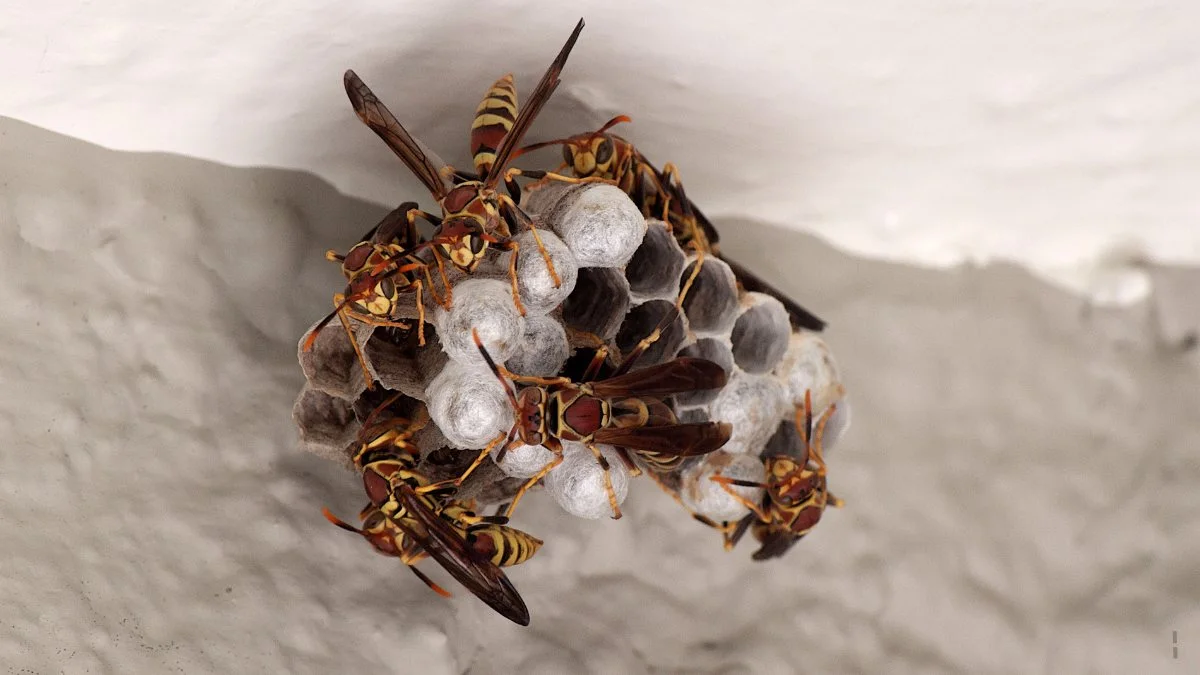
Wasps can ruin a picnic and make your porch completely unusable. If you want to keep stinging insects away without harsh pesticides, a peppermint oil wasp deterrent is one of the most effective natural solutions available. Research consistently supports its ability to repel yellowjackets, hornets, and paper wasps.
Peppermint oil overwhelms a wasp’s sensitive olfactory system. This makes it impossible for the insect to track food, follow chemical trails, or locate nesting sites. You can apply this natural wasp repellent as a spray, cotton ball soak, diffuser, ready-made product, soaked rags, or scented candle.
This guide covers 6 practical ways to use a peppermint oil as a wasp deterrent. You’ll also learn the best locations to apply it, how often to refresh treatments, and the science behind why it works.
* This post contains affiliate links.
Why Peppermint Oil Works Against Wasps: The Science
Wasps are more than just an annoyance, they pose real risks. Understanding their behavior helps you use peppermint oil wasp control more effectively. The three most common nuisance species around homes are:
Yellowjackets (Vespula and Dolichovespula species)
Hornets (including bald-faced hornets)
Paper wasps (Polistes species)
Each species follows a predictable seasonal activity pattern. Queens emerge from hibernation in early spring (March–May) and begin scouting for nesting locations.
Wasps Sting Repeatedly, and Reactions Can Be Severe
Unlike honeybees, wasps have a smooth stinger they can use multiple times. They typically sting only when they sense a threat to their nest. However, that threshold is surprisingly low for yellowjackets and bald-faced hornets.
The health risks are significant. A study published in Nature.com found Hymenoptera stings cause approximately 220,000 emergency department visits annually in the U.S.
Children and pets face the greatest risk, they may approach a nest without recognizing the danger. A consistent peppermint oil wasp repellent strategy can prevent encounters before they become emergencies.
Nests Make Outdoor Spaces Unusable
Wasp nests are built from chewed wood fiber and saliva. This produces the familiar gray, paper-like material. Depending on the species, nests appear in many locations:
Under eaves, gutters, overhangs, and ledges
Inside attics, wall voids, and roof cavities
In sheds, barns, and outbuildings
Behind shutters or inside porch lights
In mailboxes, hollow trees, or ground burrows (yellowjackets)
Hanging from tree branches (bald-faced hornets)
Paper wasps build open, umbrella-shaped nests in sheltered areas. Yellowjackets prefer enclosed cavities, including underground burrows and wall voids, making them harder to detect early. By the time you find the nest, the colony may already be large and aggressive.
When a nest forms near an entrance, play area, or patio, those spaces become functionally off-limits. A peppermint oil deterrent applied early in the season can stop that from happening.
If you find a nest around your home, head over to our article on the 9 ways to get rid of wasp nests safely for tips on removing nests.
6 Ways To Use Peppermint Oil As A Wasp Deterrent
Peppermint essential oil is widely available online and in stores like Walmart. Before choosing a method, keep these practical guidelines in mind:
Dilution
Essential oils are highly concentrated. Most methods require dilution in water, except where noted.
Pet safety
Peppermint essential oil is toxic to cats and dogs if ingested. Allow sprays to dry fully before pets re-enter treated areas.
Reapplication
Essential oils evaporate quickly. Most methods need refreshing every 5–7 days, or after rain, to stay effective.
Concentration matters
Research confirms that essential oil repellents require adequate concentration to change wasp behavior.
Peppermint isn’t the only scent that will deter wasps. Head over to our guide on the 8 scents that wasps hate to learn about other oils that can repel these flying pests.
Now, let’s move on to the 6 ways to use peppermint oil to deter wasps!
1. Peppermint Essential Oil Spray
A homemade peppermint spray is one of the most practical methods for natural wasp control. It covers large surface areas quickly. You can apply it anywhere wasps scout for nesting spots.
What you need:
Glass spray bottle (preferred; plastic works too)
Pure peppermint essential oil
Water
A few drops of dish soap (acts as an emulsifier)
How to make it:
Add 10–15 drops of peppermint essential oil per 8 ounces of water to your spray bottle. Add 2–3 drops of dish soap and gently swirl to combine. Do not shake vigorously, this creates excessive foam.
Spray along window frames, door frames, shutters, porch ceilings, eaves, and shed exteriors.
Target any sheltered surface where wasps have previously built nests. Some wasp species return to the same locations each season, so treating prior nest sites is especially important.
Reapply every week and immediately after rainfall.
By the way, if you’re wondering why you have wasps around the house in the first place, check out our article on the 5 things that attract wasps to your yard for more information!
2. Peppermint-Soaked Cotton Balls
This method works best for targeted wasp repellent placement in specific spots. Think mailboxes, porch corners, under eaves, and outdoor garbage bins. It delivers a concentrated, sustained scent barrier exactly where you need it.
How to use:
Soak cotton balls directly in undiluted peppermint essential oil, no water needed. The cotton absorbs the oil and releases it slowly over several days.
Place soaked cotton balls in a mesh bag and hang near nest-prone areas. Alternatively, put them in a mason jar covered with plastic wrap poked with small holes to let the scent out.
For outdoor garbage bins, place 2–3 soaked cotton balls inside the lid to mask food odors that attract yellowjackets. Do this particularly during late summer and fall when competition for food intensifies.
Replace cotton balls every 5–7 days, or when the peppermint scent begins to fade.
Vinegar is another strong option to soak cotton balls in. Our guide on whether or not vinegar repels wasps can teach you all about utilizing this common household item to keep wasps away!
3. Essential Oil Diffuser
For porch and patio use, an essential oil diffuser is a reliable, low-effort approach to wasp prevention. It disperses peppermint-scented water vapor into the air around your outdoor space. This creates a scent zone that keeps wasps from approaching.
How to use:
Fill the diffuser basin to the marked water line
Add 5–10 drops of peppermint essential oil to the water
Replace the cover and switch on the diffuser
Position it on a stable outdoor table or surface
A diffuser works best during outdoor activities, barbecues, afternoon meals, gatherings on the patio. The scent radius covers several feet, so for larger areas, combine it with a spray treatment on surrounding surfaces.
Product recommendation:
ASAKUKI Essential Oil Diffuser, compact, runs for extended periods on a single fill, and suits covered outdoor spaces well.
Note: Do not use peppermint oil diffusers around cats or dogs.
It is not recommended to use a diffuser with peppermint essential oils around pets.
4. Ready-Made Peppermint Oil Spray
Not everyone wants to mix their own solution. Commercial peppermint-based wasp repellent sprays are available at Home Depot, Lowe’s, and online. They’re ready to use straight from the container.
It contains geraniol, a naturally derived terpene alcohol that complements peppermint’s menthone content. Geraniol has independently demonstrated repellent activity against stinging insects in field studies.
Ready-made sprays often maintain concentration longer than homemade versions due to added stabilizers. Even so, plan to reapply weekly during peak wasp season (July–September).
5. Peppermint-Soaked Cotton Rags
Peppermint-soaked rags are a scaled-up version of the cotton ball method. They work well for covering larger structural areas, under eaves, open barn rafters, shed rooflines, and outbuilding perimeters. Cotton fabric holds moisture longer than cotton balls.
How to saturate the rags:
Option A – Spray method: Prepare a peppermint spray (15 drops of oil per cup of water) and saturate old cotton rags until thoroughly wet.
Option B – Soak method: Mix 15 drops of peppermint essential oil per cup of water in a bucket. Soak cotton rags for at least 30 minutes.
Attach saturated rags under eaves or along structural edges using a staple gun, nails, or exterior-grade pushpins. Cotton fabric holds moisture longer than cotton balls, making it better for hard-to-reach spots.
Re-saturate rags weekly to keep the scent strong, or every 4–5 days during periods of heavy heat and direct sun.
A peppermint-scented candle is a simple option for outdoor event wasp control. The flame’s heat volatilizes peppermint compounds in the wax, dispersing them into the surrounding air. It works similarly to a diffuser, but is better suited for one-time events than ongoing wasp management.
Light multiple candles spaced a few feet apart for broader coverage. This method suits dinner parties, cookouts, and picnics particularly well. Since candles must be supervised and eventually extinguished, they’re not ideal as a permanent deterrent.
Safety reminders:
Always place candles on a stable, level surface
Never leave lit candles unattended for extended periods
Keep away from overhanging branches, tablecloths, or other flammable materials
Be cautious around pets, particularly cats
Why Peppermint Oil Works Against Wasps? The Science
Peppermint oil’s effectiveness as an insect repellent comes down to specific chemical compounds. Wasps process these compounds through highly sensitive olfactory receptors in their antennae. The result is a sensory overload that disrupts their ability to function normally.
The Key Chemical Compounds
Peppermint oil is a complex mixture of volatile organic compounds. Research published on ResearchGate found the main constituents to be menthol (40.7%) and menthone (23.4%). Additional compounds include menthyl acetate, 1,8-cineole, limonene, and beta-caryophyllene.
For wasp deterrence, the three most relevant compounds are:
Menthone
A ketone compound responsible for peppermint’s sharp, intense scent. The Journal of Pest Management Science (2012) identified menthone as one of the most powerful individual wasp repellent compounds.
Menthol
The dominant compound in peppermint oil. It activates cold-sensitive TRPM8 receptors in insects and interferes with the olfactory receptor neurons they use to detect chemical cues in their environment.
Limonene
A terpene found across many aromatic plants. It has documented insecticidal and repellent activity across multiple insect species, adding to peppermint oil’s overall deterrent profile.
How Wasps Detect Scent, and Why Peppermint Overloads That System
Wasps rely on olfactory signaling through their antennae to communicate and locate resources. Their sensory system detects alarm pheromones, food odor trails, and the chemical signatures of safe nesting sites. When a wasp encounters a powerful volatile compound like peppermint, the signal overwhelms everything else.
The same study 2012 in the Journal of Pest Management Science tested 21 essential oils against social wasps (Hymenoptera: Vespidae). It found that 17 of the 21 oils demonstrated significant repellency against one or more wasp species.
As reported by the School of Aromatic Studies, a blended mixture of clove, geranium, and lemongrass oils blocked wasps’ attraction to meat baits entirely. Traps containing only the oil blend actually caught fewer wasps than empty traps, confirming active repellency.
Peppermint doesn’t just mask food smells. It actively disrupts the wasp’s ability to process any olfactory information, including navigation cues, nest-site assessment, and foraging trails.
Best Locations For Applying A Peppermint Oil Wasp Deterrent
Choosing the right location matters as much as the method. Focus your peppermint oil wasp deterrent treatments on these areas:
High-risk nesting sites:
Under roof eaves and overhangs
Porch ceilings and rafters
Behind shutters and around window frames
Inside or around shed and barn rafters
Attic vents and soffits
High-traffic problem areas:
Outdoor dining tables and seating areas (diffuser or candles)
Garbage bin lids (soaked cotton balls)
Mailboxes (small mesh bag with cotton balls)
Entry points to outbuildings
Previously active sites:
Many wasp species return to the same nesting spots season after season. If you removed a nest last year, treat that area in early spring before queens begin scouting. Applying deterrents proactively to prior nest sites is one of the most effective prevention strategies available.
Peppermint Oil Wasp Deterrent Vs. Other Natural Repellents
Peppermint is effective on its own, but it works even better combined with other repellent oils. Research has identified several compounds with proven repellency against yellowjackets and paper wasps:
Clove oil (eugenol): In the 2012 study, clove oil alone reduced wasp visits to baited traps by 95%. Blend it with peppermint in a spray for enhanced results.
Lemongrass oil (citral): Particularly effective against yellowjackets. Works synergistically with peppermint and geranium.
Geranium oil: Included in commercial sprays like Mighty Mint for its additive repellent effect.
Spearmint and wintergreen: Other mint-family oils with similar menthone and menthol content. They affect wasp olfactory receptors the same way peppermint does.
If a single-oil treatment isn’t producing results, try a blended essential oil spray combining peppermint, clove, and lemongrass. Research supports this combination as among the most effective naturally derived wasp repellent formulations available.
That’s A Wrap!
Wasps pose real risks, painful stings, allergic reactions, and nests that make outdoor spaces unusable.
A peppermint oil wasp deterrent is a natural, eco-friendly, and research-supported approach to keeping these insects away. It works against yellowjackets, hornets, and paper wasps without harsh chemicals.
Here are the 6 methods for using peppermint oil as a wasp repellent:
Peppermint essential oil spray – best for wide-area surface treatment
Peppermint-soaked cotton balls – best for targeted spots and garbage bins
Essential oil diffuser – best for porch and patio protection
Peppermint-soaked cotton rags – best for barns, sheds, and large structural areas
Peppermint scented candle – best for outdoor events and gatherings
Start treatments early in spring. Target areas where wasps nested the previous year. Reapply consistently and combine peppermint with complementary oils for the strongest results.
Finally, if the wasp problem becomes too advanced to handle with DIY methods, reach out to aprofessional through our pest control finder!
References
Journal of Pest Management Science (2012) – “Essential oils as potential control agents for social wasps (Hymenoptera: Vespidae).” Foundational study on essential oil repellency against yellowjackets and paper wasps.
PMC/NCBI – “A prediction nomogram for mortality in patients following wasp stings.” Epidemiological data on Hymenoptera sting hospitalizations and fatalities.
Yes, peppermint oil can repel wasps. The strong scent disrupts their sense of smell. It makes areas less attractive for nesting or feeding. Wasps usually avoid places treated with it, especially when applied regularly around entry points and outdoor spaces.
For immediate control, insect sprays work best and kill wasps on contact. For prevention, peppermint oil works well. It helps keep wasps away from patios, doors, and seating areas by interfering with their scent-based navigation and attraction to food sources.
A common homemade option is dish soap mixed with water. It works by coating the wasp’s body and blocking breathing openings. This causes quick immobilization and death when sprayed directly on wasps or small accessible nests in close range.
Permanent control requires removing active nests and preventing new ones. Seal cracks, gaps, and entry points around your home. Keep outdoor areas clean and reduce food sources. Regular deterrent use helps stop queens from returning and rebuilding colonies each season.
Robyn is your friendly neighborhood writer, editor, and published author - boasting many years of experience in pest control, from which she magically weaves words into the captivating and engaging posts as we know them. When not tucked behind her laptop screen, she can be found embracing nature in the most thrilling ways possible. Rock climbing? Yes, please! Hiking? Absolutely! Traveling the U.S. with her husband, their lovable three-legged dog, and two mischievous cats? That’s her everyday reality. They live, love, and work in their cozy campervan, letting the road take them where it will, and finding inspiration in every sunrise, mountain peak, and wildlife sighting they encounter. Check out my Profile.
Pest Pointers was started in a cozy corner of Upstate New York, known for its expansive pastures, dense woods, and abundant wildlife pests. We are dedicated to providing YOU with solutions and insights into managing common pest issues. Starting out on over 50 acres of land and a freshwater bass pond with abundant pests, we combine firsthand experience with dedicated advice to help you tackle even the toughest of critters!